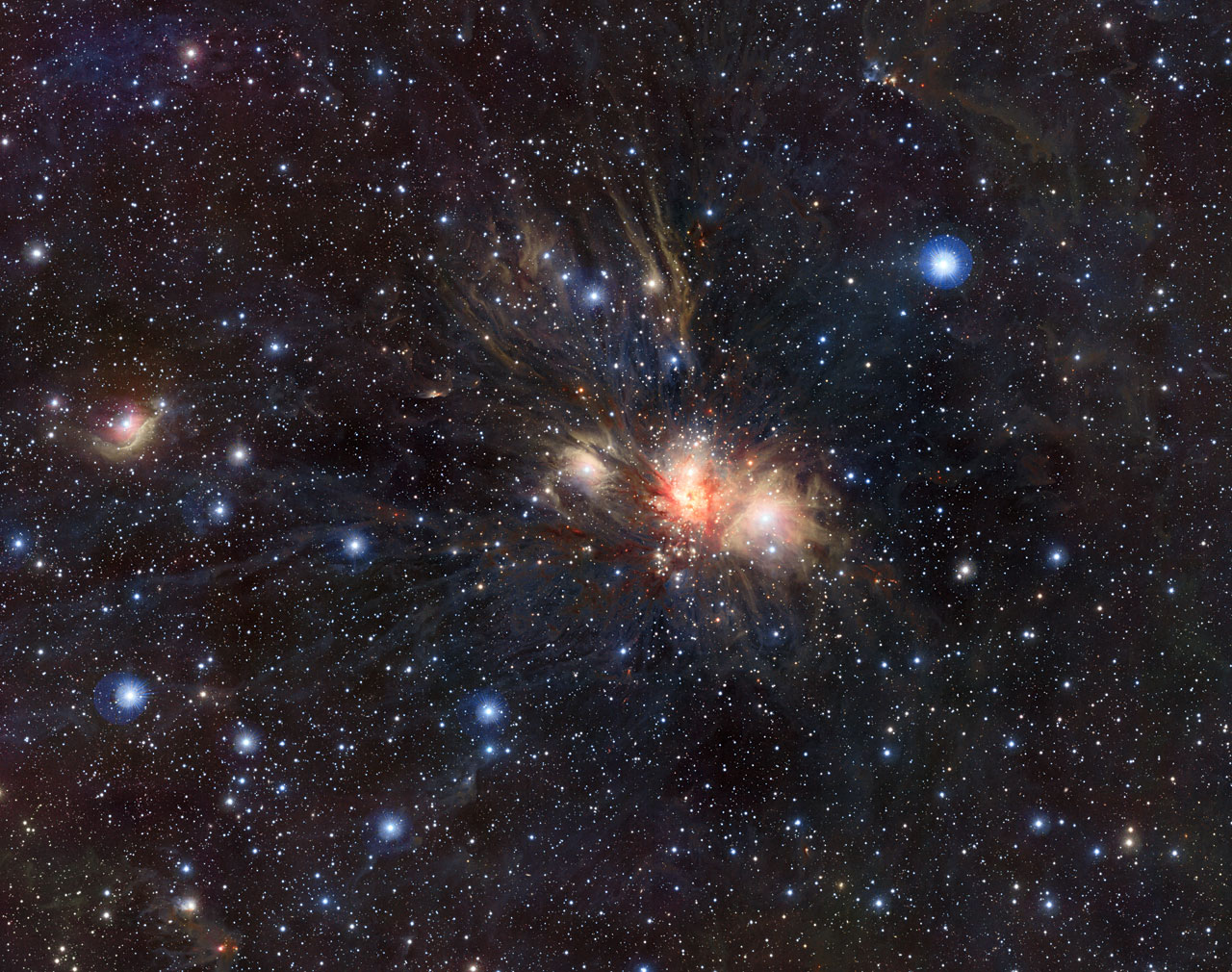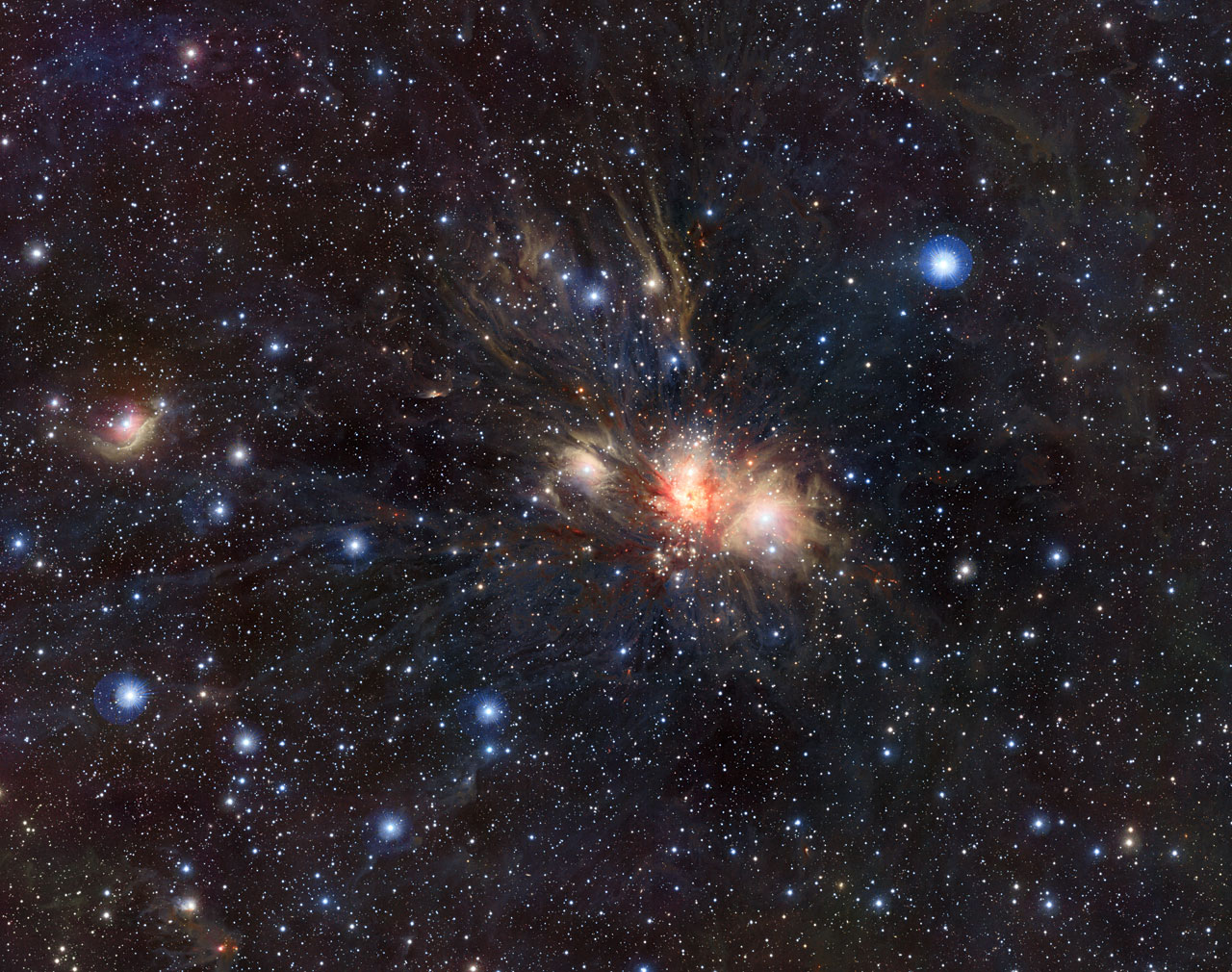
Drifting through the one-horned constellation Monoceros, these dusty streamers and new born stars are part of the active Monoceros R2 star-forming region, embedded in a giant molecular cloud. The cosmic scene was recorded by the VISTA survey telescope in near-infrared light. Visible light images show dusty NGC 2170, seen here just right of center, as a complex of bluish reflection nebulae. But this penetrating near-infrared view reveals telltale signs of ongoing star formation and massive young stars otherwise hidden by the dust. Energetic winds and radiation from the hot young stars reshape the natal interstellar clouds. Close on the sky to the star-forming Orion Nebula, the Monoceros R2 region is almost twice as far away, about 2700 light-years distant. At that distance, this vista spans about 80 light-years.
Drifando a través de la constelación de un solo cuerno Monoceros, estos chorros de polvo y estrellas recién nacidas forman parte de la región activa de formación estelar Monoceros R2, incrustada en una nube molecular gigante. Esta escena cósmica fue registrada por el telescopio de sondeo VISTA en luz infrarroja cercana. Las imágenes en luz visible muestran la nebulosa polvorienta NGC 2170, que se ve aquí justo a la derecha del centro, como un complejo de nebulosas de reflexión azuladas. Pero esta penetrante vista en infrarrojo cercano revela signos reveladores de formación estelar en curso y estrellas jóvenes masivas que de otro modo estarían ocultas por el polvo. Los vientos y la radiación energética de las estrellas jóvenes calientes moldean las nubes interestelares natales. Cerca en el cielo de la nebulosa de formación estelar de Orión, la región Monoceros R2 está casi el doble de lejos, a unos 2700 años luz de distancia. A esa distancia, esta vista abarca unos 80 años luz.