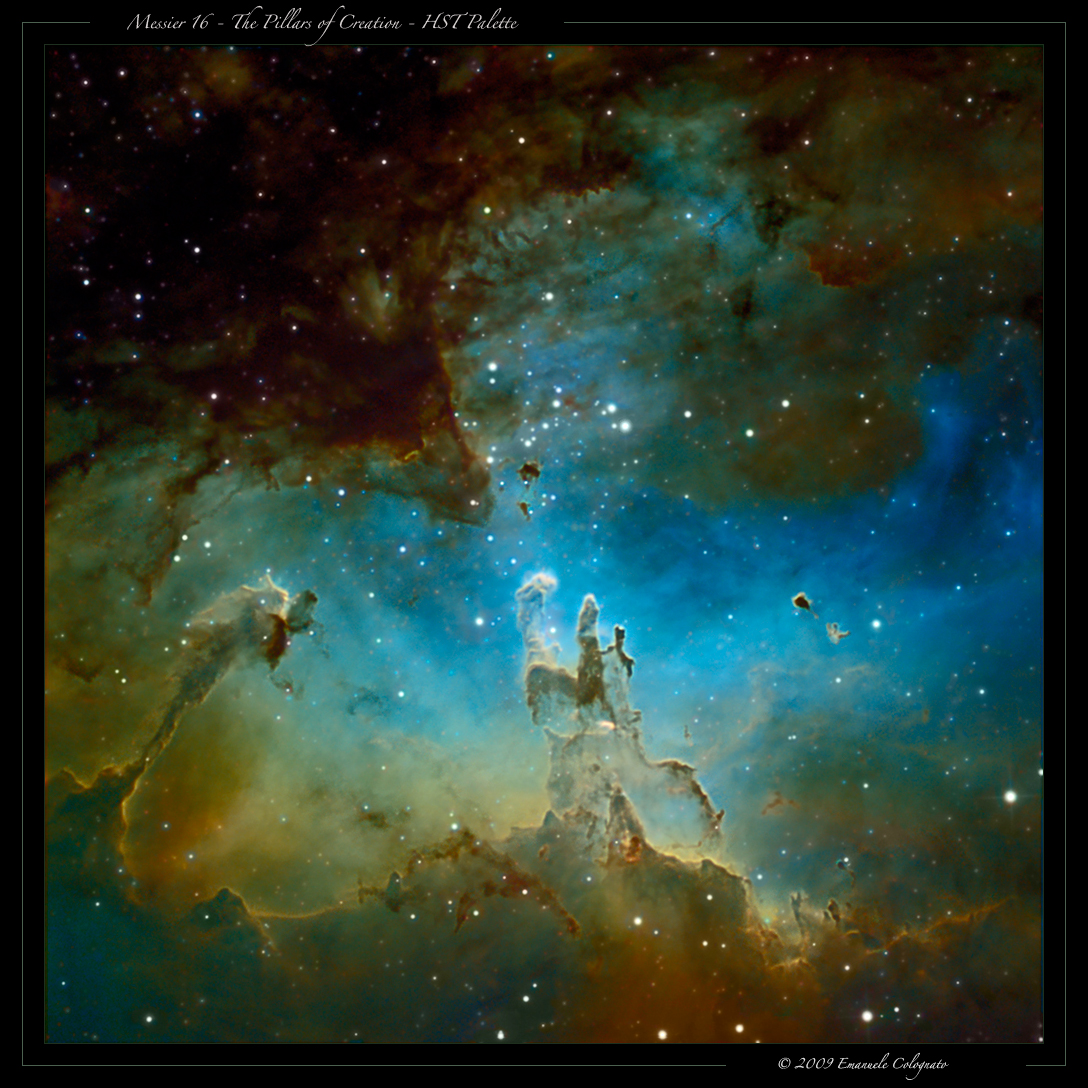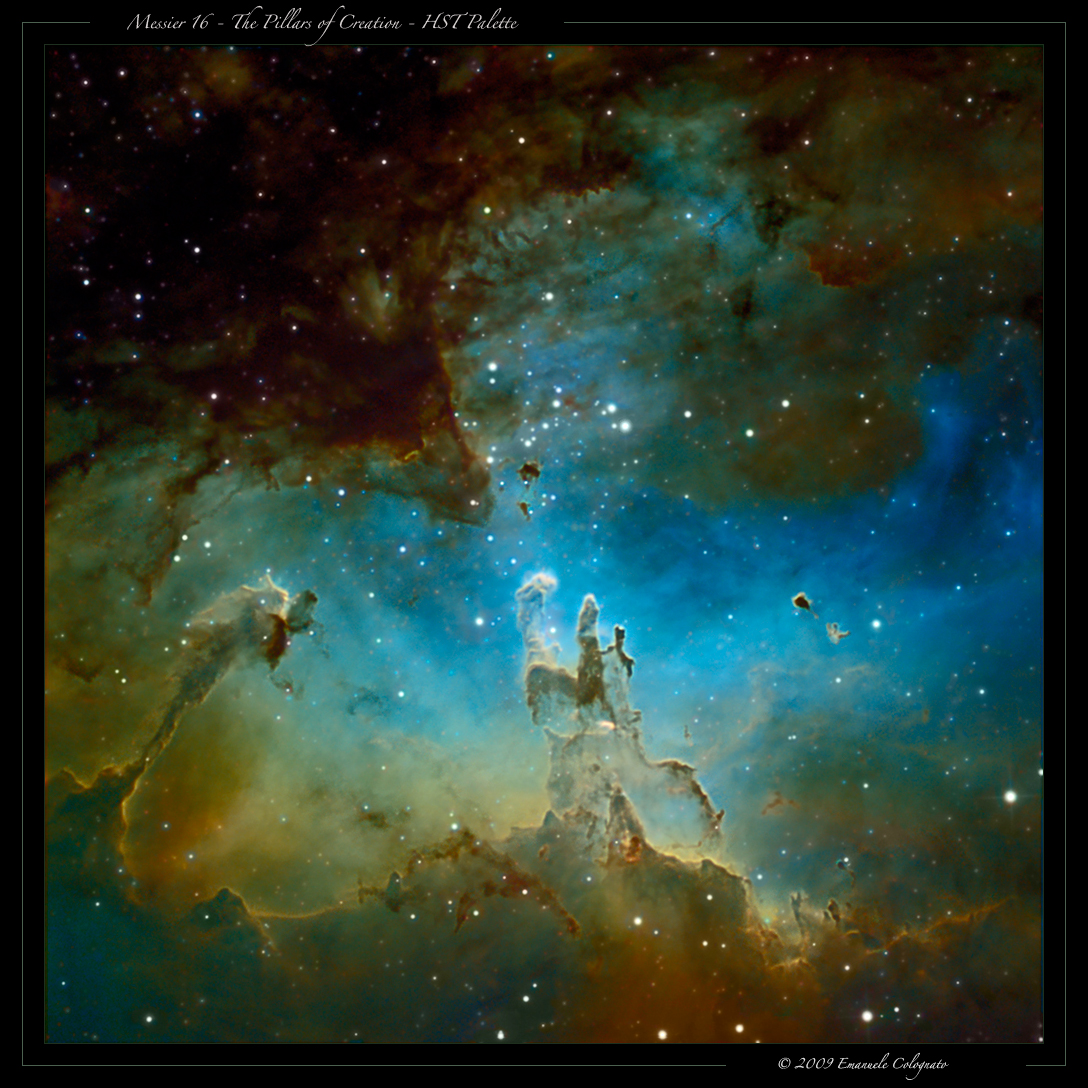
What lights up this castle of star formation? The familiar Eagle Nebula glows bright in many colors at once. The above image is a composite of three of these glowing gas colors. Pillars of dark dust nicely outline some of the denser towers of star formation. Energetic light from young massive stars causes the gas to glow and effectively boils away part of the dust and gas from its birth pillar. Many of these stars will explode after several million years, returning most of their elements back to the nebula which formed them. This process is forming an open cluster of stars known as M16. Random APOD: Click here to surf the universe
¿Qué ilumina este castillo de formación estelar? La conocida Nebulosa del Águila brilla con muchos colores a la vez. La imagen anterior es una composición de tres de estos colores brillantes del gas. Las columnas de polvo oscuro delimitan elegantemente algunas de las torres más densas de formación estelar. La luz energética de estrellas jóvenes y masivas hace que el gas brille y efectivamente evapora parte del polvo y el gas de su columna natal. Muchas de estas estrellas explotarán después de varios millones de años, devolviendo la mayoría de sus elementos al nebulosa que las formó. Este proceso está formando un cúmulo estelar abierto conocido como M16.