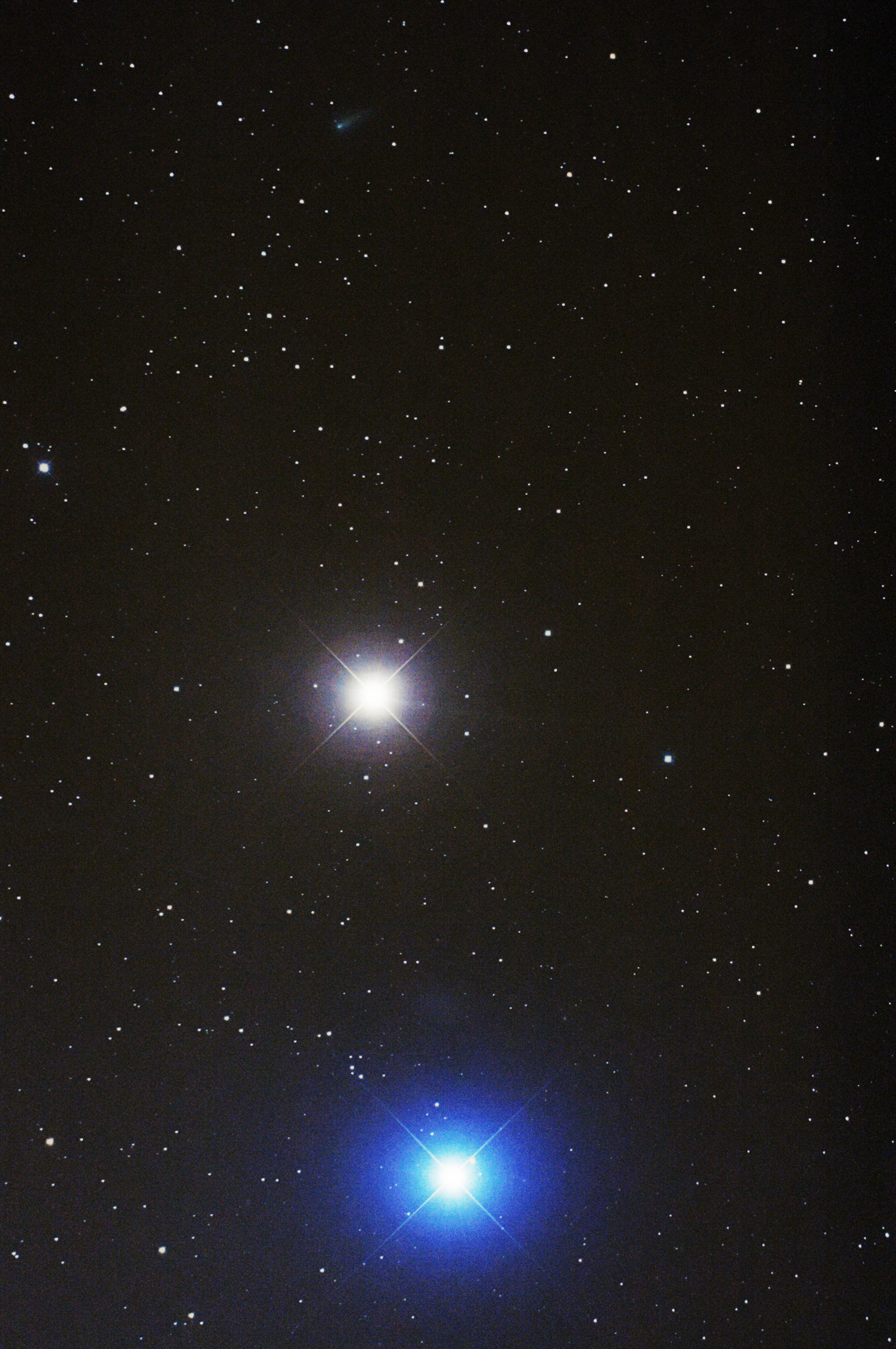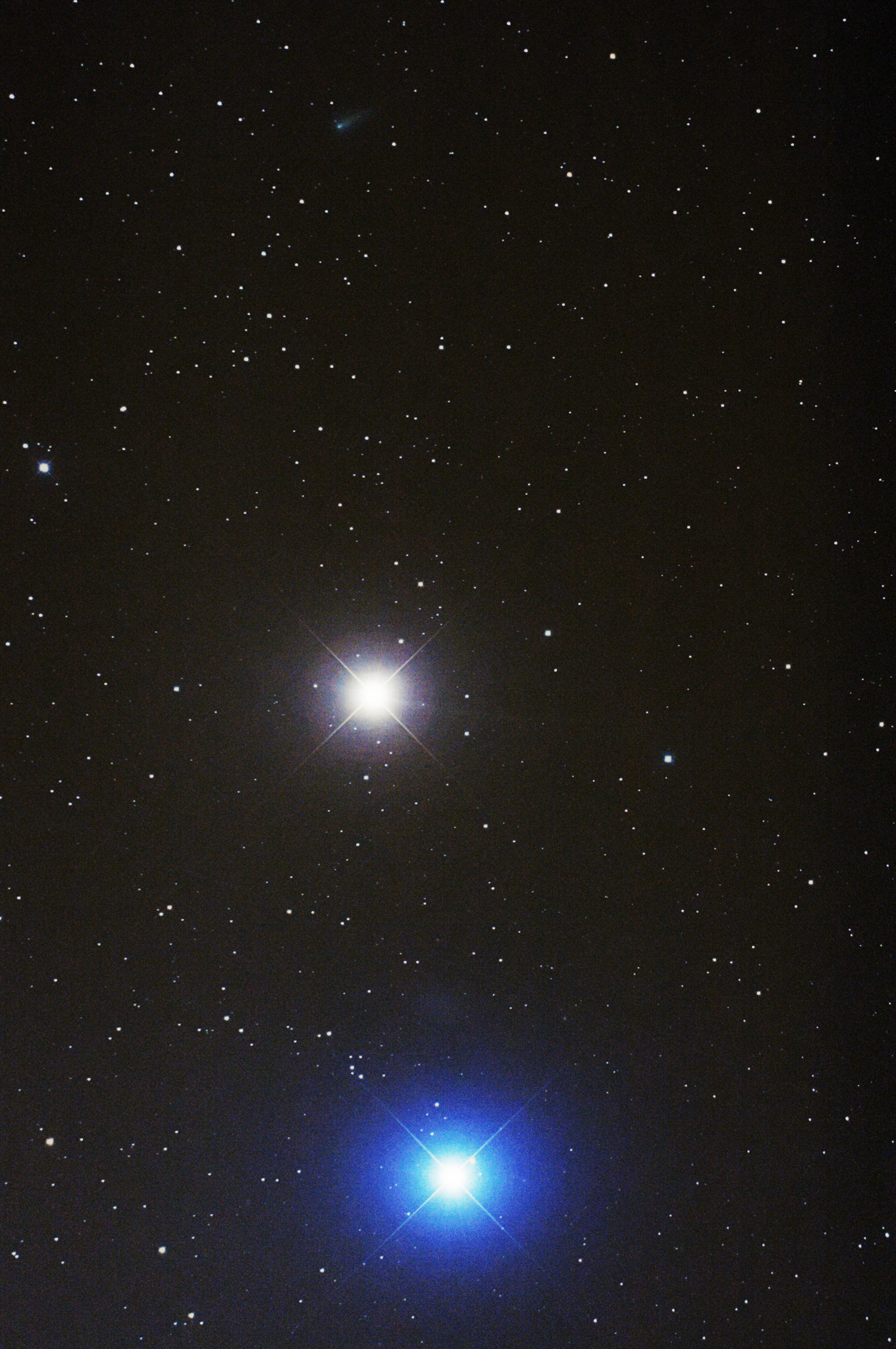
In order top to bottom this celestial snapshot features Comet ISON, planet Mars, and Regulus, alpha star of the constellation Leo, in the same frame. The scene spans about 2 degrees near the eastern horizon in early morning skies of October 15. Closest of the three, the much heralded Comet ISON (C/2012 S1) is by far the faintest at 14 light-minutes (1.7 AU) away. Mars is only slightly farther from our fair planet. About 16.5 light minutes (2 AU) away its normal ruddy color is washed out in the exposure. Regulus outshines both comet and planet from a distance of 75 light-years. Just above Regulus, the very faint smudge of light is actually the Leo I dwarf galaxy, 800,000 light-years away and almost lost in the glare of the bluish hued bright star. Comet ISON is expected to grow brighter, though. How bright is still not clear, but not as bright as a Full Moon in night skies. Estimated to be 1 to 4 kilometers in diameter, ISON's nucleus might substantially survive its very close encounter with the Sun on November 28. If so, the comet will climb back above the eastern horizon in planet Earth's northern hemisphere before dawn in early December.
De arriba a abajo, esta instantánea celeste muestra la Cometa ISON, el planeta Marte y Regulus, la estrella alfa de la constelación Leo, en el mismo marco. La escena abarca aproximadamente 2 grados cerca del horizonte oriental en los cielos matutinos del 15 de octubre. El más cercano de los tres, la famosa Cometa ISON (C/2012 S1), es por mucho el más tenue, a 14 minutos luz (1.7 AU) de distancia. Marte está ligeramente más lejos de nuestro planeta. A unos 16.5 minutos luz (2 AU) de distancia, su color normal rojizo se desdibuja en la exposición. Regulus supera en brillo tanto a la cometa como al planeta desde una distancia de 75 años luz. Justo por encima de Regulus, el tenue manchón de luz es en realidad la galaxia enana Leo I, a 800,000 años luz de distancia y casi perdida en el resplandor de la brillante estrella de tono azulado. Se espera que la Cometa ISON se vuelva más brillante, aunque aún no se sabe con certeza cuán brillante será, pero no tan brillante como la Luna llena en los cielos nocturnos. Se estima que tiene un diámetro de 1 a 4 kilómetros, y su núcleo podría sobrevivir significativamente a su muy cercana aproximación al Sol el 28 de noviembre. Si así es, la cometa regresará a aparecer por encima del horizonte oriental en el hemisferio norte de la Tierra antes del amanecer a principios de diciembre.