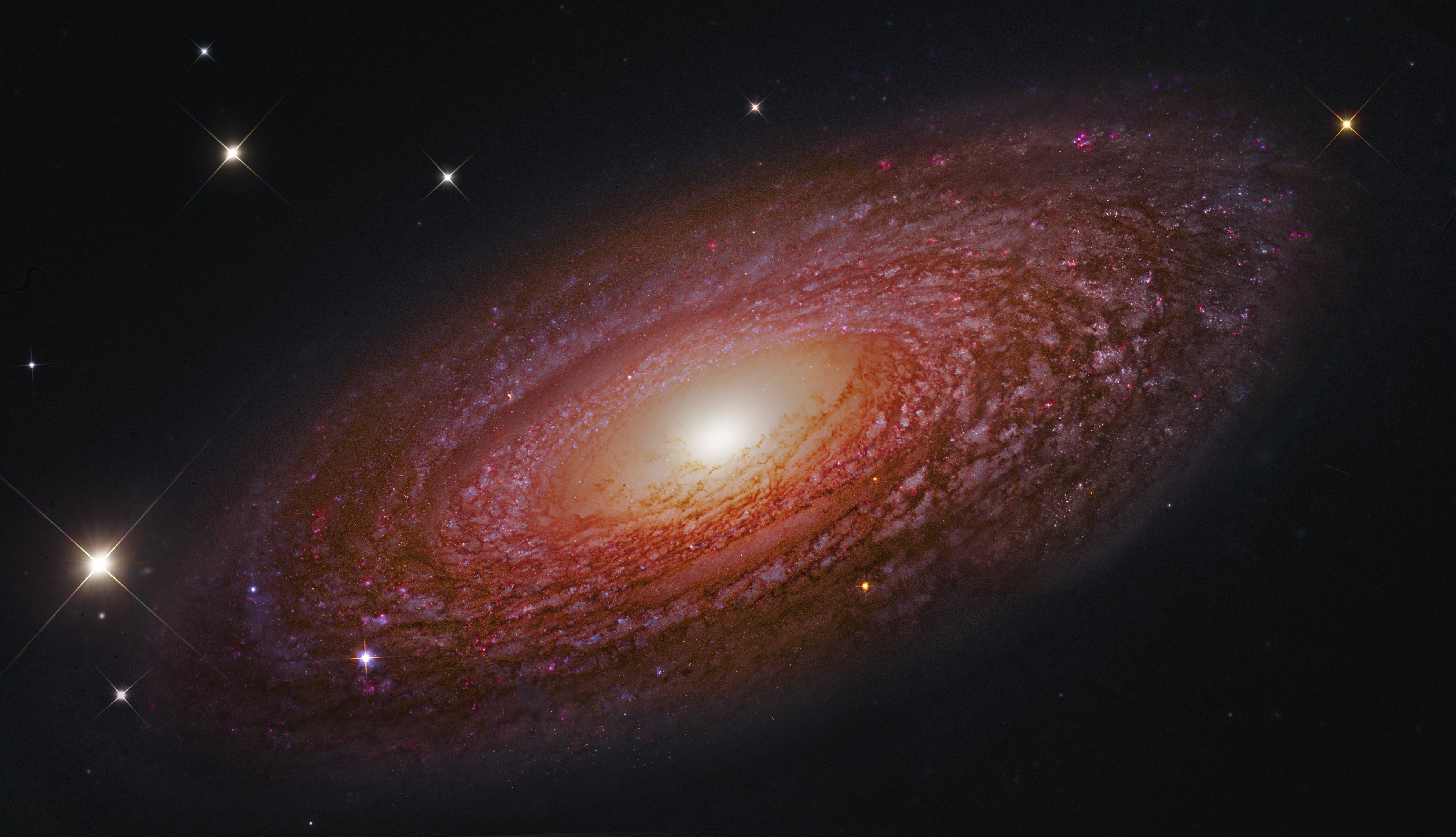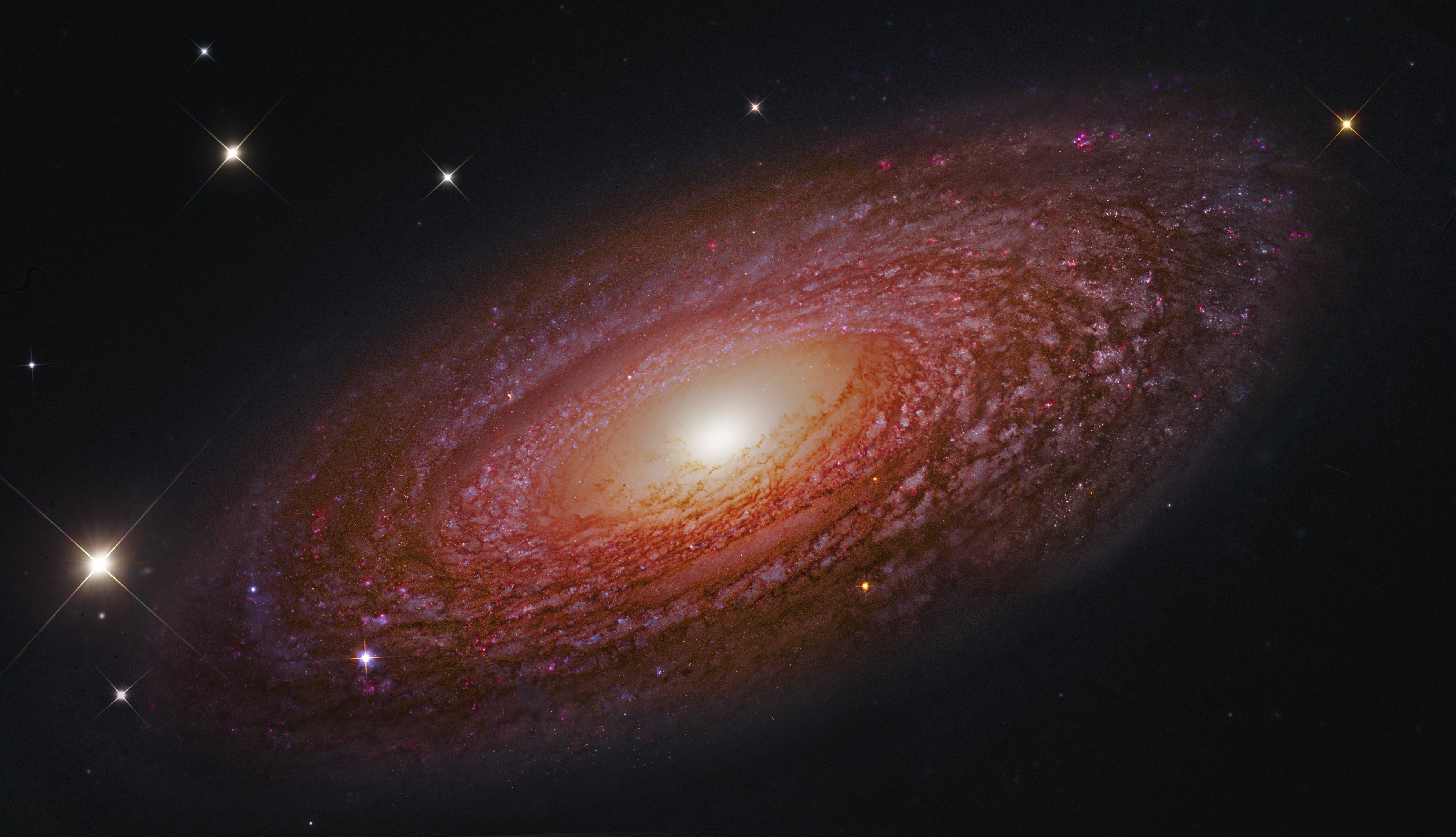
It is one of the more massive galaxies known. A mere 46 million light-years distant, spiral galaxy NGC 2841 can be found in the northern constellation of Ursa Major. This sharp view of the gorgeous island universe shows off a striking yellow nucleus and galactic disk. Dust lanes, small, pink star-forming regions, and young blue star clusters are embedded in the patchy, tightly wound spiral arms. In contrast, many other spirals exhibit grand, sweeping arms with large star-forming regions. NGC 2841 has a diameter of over 150,000 light-years, even larger than our own Milky Way and captured by this composite image merging exposures from the orbiting 2.4-meter Hubble Space Telescope and the ground-based 8.2-meter Subaru Telescope. X-ray images suggest that resulting winds and stellar explosions create plumes of hot gas extending into a halo around NGC 2841.
Es una de las galaxias más masivas conocidas. A tan solo 46 millones de años luz de distancia, la galaxia espiral NGC 2841 se encuentra en la constelación norteña de Ursa Major. Esta imagen nítida de este hermoso universo insular muestra un núcleo amarillo llamativo y un disco galáctico. Bandas de polvo, pequeñas regiones rosadas de formación estelar y jóvenes cúmulos estelares azules están incrustados en los brazos espirales estrechos y discontinuos. En contraste, muchas otras galaxias espirales presentan brazos amplios y extensos con grandes regiones de formación estelar. NGC 2841 tiene un diámetro de más de 150,000 años luz, incluso mayor que el de nuestra propia Vía Láctea, y fue capturada en esta imagen compuesta que combina exposiciones obtenidas por el telescopio espacial Hubble de 2.4 metros en órbita y el telescopio terrestre Subaru de 8.2 metros. Las imágenes en rayos X sugieren que los vientos resultantes y las explosiones estelares generan plumas de gas caliente que se extienden hacia un halo alrededor de NGC 2841.