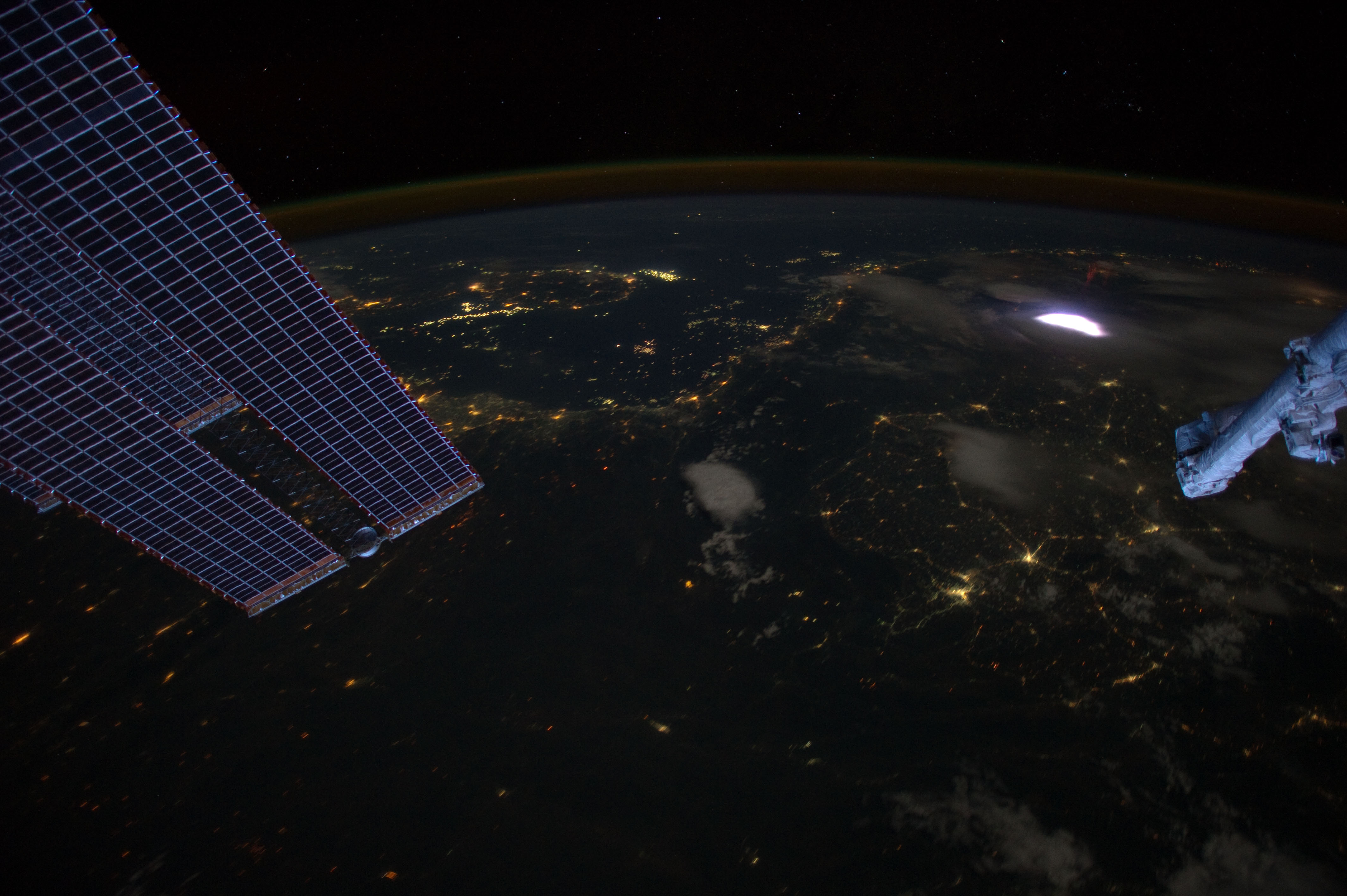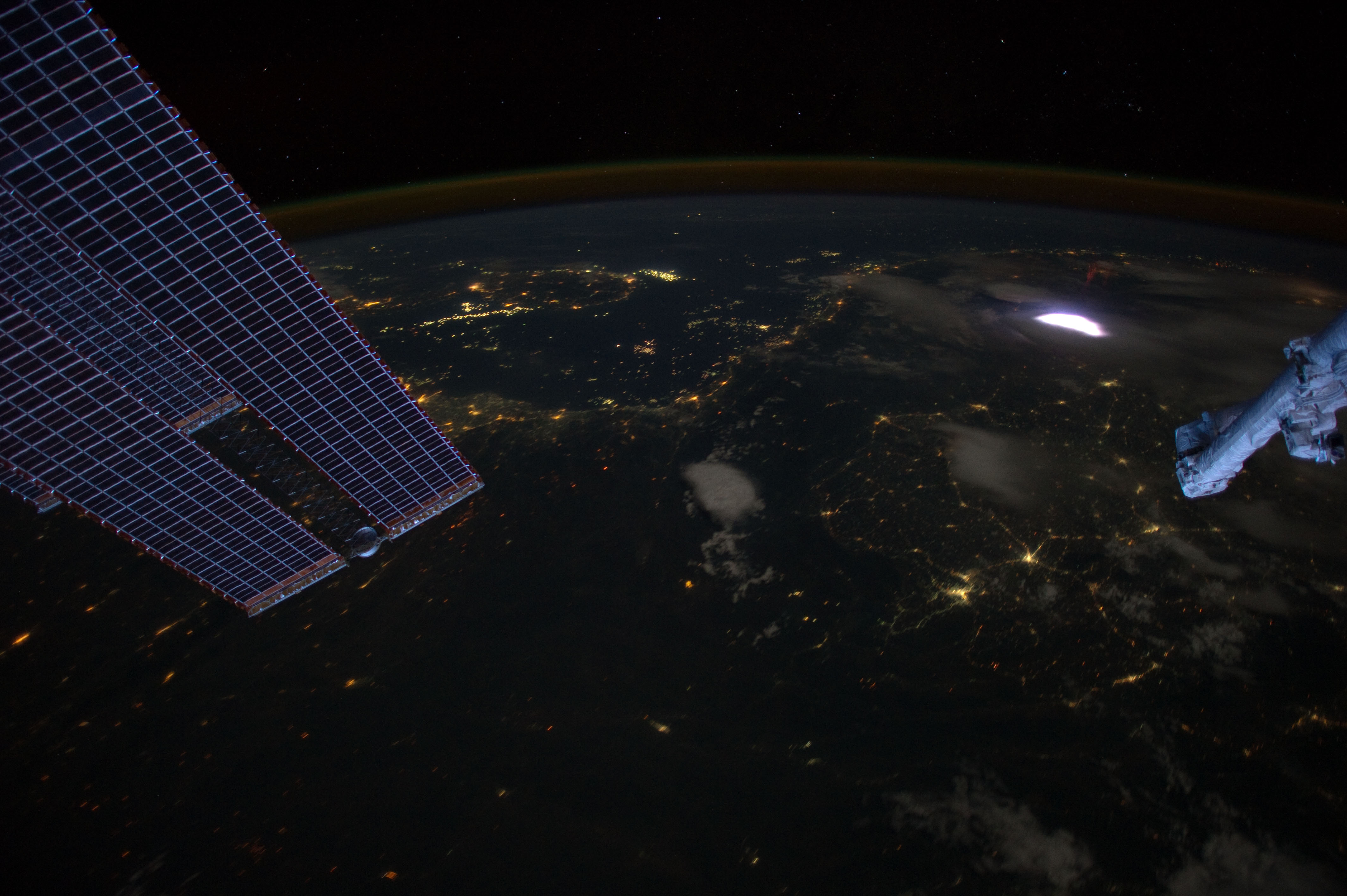
There is something very unusual in this picture of the Earth -- can you find it? A fleeting phenomenon once thought to be only a legend has been newly caught if you know just where to look. The featured image was taken from the orbiting International Space Station (ISS) in late April and shows familiar ISS solar panels on the far left and part of a robotic arm to the far right. The rarely imaged phenomenon is known as a red sprite and it can be seen, albeit faintly, just over the bright area on the image right. This bright area and the red sprite are different types of lightning, with the white flash the more typical type. Although sprites have been reported anecdotally for as long as 300 years, they were first caught on film in 1989 -- by accident. Much remains unknown about sprites including how they occur, their effect on the atmospheric global electric circuit, and if they are somehow related to other upper atmospheric lightning phenomena such as blue jets or terrestrial gamma flashes. Free APOD Lectures: Editor to Speak in January in Philadelphia and New York City
Hay algo muy inusual en esta imagen de la Tierra — ¿puedes encontrarlo? Un fenómeno efímero, una vez considerado solo una leyenda, ha sido capturado recientemente si se sabe exactamente dónde mirar. La imagen destacada fue tomada desde la Estación Espacial Internacional (ISS) a finales de abril y muestra las conocidas placas solares de la ISS a la izquierda y parte de un brazo robótico a la derecha. El fenómeno poco capturado en imágenes se conoce como un sprite rojo y puede verse, aunque débilmente, justo sobre el área brillante en la parte derecha de la imagen. Esta área brillante y el sprite rojo son tipos diferentes de relámpagos, siendo el destello blanco el tipo más común. Aunque los sprites han sido reportados anecdotamente desde hace aproximadamente 300 años, fueron capturados por primera vez en película en 1989 — por accidente. Aún se desconoce mucho sobre los sprites, incluyendo cómo ocurren, su efecto en el circuito eléctrico global de la atmósfera, y si están relacionados de alguna manera con otros fenómenos de relámpago en la atmósfera superior, como los jets azules o las chispas gamma terrestres.