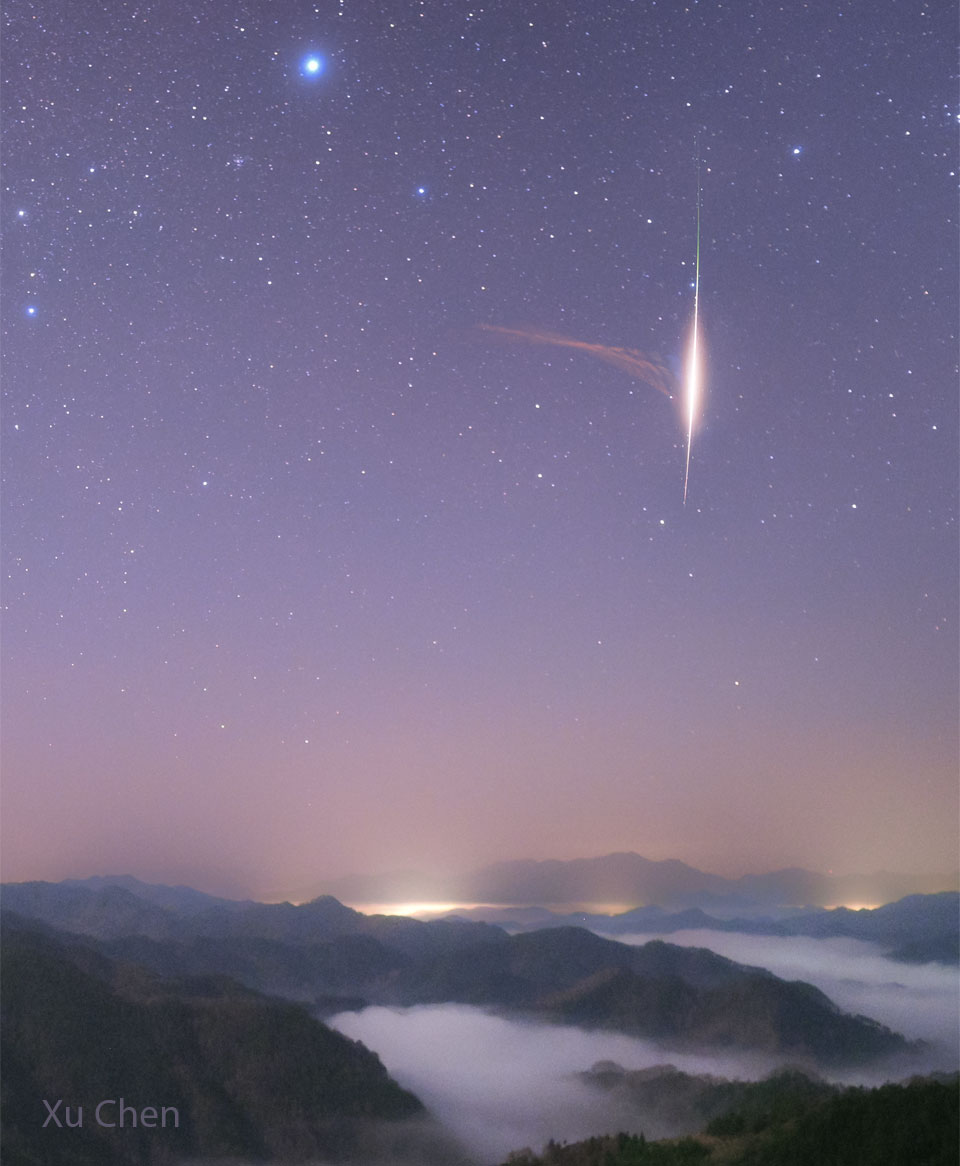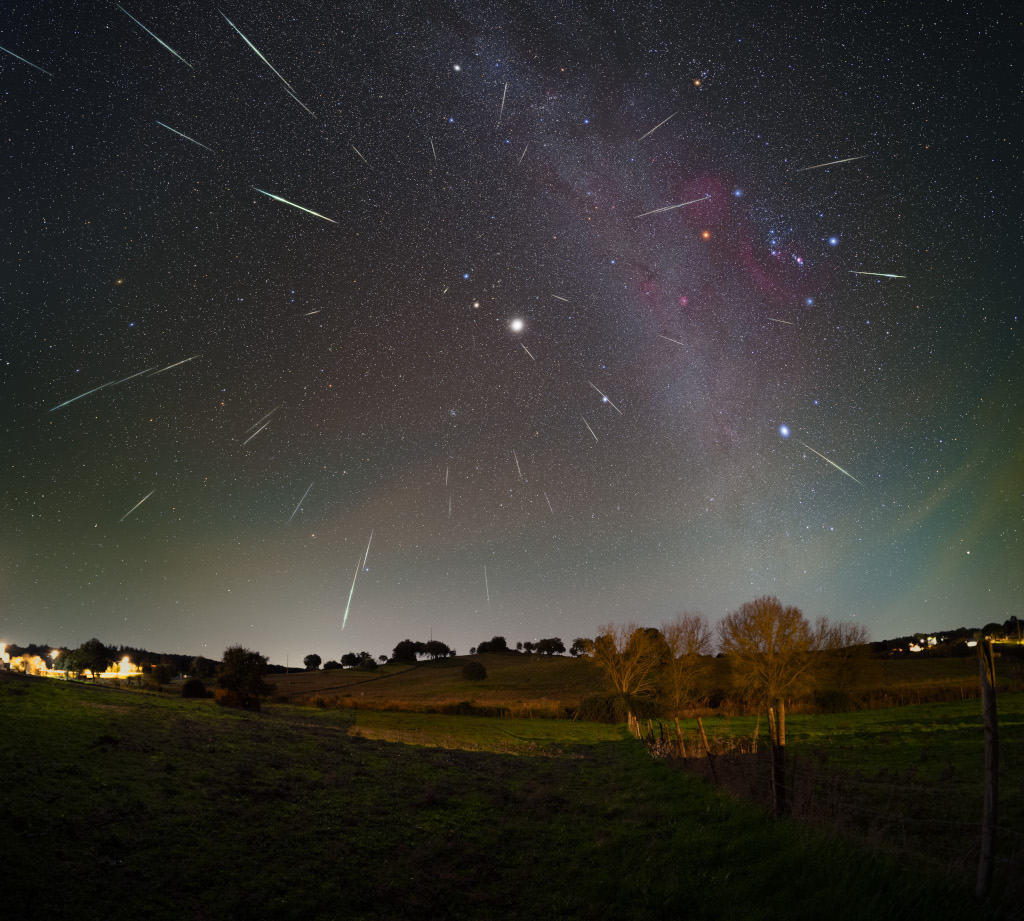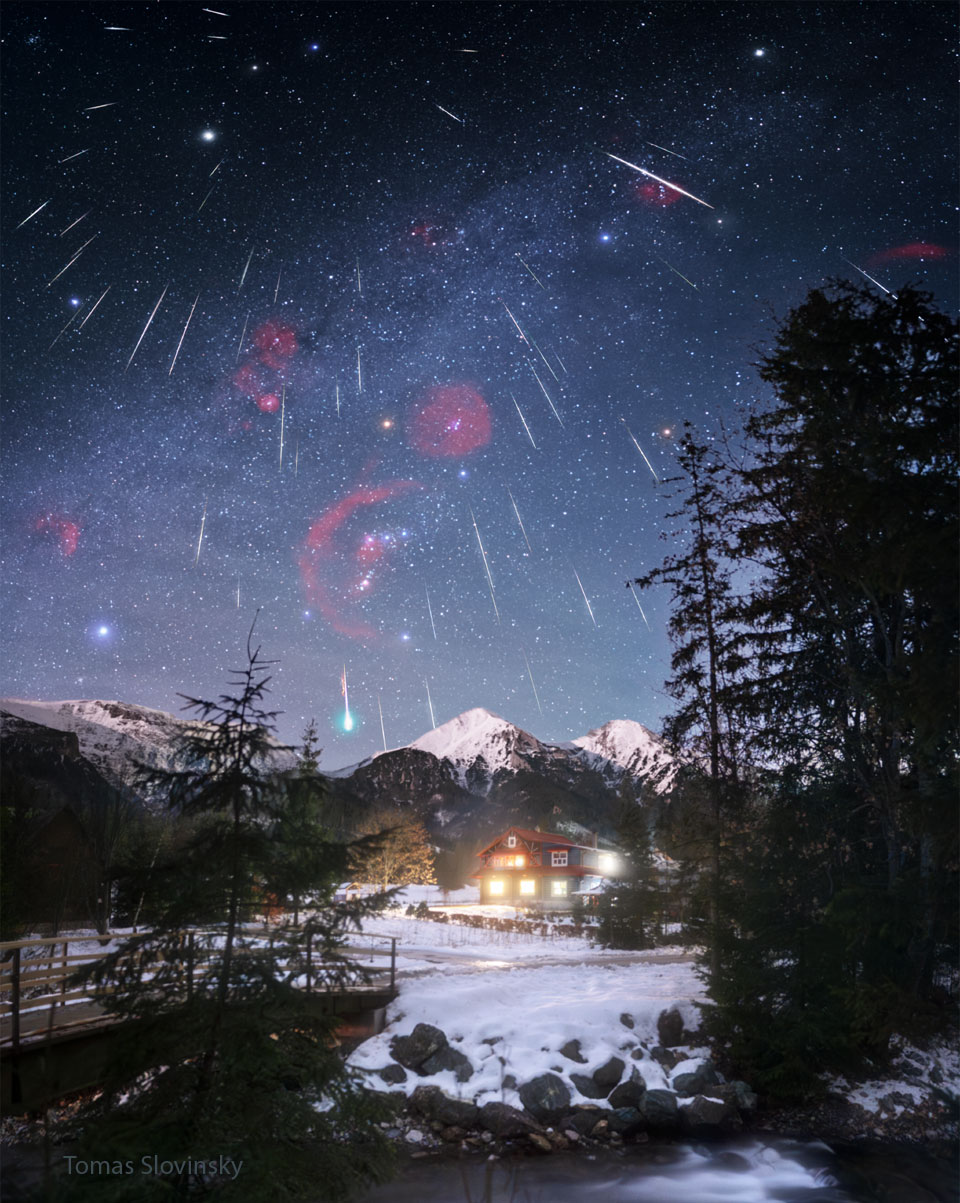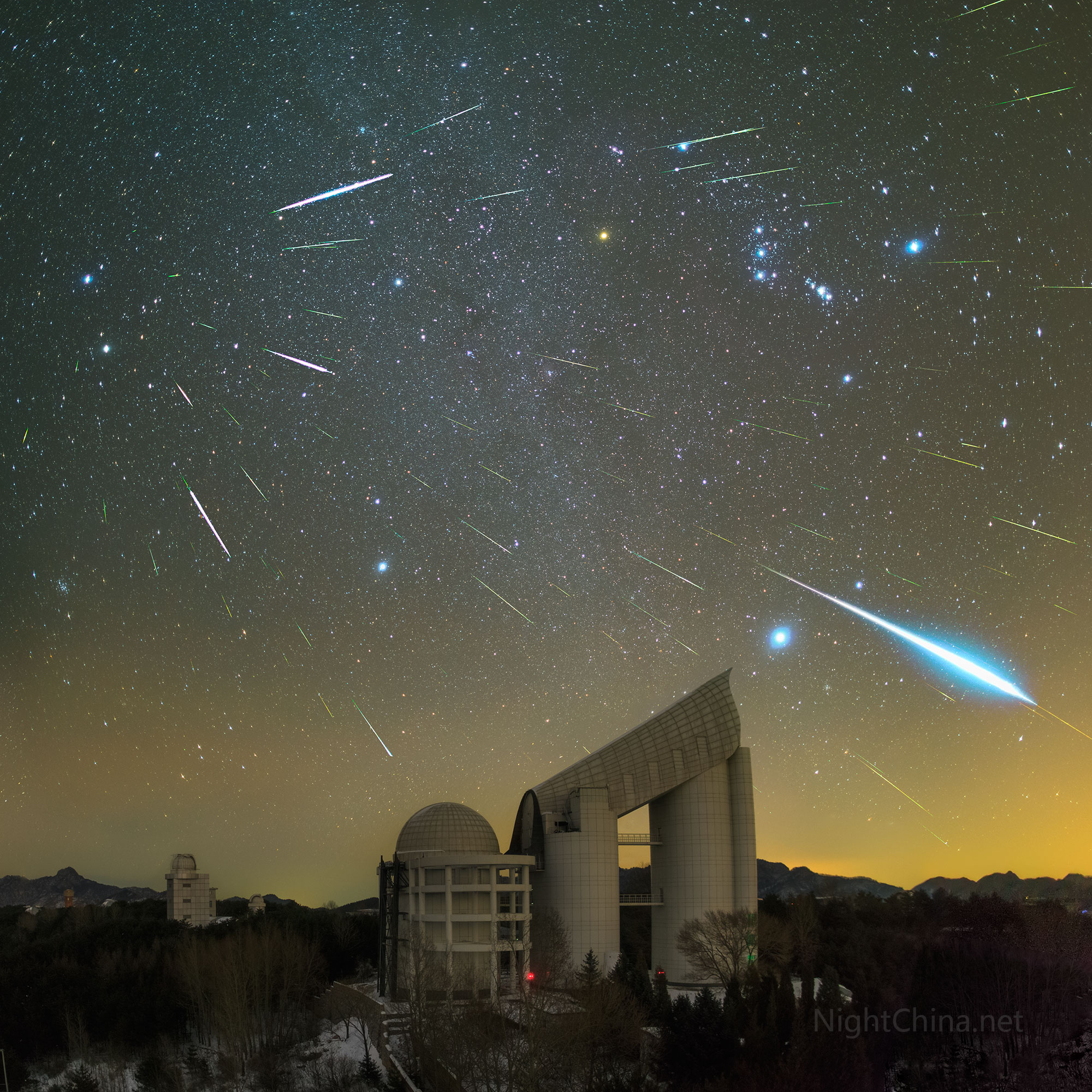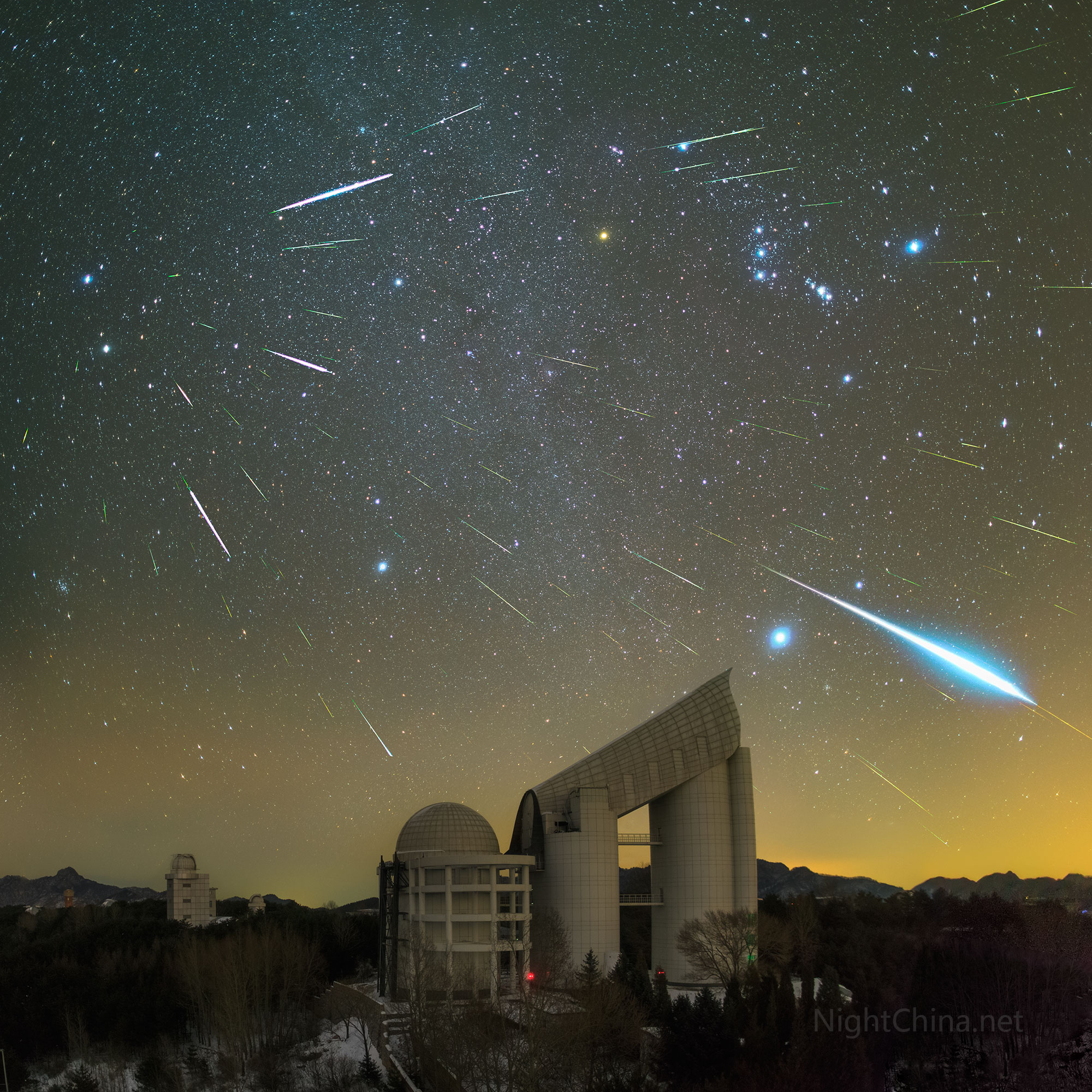
Where do Geminid meteors come from? In terms of location on the sky, as the featured image composite beautifully demonstrates, the sand-sized bits of rock that create the streaks of the Geminid Meteor Shower appear to flow out from the constellation of Gemini. In terms of parent body, Solar System trajectories point to the asteroid 3200 Phaethon -- but this results in a bit of a mystery since that unusual object appears mostly dormant. Perhaps, 3200 Phaethon undergoes greater dust-liberating events than we know, but even if so, exactly what happens and why remains a riddle. Peaking last week, over 50 meteors including a bright fireball were captured streaking above Xinglong Observatory in China. Since the Geminids of December are one of the most predictable and active meteor showers, investigations into details of its origin are likely to continue. AAS Conventioneers: APOD Town Meeting Wednesday at 2:15 pm
¿De dónde provienen los meteoros de Géminidas? En términos de ubicación en el cielo, como magníficamente demuestra la imagen compuesta destacada, los pequeños fragmentos de roca del tamaño de la arena que generan las estelas del chorro de meteoros de Géminidas parecen surgir de la constelación de Géminis. En términos de cuerpo parental, las trayectorias del Sistema Solar apuntan al asteroide 3200 Phaethon — pero esto plantea cierto misterio, ya que ese objeto inusual parece estar en su mayor parte inactivo. Tal vez, 3200 Phaethon experimenta eventos de liberación de polvo más frecuentes de lo que sabemos, pero incluso así, exactamente qué ocurre y por qué sigue siendo un enigma. Alcanzando su máximo la semana pasada, más de 50 meteoros, incluyendo una brillante bola de fuego, fueron capturados estrellándose sobre el Observatorio de Xinglong en China. Dado que las Géminidas de diciembre son una de las lluvias de meteoros más predecibles y activas, las investigaciones sobre los detalles de su origen probablemente continuarán.