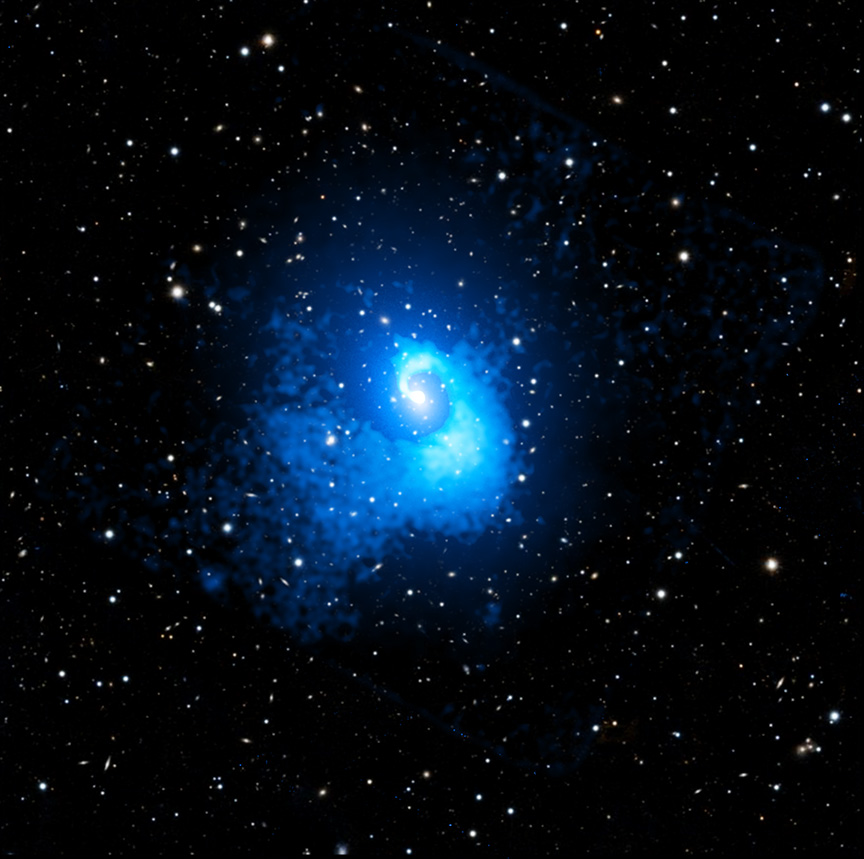
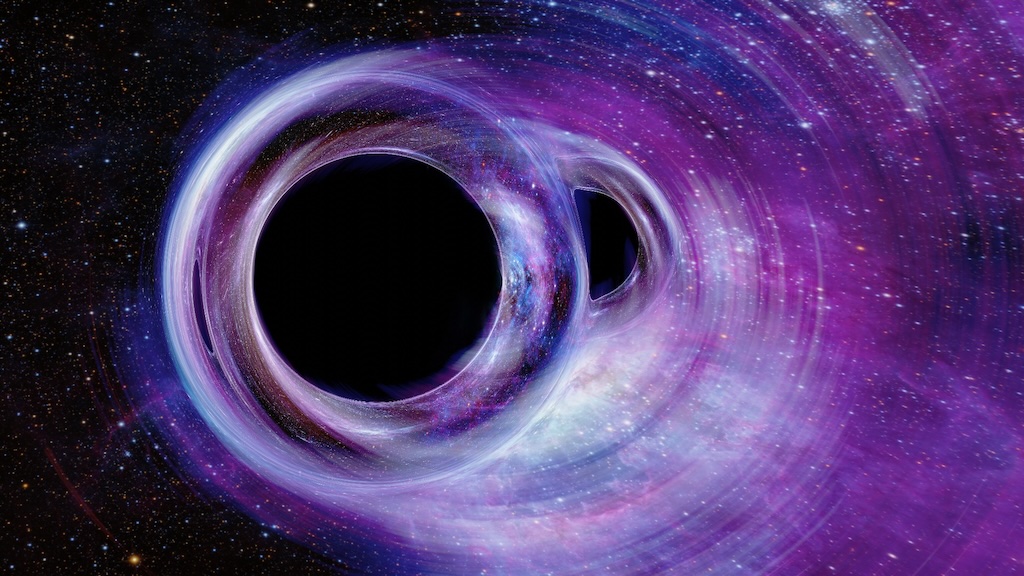
A new sky is becoming visible. When you look up, you see the sky as it appears in light -- electromagnetic radiation. But just over the past year, humanity has begun to see our once-familiar sky as it appears in a different type of radiation -- gravitational radiation. Today, the LIGO collaboration is reporting the detection of GW151226, the second confirmed flash of gravitational radiation after GW150914, the historic first detection registered three months earlier. As its name implies, GW151226 was recorded in late December of 2015. It was detected simultaneously by both LIGO facilities in Washington and Louisiana, USA. In the featured video, an animated plot demonstrates how the frequency of GW151226 changed with time during measurement by the Hanford, Washington detector. This GW-emitting system is best fit by two merging black holes with initial masses of about 14 and 8 solar masses at a redshift of roughly 0.09, meaning, if correct, that it took roughly 1.4 billion years for this radiation to reach us. Note that the brightness and frequency -- here mapped into sound -- of the gravitational radiation peaks during the last second of the black hole merger. As LIGO continues to operate, as its sensitivity continues to increase, and as other gravitational radiation detectors come online in the next few years, humanity's new view of the sky will surely change humanity's understanding of the universe.
Un nuevo cielo está comenzando a hacerse visible. Cuando miras hacia arriba, ves el cielo tal como aparece en luz — radiación electromagnética. Pero solo hace poco más de un año, la humanidad ha comenzado a ver nuestro cielo familiar tal como aparece en un tipo diferente de radiación — la radiación gravitacional. Hoy, la colaboración LIGO informa sobre la detección de GW151226, la segunda fuente confirmada de destello de radiación gravitacional, después de GW150914, la primera detección histórica registrada tres meses antes. Como sugiere su nombre, GW151226 fue registrado a finales de diciembre de 2015. Fue detectado simultáneamente por ambos centros de LIGO en Washington y Luisiana, Estados Unidos. En el video destacado, una gráfica animada muestra cómo cambió la frecuencia de GW151226 con el tiempo durante la medición realizada por el detector de Hanford, Washington. Este sistema emisor de ondas gravitacionales se ajusta mejor a dos agujeros negros fusionándose con masas iniciales de aproximadamente 14 y 8 masas solares a una redshift de aproximadamente 0.09, lo que significaría, si es correcto, que tomó aproximadamente 1.4 mil millones de años para que esta radiación llegara hasta nosotros. Tenga en cuenta que la luminosidad y la frecuencia — aquí mapeadas en sonido — de la radiación gravitacional alcanzan su punto máximo durante el último segundo de la fusión de los agujeros negros. A medida que LIGO continúe operando, a medida que su sensibilidad continúe aumentando, y a medida que otros detectores de radiación gravitacional se pongan en marcha en los próximos años, la nueva visión de la humanidad del cielo sin duda cambiará nuestra comprensión del universo.