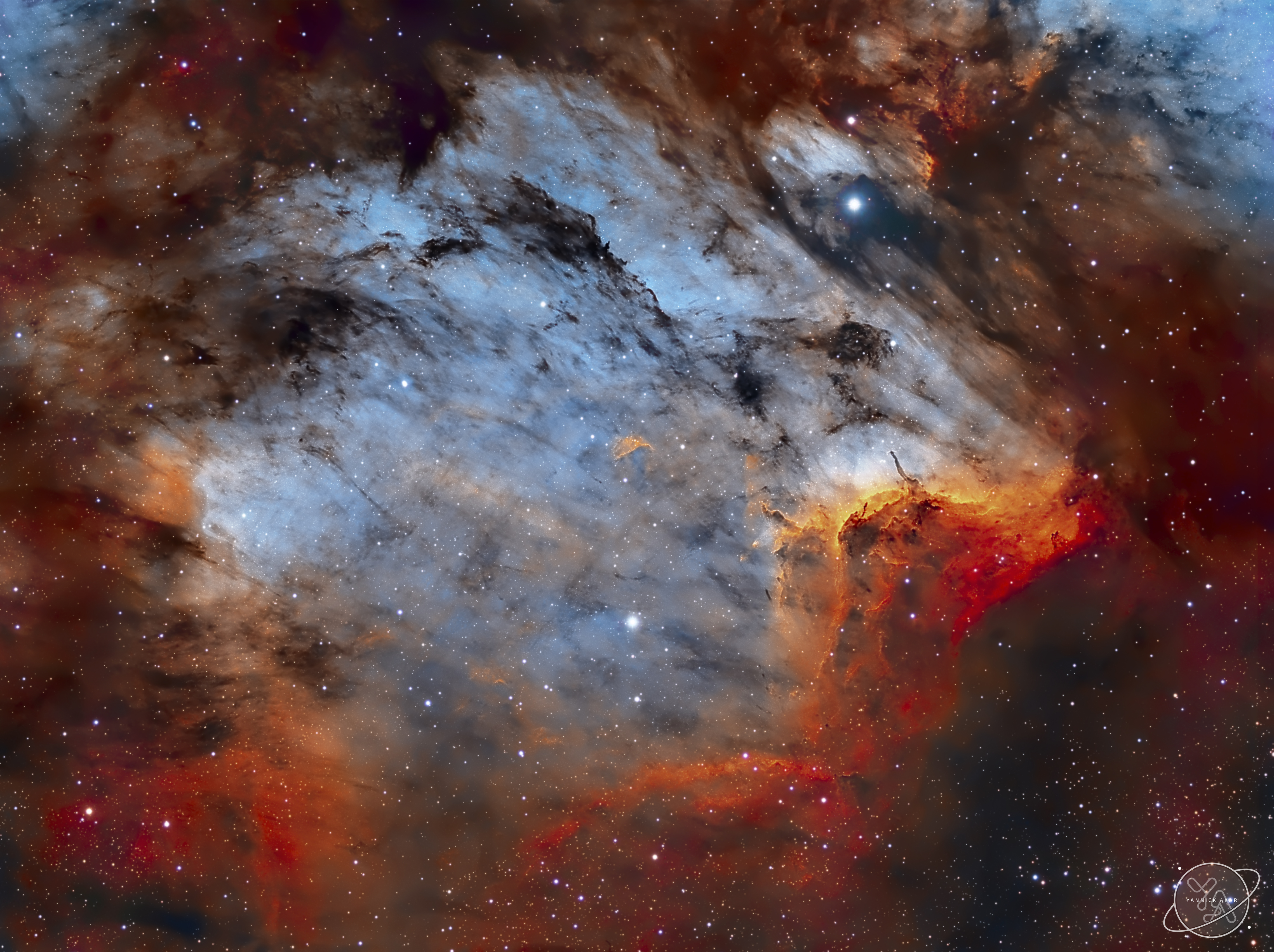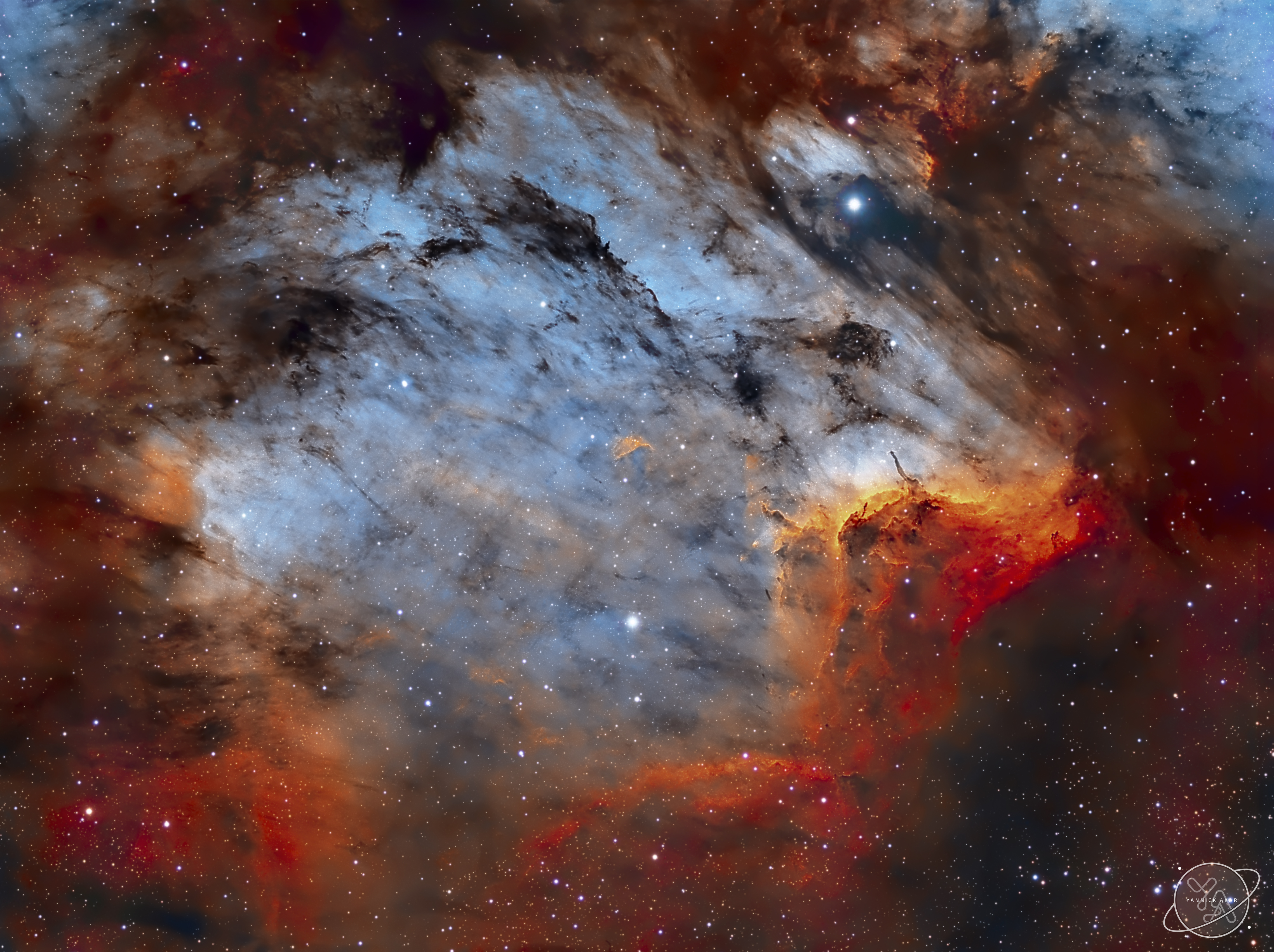
The Pelican Nebula is slowly being transformed. IC 5070, the official designation, is divided from the larger North America Nebula by a molecular cloud filled with dark dust. The Pelican, however, receives much study because it is a particularly active mix of star formation and evolving gas clouds. The featured picture was produced in three specific colors -- light emitted by sulfur, hydrogen, and oxygen -- that can help us to better understand these interactions. The light from young energetic stars is slowly transforming the cold gas to hot gas, with the advancing boundary between the two, known as an ionization front, visible in bright orange on the right. Particularly dense tentacles of cold gas remain. Millions of years from now this nebula might no longer be known as the Pelican, as the balance and placement of stars and gas will surely leave something that appears completely different.
La nebulosa del Pelícano está siendo transformada lentamente. IC 5070, su designación oficial, está separada de la más grande nebulosa del Continente Americano del Norte por una nube molecular llena de polvo oscuro. Sin embargo, el Pelícano recibe mucha atención porque es una mezcla particularmente activa de formación estelar y nubes de gas en evolución. La imagen destacada fue producida en tres colores específicos — luz emitida por azufre, hidrógeno y oxígeno — que pueden ayudarnos a comprender mejor estas interacciones. La luz de estrellas jóvenes y energéticas está transformando lentamente el gas frío en gas caliente, con el límite avanzante entre ambos, conocido como frente de ionización, visible en naranja brillante a la derecha. Quedan tentáculos particularmente densos de gas frío. Hace millones de años, esta nebulosa podría ya no ser conocida como el Pelícano, ya que el equilibrio y la disposición de las estrellas y el gas seguramente dejarán algo que se vea completamente diferente.