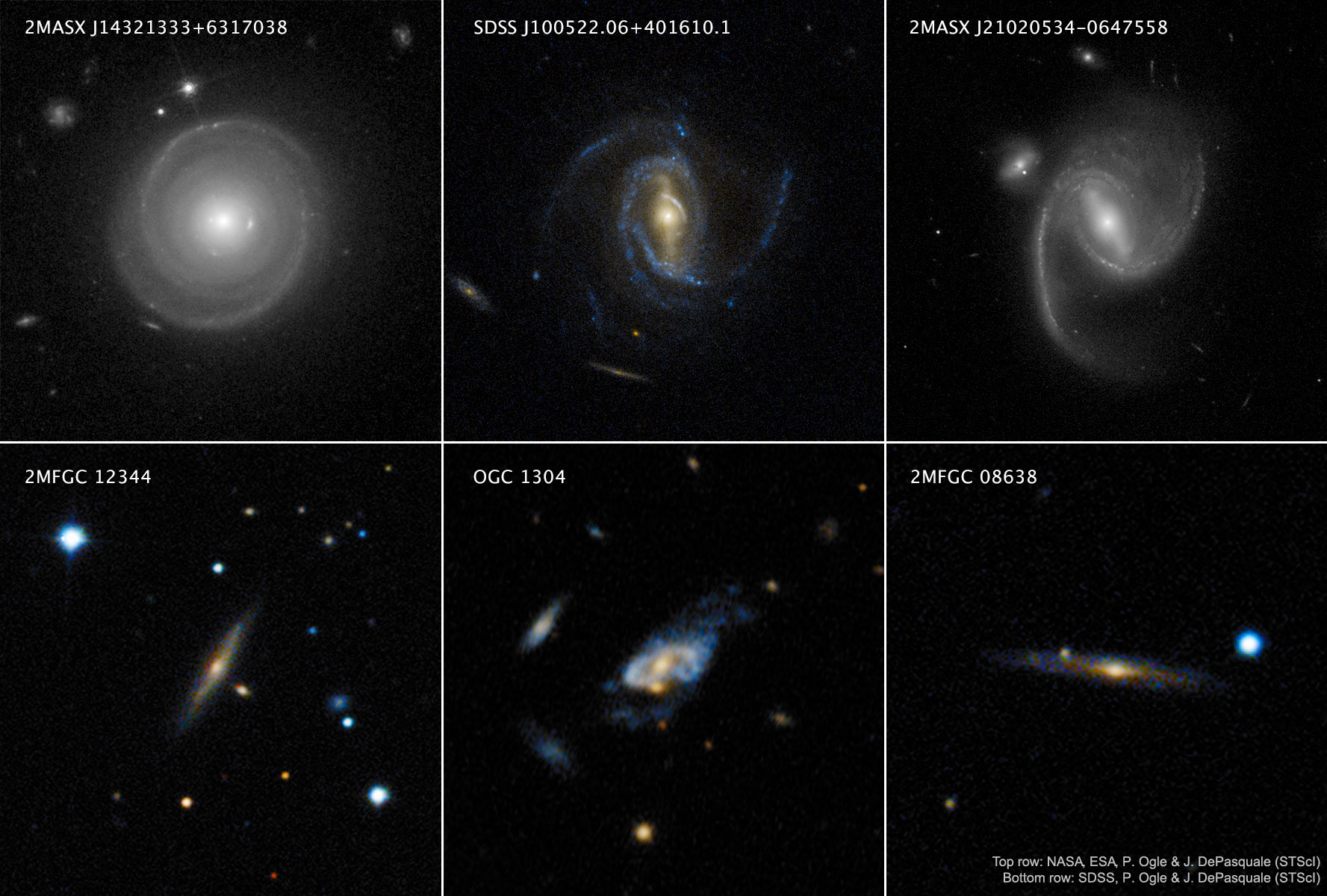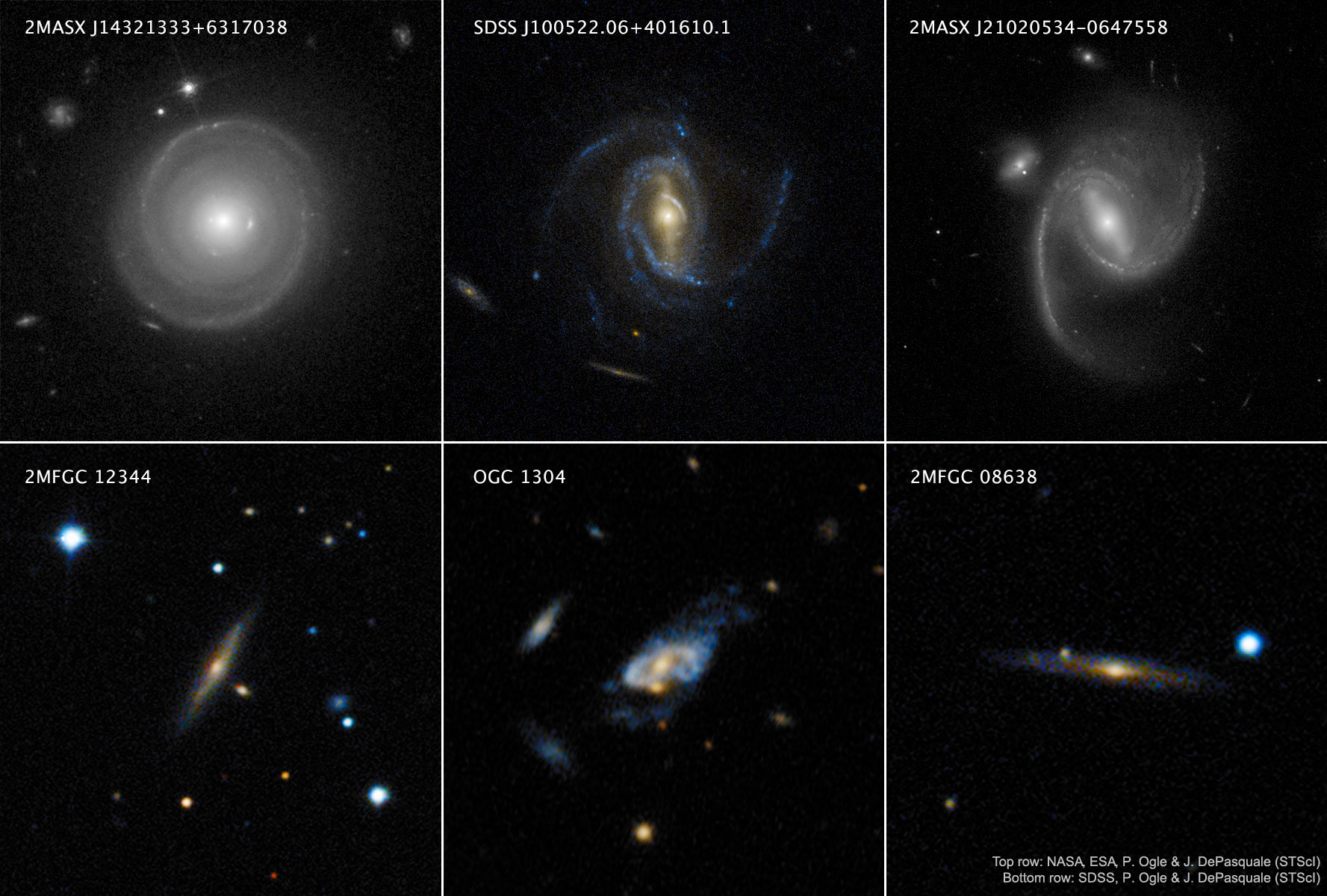
Why are these galaxies spinning so fast? If you estimated each spiral's mass by how much light it emits, their fast rotations should break them apart. The leading hypothesis as to why these galaxies don't break apart is dark matter -- mass so dark we can't see it. But these galaxies are even out-spinning this break-up limit -- they are the fastest rotating disk galaxies known. It is therefore further hypothesized that their dark matter halos are so massive -- and their spins so fast -- that it is harder for them to form stars than regular spirals. If so, then these galaxies may be among the most massive spirals possible. Further study of surprising super-spirals like these will continue, likely including observations taken by NASA's James Webb Space Telescope scheduled for launch in 2021.
¿Por qué estas galaxias giran tan rápido? Si se estimara la masa de cada espiral según la cantidad de luz que emite, sus rápidas rotaciones deberían desgarrarlas. La hipótesis principal sobre por qué estas galaxias no se desgarran es la materia oscura — masa tan oscura que no podemos verla. Pero estas galaxias incluso superan este límite de desgarramiento — son las galaxias de disco que giran más rápido conocidas. Por lo tanto, se hipotetiza además que sus halos de materia oscura son tan masivos — y sus giros tan rápidos — que resulta más difícil para ellas formar estrellas que para las espirales normales. Si es así, entonces estas galaxias podrían ser entre las espirales más masivas posibles. El estudio adicional de sorprendentes super-espirales como estas continuará, probablemente incluyendo observaciones tomadas por el telescopio espacial James Webb de la NASA, programado para su lanzamiento en 2021.