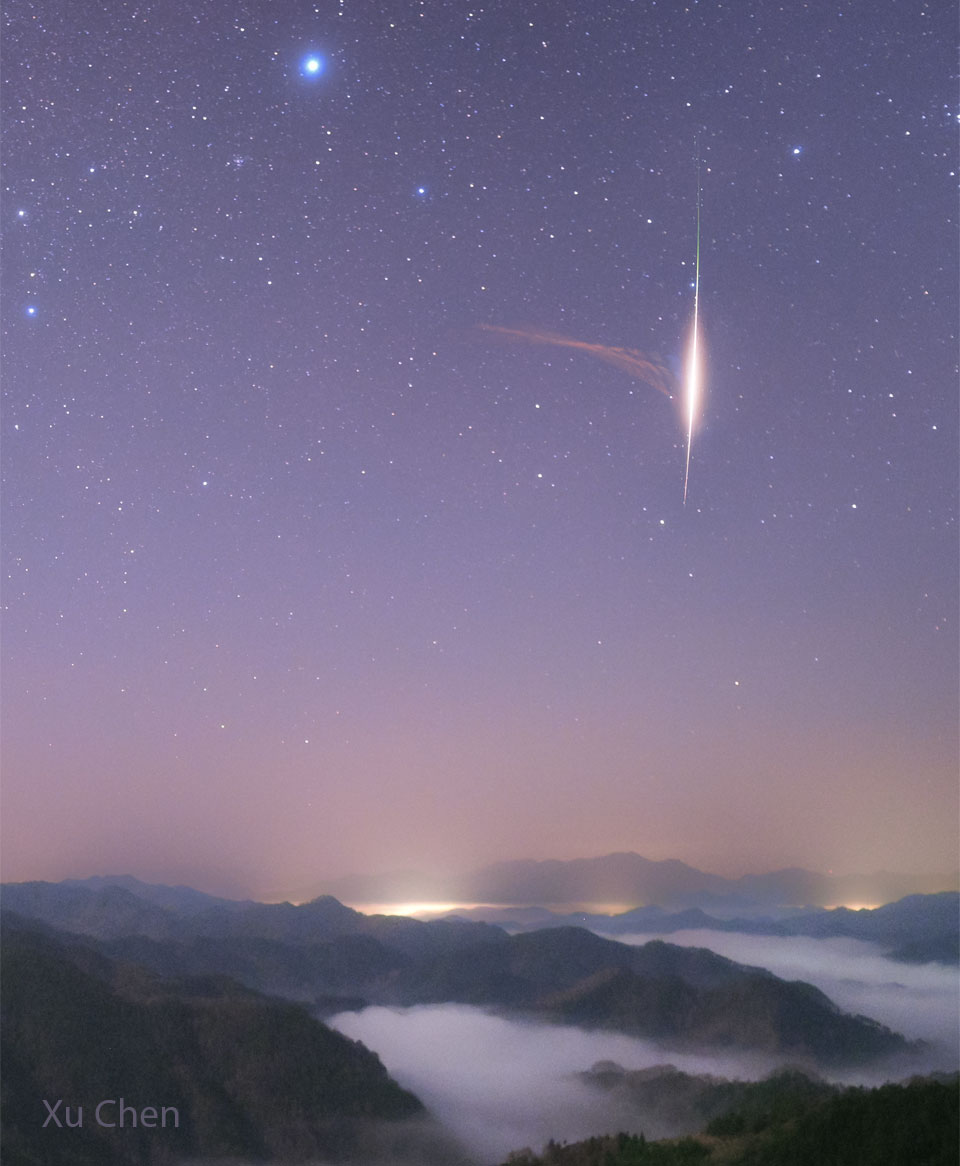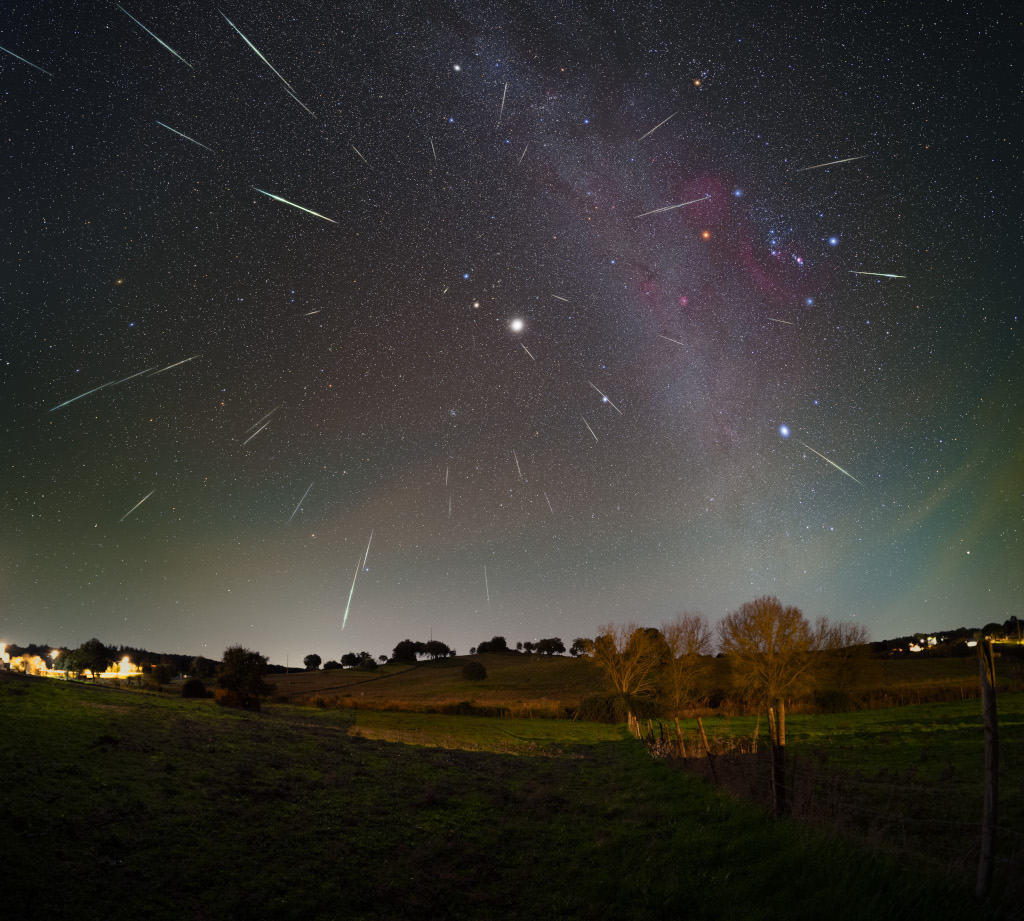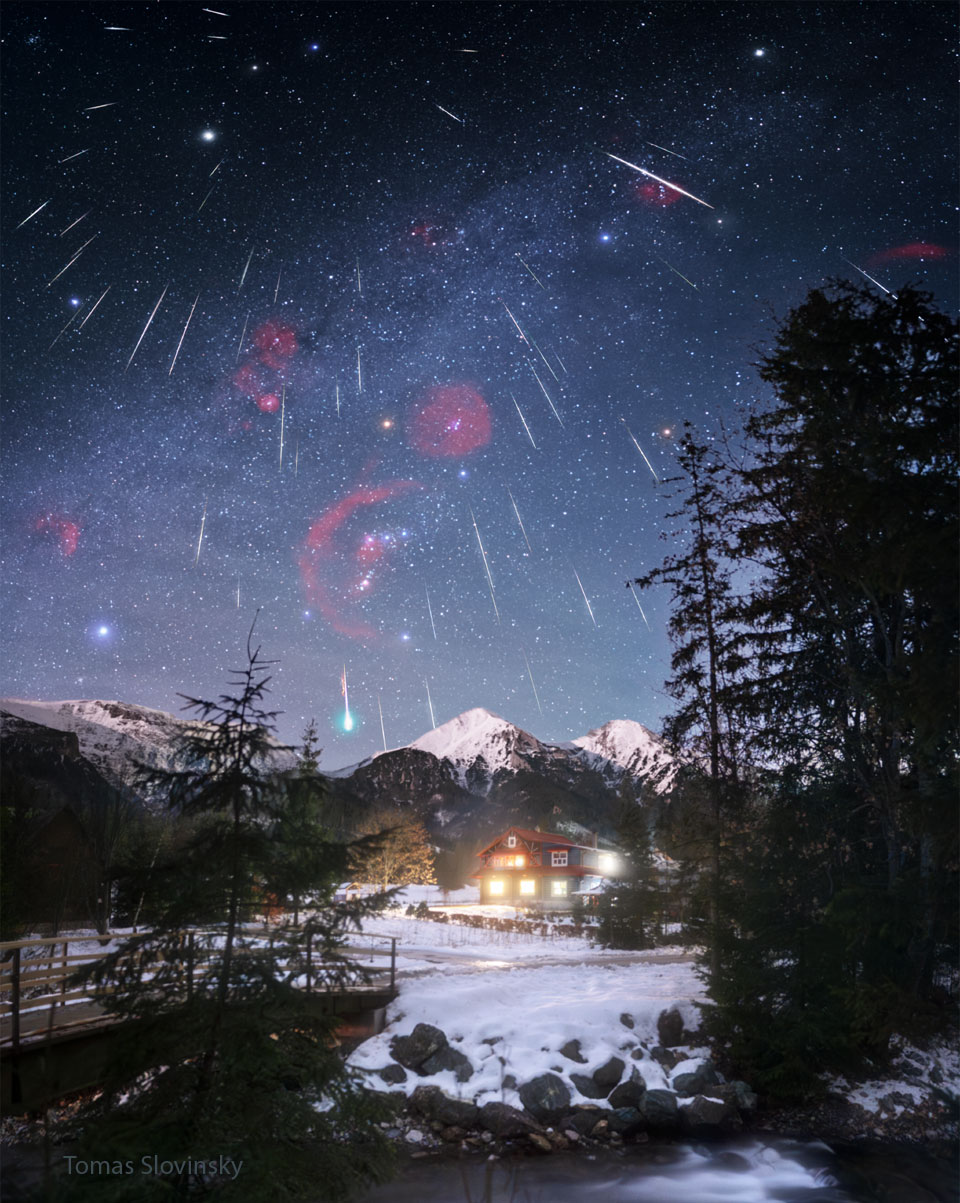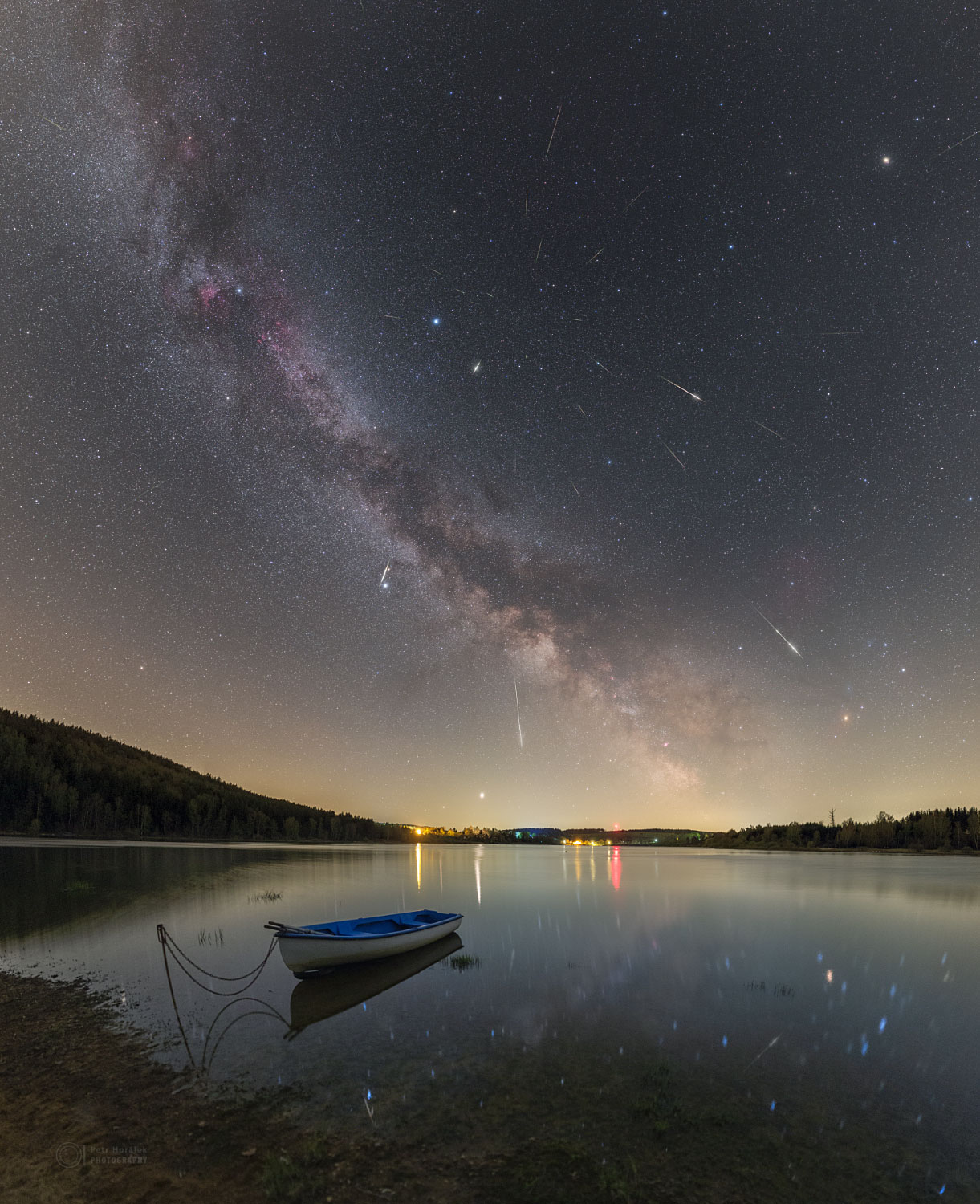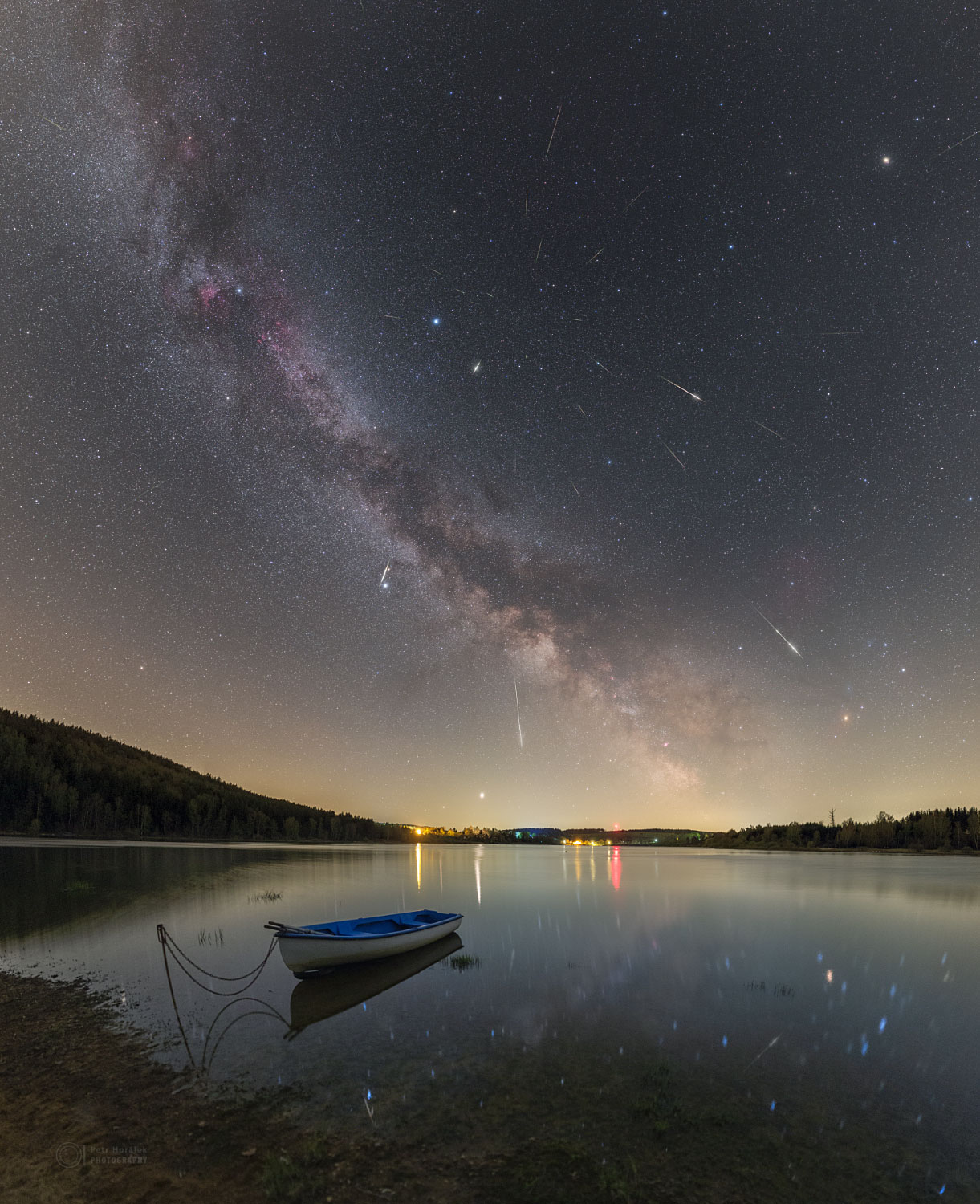
Where are all of these meteors coming from? In terms of direction on the sky, the pointed answer is the constellation of Small Harp (Lyra). That is why the famous meteor shower that peaks every April is known as the Lyrids -- the meteors all appear to came from a radiant toward Lyra. In terms of parent body, though, the sand-sized debris that makes up the Lyrid meteors come from Comet Thatcher. The comet follows a well-defined orbit around our Sun, and the part of the orbit that approaches Earth is superposed in front of Lyra. Therefore, when Earth crosses this orbit, the radiant point of falling debris appears in Lyra. Featured here, a composite image containing over 33 meteors (can you find them all?) from last month's Lyrid meteor shower shows several bright meteors that streaked over a shore of Seč Lake in the Czech Republic. Also visible are the bright stars Vega and Altair, the planet Jupiter, and the central band of our Milky Way Galaxy. Notable APOD Submissions: Lyrid Meteor Shower 2020
¿De dónde vienen todos estos meteores? En términos de dirección en el cielo, la respuesta precisa es la constelación de Lira (Lyra). Por eso, la famosa lluvia de meteoros que alcanza su máximo cada abril se conoce como los Lyridas — todos los meteores parecen provenir de un punto radiante hacia Lyra. En cuanto a su cuerpo parental, los fragmentos de tamaño de grano de arena que componen los meteores Lyridas provienen del cometa Thatcher. El cometa sigue una órbita bien definida alrededor de nuestro Sol, y la parte de la órbita que se acerca a la Tierra se superpone frente a Lyra. Por lo tanto, cuando la Tierra cruza esta órbita, el punto radiante de los fragmentos en caída aparece en Lyra. En la imagen destacada, una imagen compuesta que contiene más de 33 meteores (¿puedes encontrarlos todos?) de la lluvia de meteoros Lyridas del mes pasado muestra varios meteores brillantes que cruzaron el cielo sobre la orilla del lago Seč en la República Checa. También se ven las estrellas brillantes Vega y Altair, el planeta Júpiter y la banda central de nuestra galaxia, la Vía Láctea.