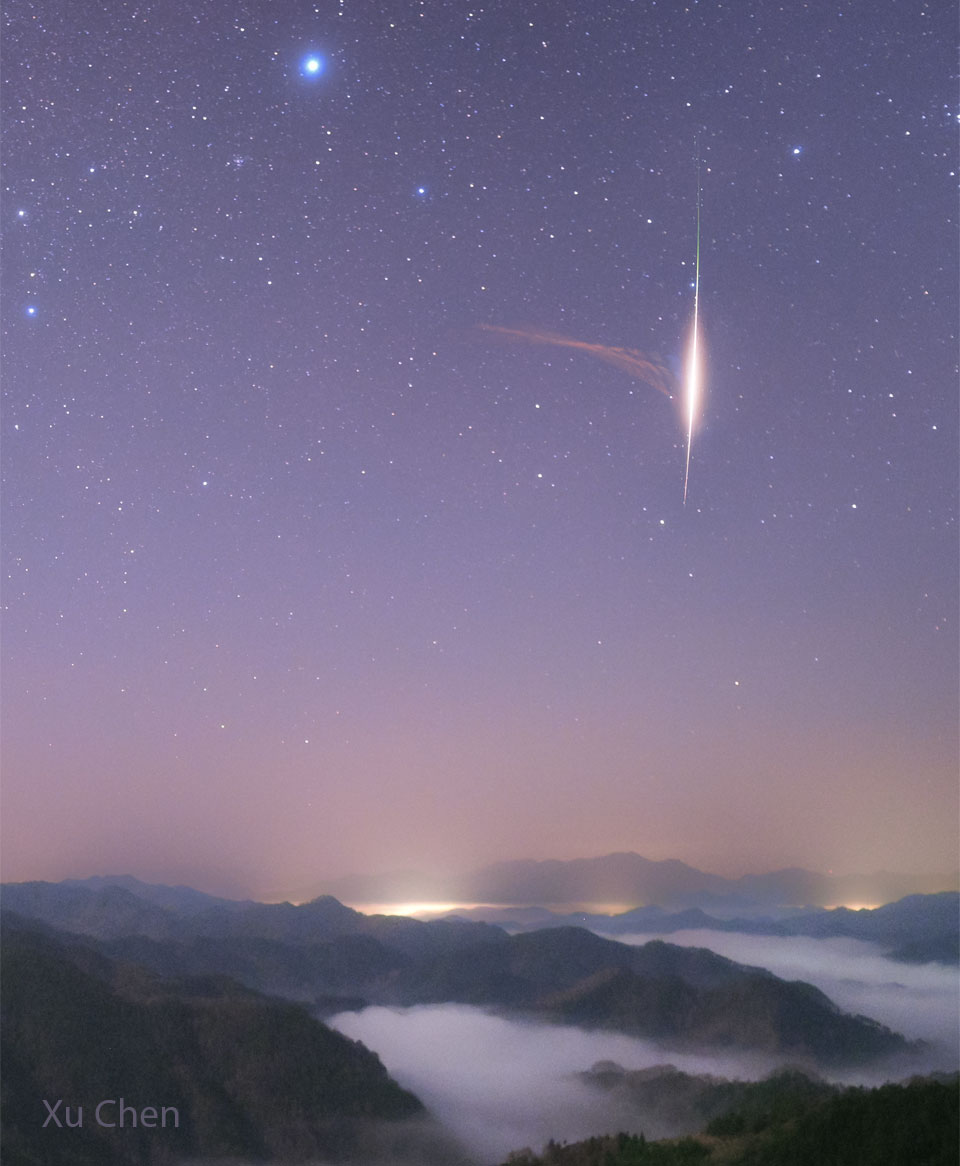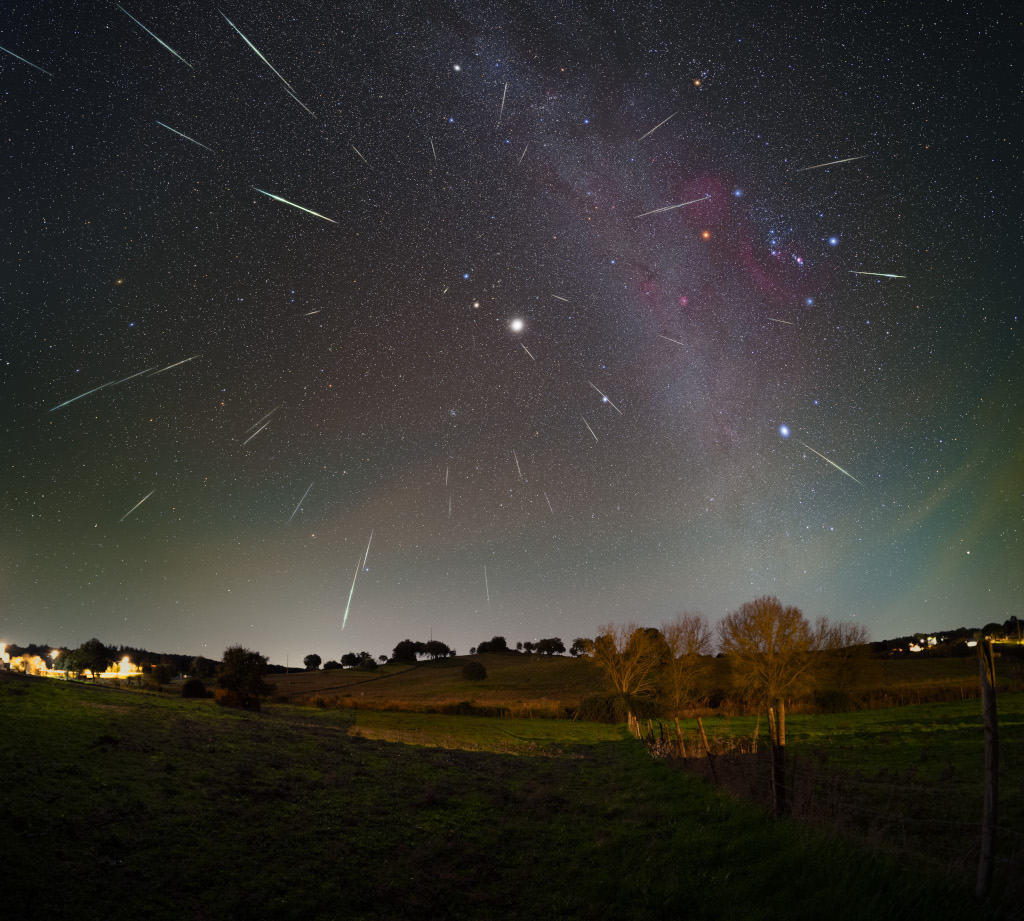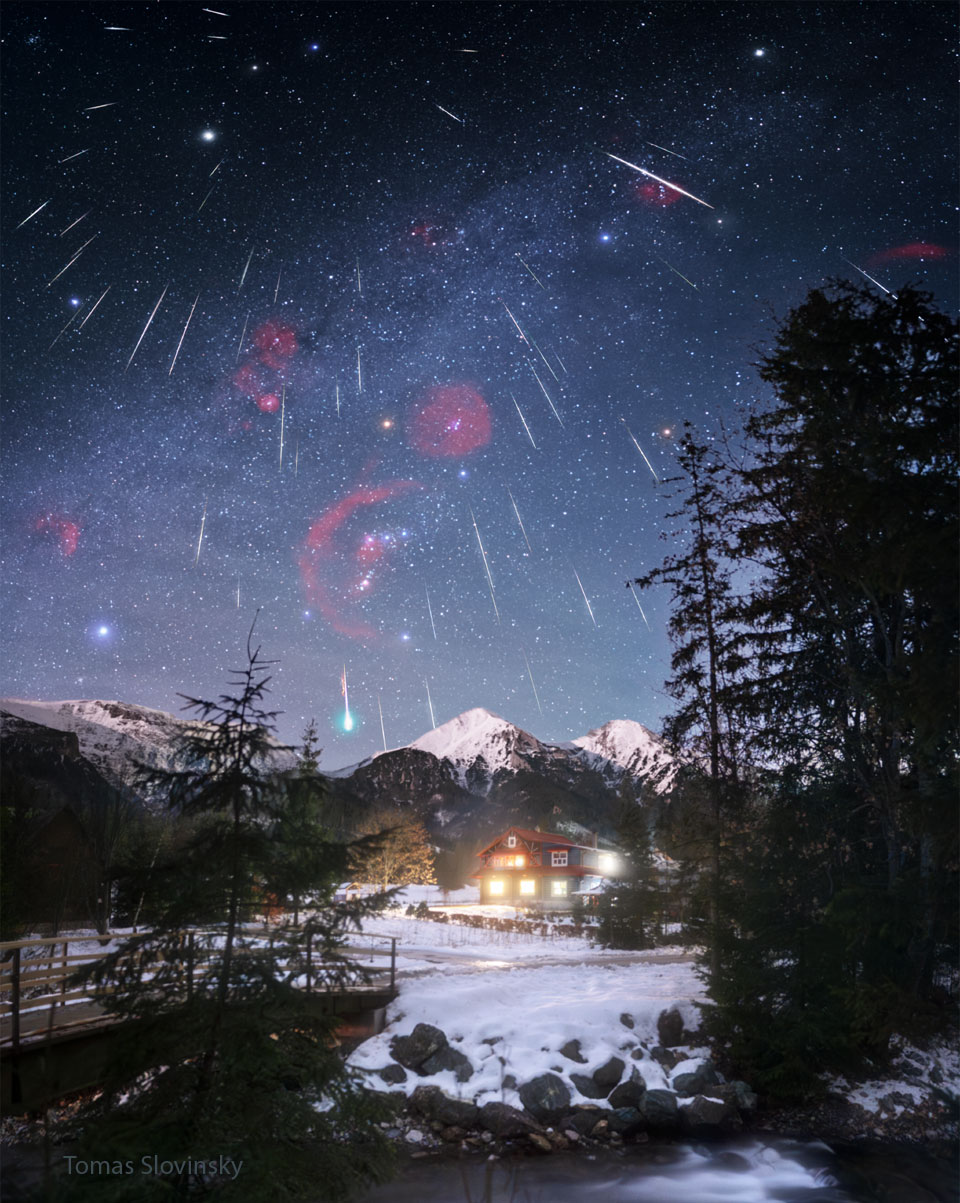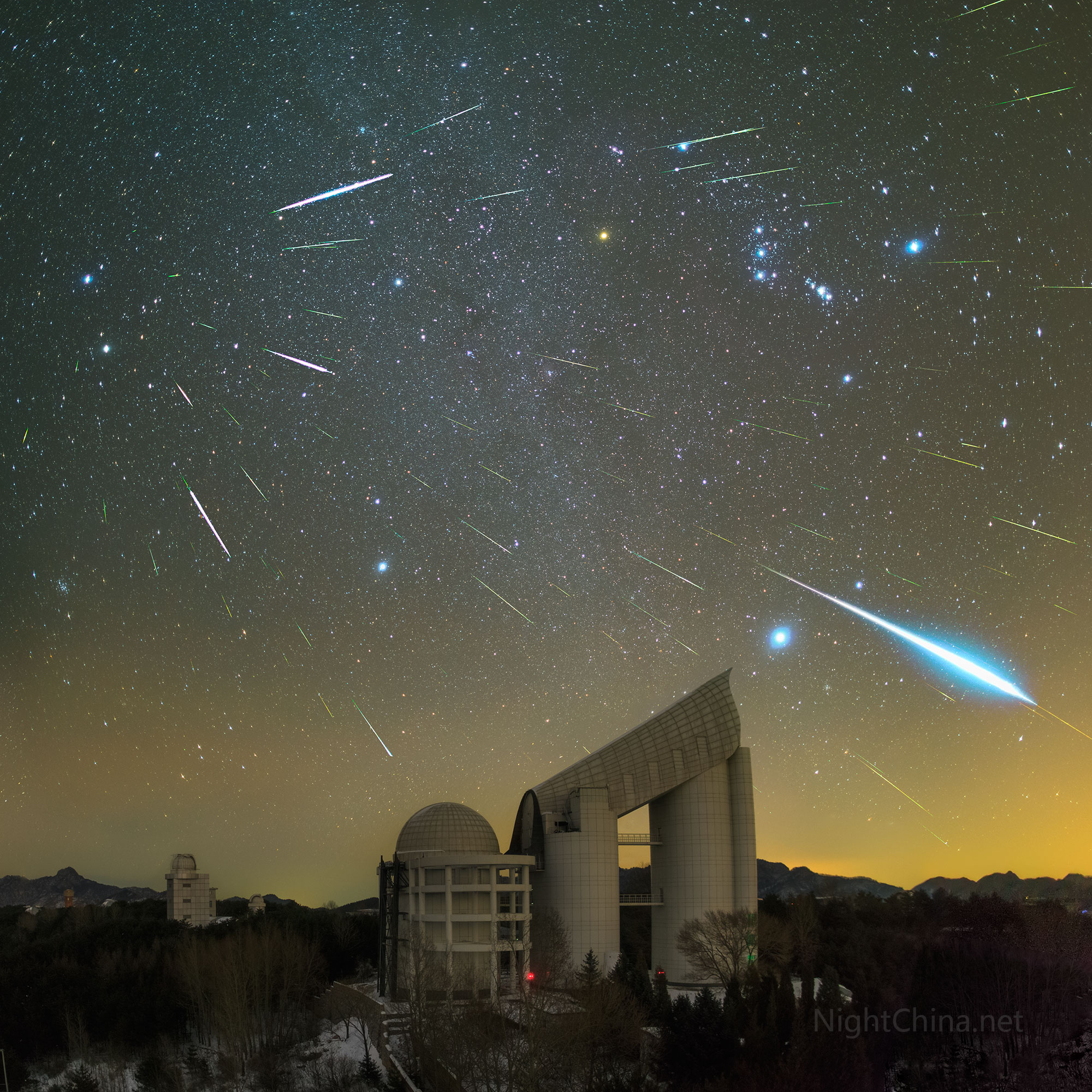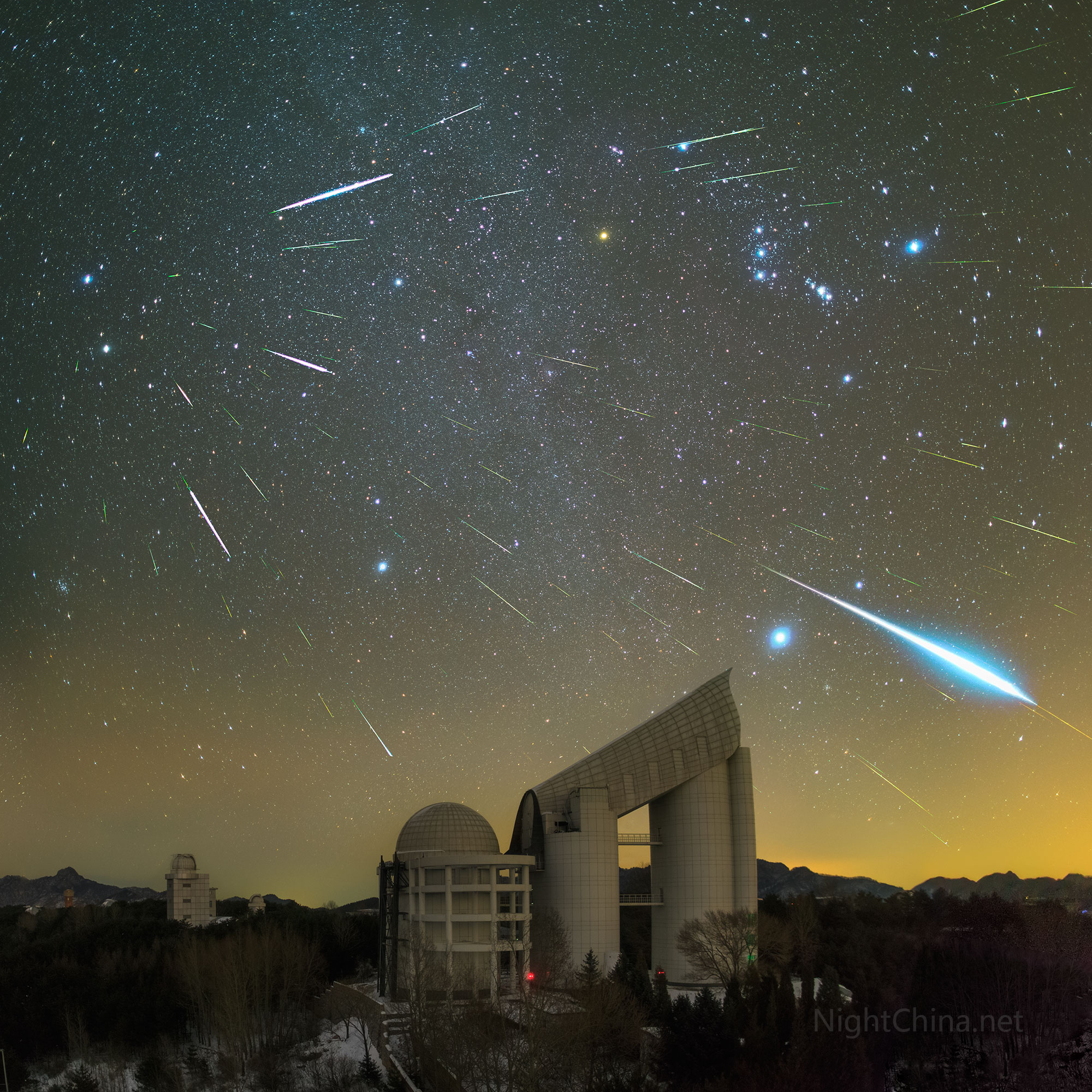
Where do Geminid meteors come from? In terms of location on the sky, as the featured image composite beautifully demonstrates, the sand-sized bits of rock that create the streaks of the Geminids meteor shower appear to flow out from the constellation of Gemini. In terms of parent body, Solar System trajectories point to the asteroid 3200 Phaethon -- but this results in a bit of a mystery since that unusual object appears mostly dormant. Perhaps, 3200 Phaethon undergoes greater dust-liberating events than we know. Over 50 meteors including a bright fireball were captured during the peak of the 2015 Geminids Meteor Shower streaking above Xinglong Observatory in China. The Geminids of December are one of the most predictable and active meteor showers. This year's Geminids peak tonight and should be particularly good because, in part, the nearly new Moon will only rise toward dawn and so not brighten the sky.
¿De dónde provienen los meteores Geminidas? En términos de ubicación en el cielo, como muestra bellamente la imagen compuesta, los granos de roca del tamaño de la arena que crean las estelas del aguacero de meteoros Geminidas parecen fluir desde la constelación de Géminis. En términos de cuerpo parental, las trayectorias del Sistema Solar apuntan al asteroide 3200 Fáeton, pero esto da lugar a un misterio, ya que ese objeto inusual parece estar principalmente inactivo. Quizás, 3200 Fáeton libere más partículas de polvo de lo que conocemos. Más de 50 meteores, incluyendo una brillante bola de fuego, fueron capturados durante el pico del aguacero de meteoros Geminidas de 2015, que se desplegaba sobre el Observatorio Xinglong en China. Los Geminidas de diciembre son uno de los aguaceros de meteoros más predecibles y activos. Este año, los Geminidas alcanzarán su pico esta noche y deberían ser particularmente buenos, en parte porque la Luna casi nueva solo se elevará hacia el amanecer y, por lo tanto, no aclarará el cielo.