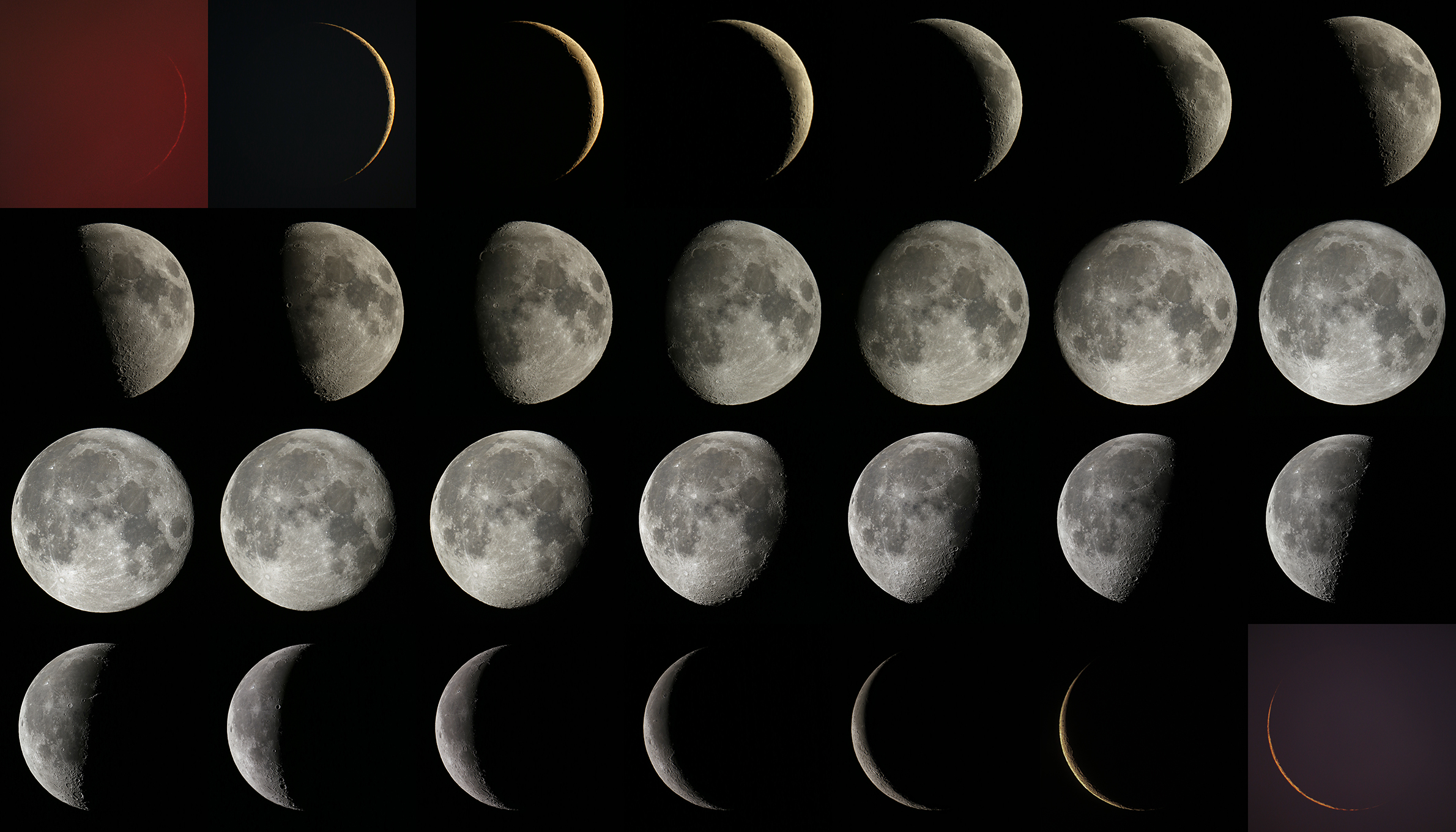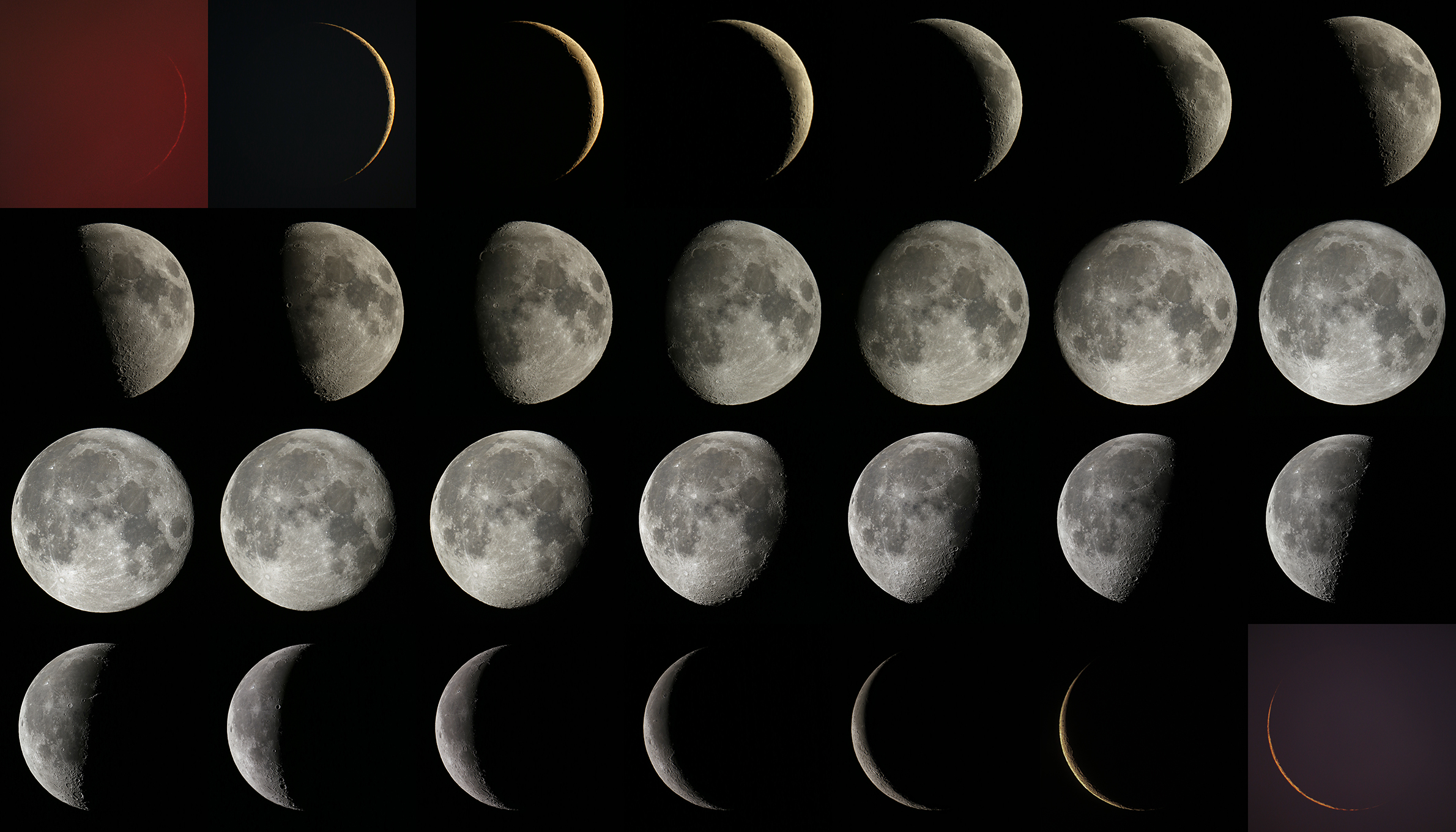
Observe the Moon every night and you'll see its visible sunlit portion gradually change. In phases progressing from New Moon to Full Moon to New Moon again, a lunar cycle or lunation is completed in about 29.5 days. Top left to bottom right, this 7x4 matrix of telescopic images captures the range of lunar phases for 28 consecutive nights, from the evening of July 29 to the morning of August 26, following an almost complete lunation. No image was taken 24 hours or so just after and just before New Moon, when the lunar phase is at best a narrow crescent, close to the Sun and really hard to see. Finding mostly clear Mediterranean skies required an occasional road trip to complete this lunar cycle project, imaging in early evening for the first half and late evening and early morning for the second half of the lunation. Since all the images are registered at the same scale you can use this matrix to track the change in the Moon's apparent size during the single lunation. For extra credit, find the lunar phase that occurred closest to perigee. Tonight: International Observe the Moon Night
Crédito: NASA, CGRO SSC Si observas la Luna cada noche, verás que la porción visible iluminada por el Sol cambia gradualmente. En fases que progresan desde la Luna Nueva hasta la Luna Llena y de vuelta a la Luna Nueva, un ciclo lunar o lunación se completa en aproximadamente 29.5 días. De la esquina superior izquierda a la inferior derecha, esta matriz de 7x4 de imágenes tomadas con telescopio captura el rango de fases lunares durante 28 noches consecutivas, desde la tarde del 29 de julio hasta la mañana del 26 de agosto, siguiendo una lunación casi completa. No se tomaron imágenes durante aproximadamente 24 horas después y antes de la Luna Nueva, cuando la fase lunar es como máximo un delgado creciente, cerca del Sol y realmente difícil de ver. Encontrar cielos mayormente despejados en el Mediterráneo requirió viajes ocasionales en carretera para completar este proyecto del ciclo lunar, tomando imágenes en la primera mitad por la tarde temprana y en la segunda mitad por la noche tardía y la madrugada. Dado que todas las imágenes están registradas a la misma escala, puedes usar esta matriz para seguir el cambio en el tamaño aparente de la Luna durante una sola lunación. Para crédito adicional, encuentra la fase lunar que ocurrió más cerca del perigeo.