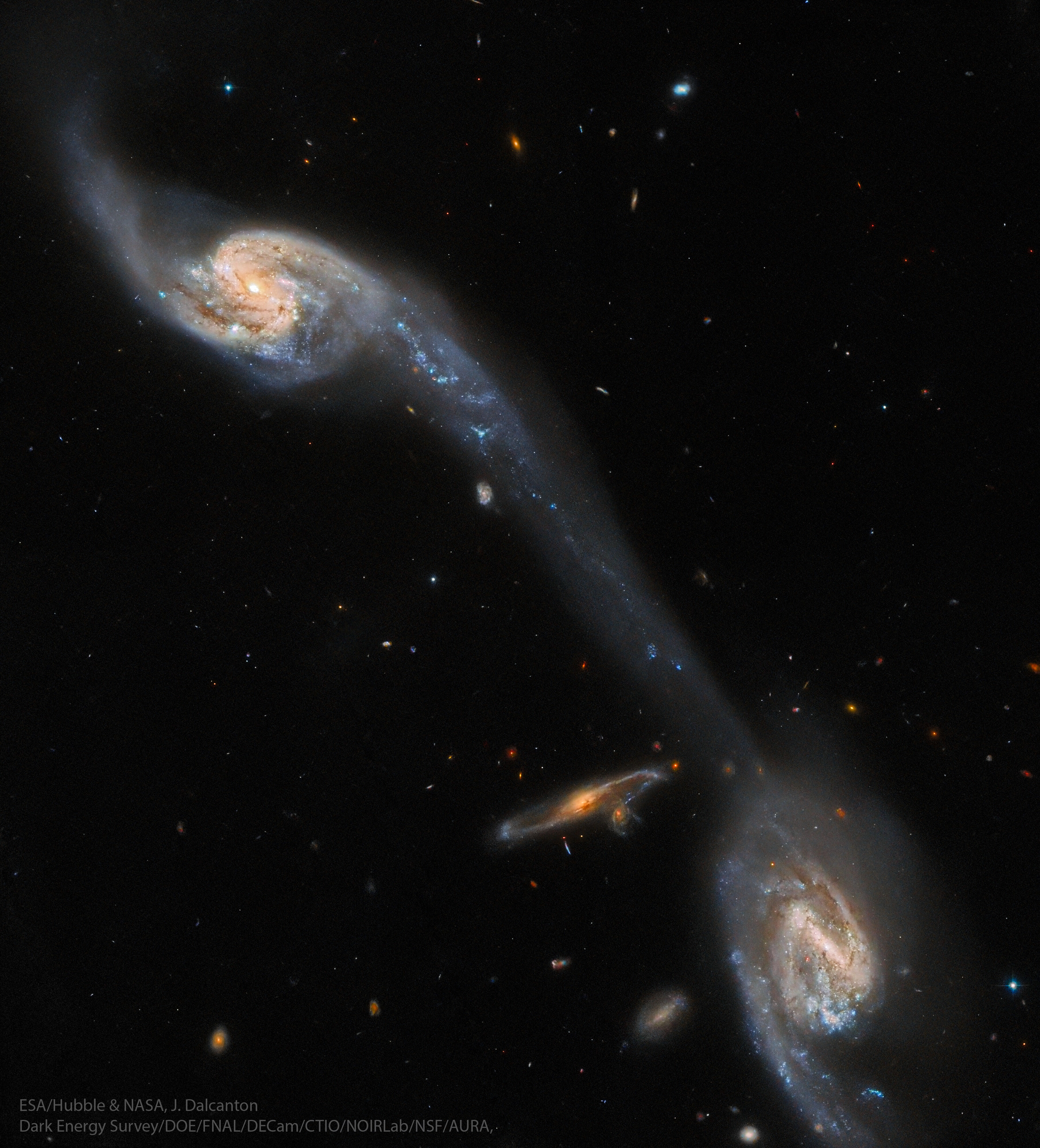
How many galaxies are interacting here? This grouping of galaxies is called the Wild Triplet, not only for the discoverer, but for the number of bright galaxies that appear. It had been assumed that all three galaxies, collectively cataloged as Arp 248, are interacting, but more recent investigations reveal that only the brightest two galaxies are sparring gravitationally: the big galaxies at the top and bottom. The spiral galaxy in the middle of the featured image by the Hubble Space Telescope is actually far in the distance, as is the galaxy just below it and all of the other numerous galaxies in the field. A striking result of these giants jousting is a tremendous bridge of stars, gas, and dust that stretches between them -- a bridge almost 200,000 light-years long. Light we see today from Wild's Triplet left about 200 million years ago, when dinosaurs roamed the Earth. In perhaps a billion years or so, the two interacting galaxies will merge to form a single large spiral galaxy. Lunar Eclipse of November 2022: Notable Submissions to APOD
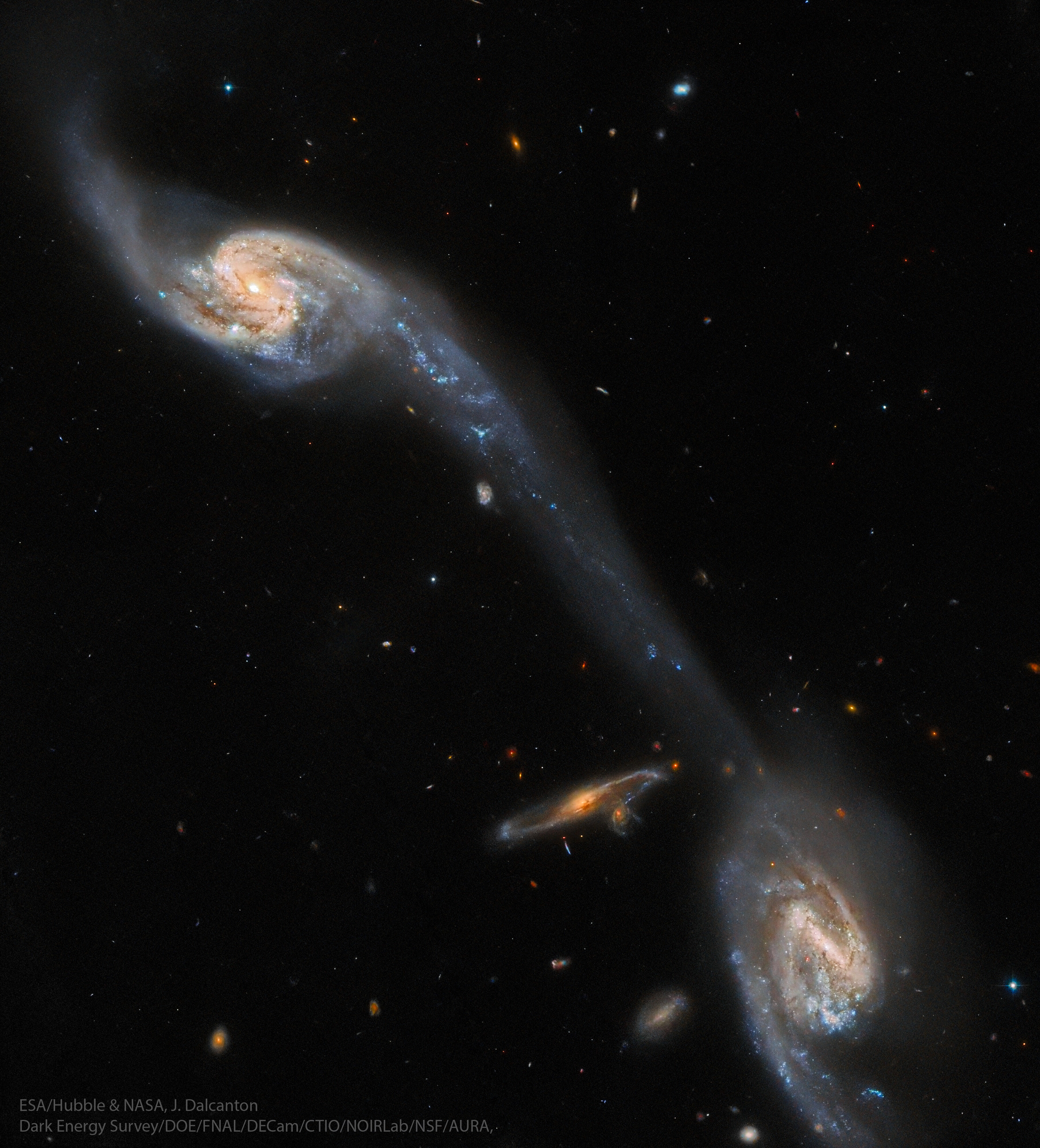
¿Cuántas galaxias están interactuando aquí? Este grupo de galaxias se llama el Triplete de Wild, no solo en honor al descubridor, sino también por el número de galaxias brillantes que aparecen. Se había supuesto que las tres galaxias, catalogadas colectivamente como Arp 248, estaban interactuando, pero investigaciones más recientes revelan que solo las dos galaxias más brillantes están en conflicto gravitacional: las grandes galaxias de arriba y abajo. La galaxia espiral en el centro de la imagen proporcionada por el Telescopio Espacial Hubble, en realidad está muy lejos, al igual que la galaxia justo debajo de ella y todas las otras galaxias numerosas en el campo. Un resultado sorprendente de esta lucha entre gigantes es un puente enorme de estrellas, gas y polvo que se extiende entre ellas — un puente de casi 200,000 años luz de largo. La luz que vemos hoy del Triplete de Wild salió hace aproximadamente 200 millones de años, cuando los dinosaurios paseaban por la Tierra. En quizás alrededor de mil millones de años, las dos galaxias en interacción se fusionarán para formar una única gran galaxia espiral.