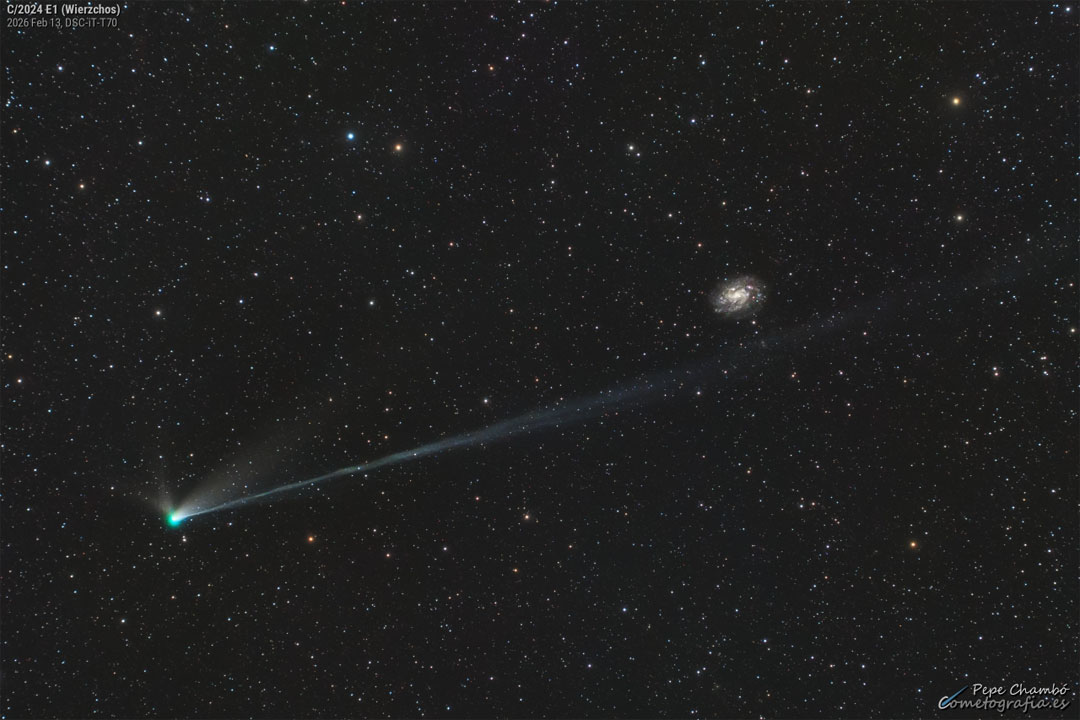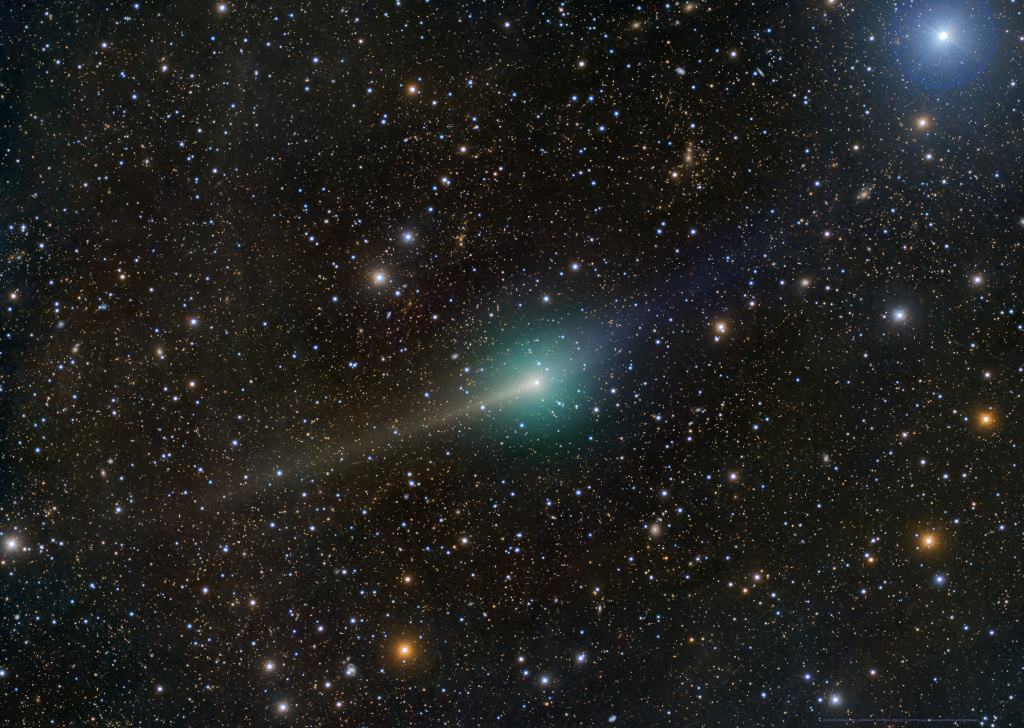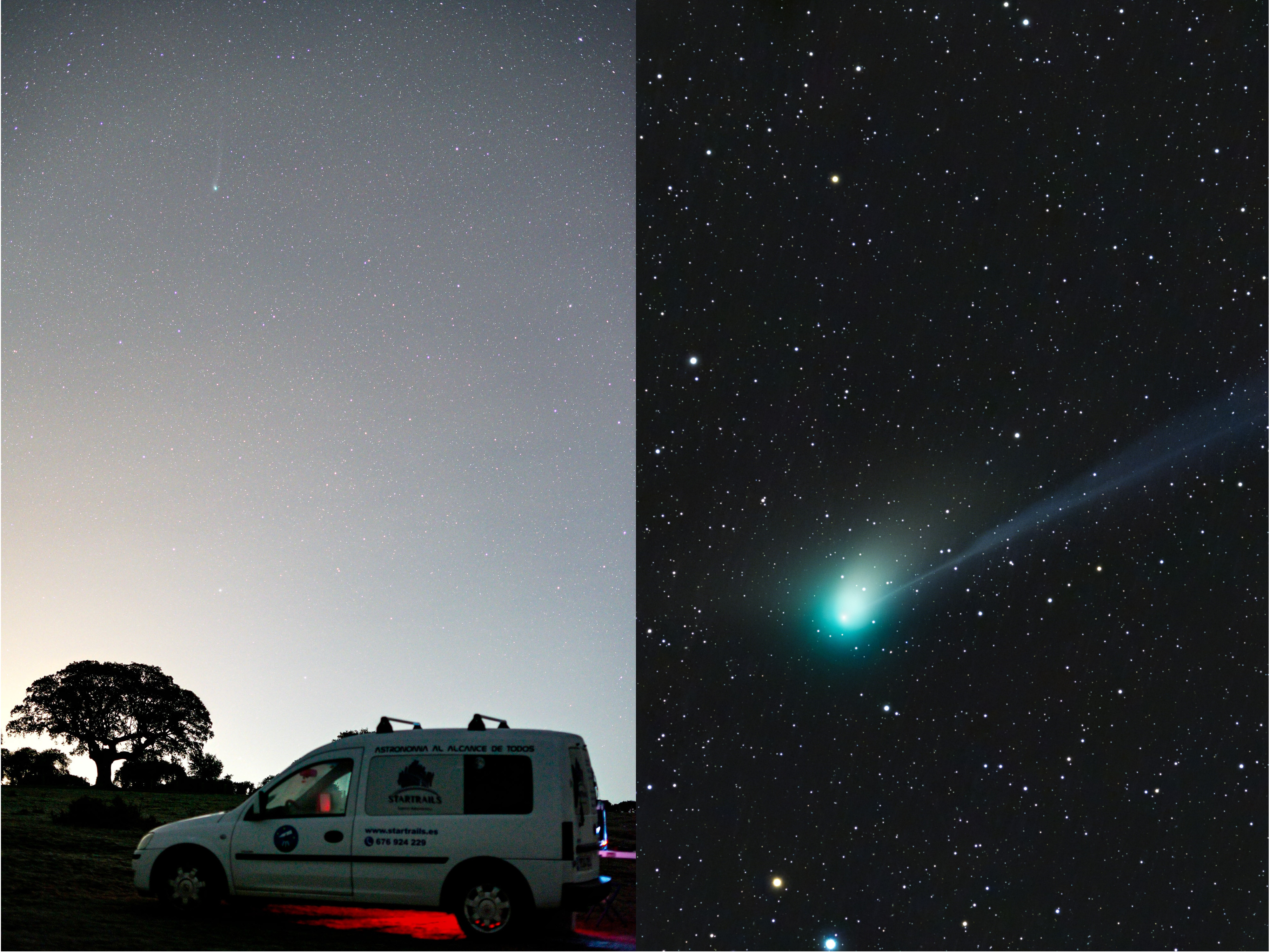
Comet C/2022E3 (ZTF) no longer requires a telescope for viewing. By January 19, it could just be seen with the naked eye in this rural sky with little light pollution from a location about 20 kilometers from Salamanca, Spain. Still, telescopic images are needed to show any hint of the comet's pretty green coma, stubby whitish dust tail, and long ion tail. Its faint ion tail has been buffeted by recent solar activity. This visitor from the distant Oort cloud rounded the Sun on January 12. and is now sweeping through stars near the northern boundary of the constellation Bootes. Outward bound but still growing brighter, Comet ZTF makes its closest approach on February 2, coming to within about 2.4 light-minutes of our fair planet.
El cometa C/2022 E3 (ZTF) ya no requiere de un telescopio para ser observado. El 19 de enero, ya era visible a simple vista en este cielo rural con poca contaminación lumínica, desde una ubicación a unos 20 kilómetros de Salamanca, España. Sin embargo, se necesitan imágenes telescópicas para mostrar cualquier indicio de la bonita coma verde del cometa, su cola de polvo blanquecina y corta, y su larga cola de iones. Su tenue cola de iones ha sido afectada por la reciente actividad solar. Este visitante proveniente de la lejana nube de Oort pasó cerca del Sol el 12 de enero y ahora atraviesa las estrellas cerca del límite norte de la constelación de Bootes. Aunque se aleja de nosotros, sigue aumentando su brillo, y el cometa ZTF alcanzará su punto más cercano el 2 de febrero, acercándose a unos 2,4 minutos luz de nuestro planeta.