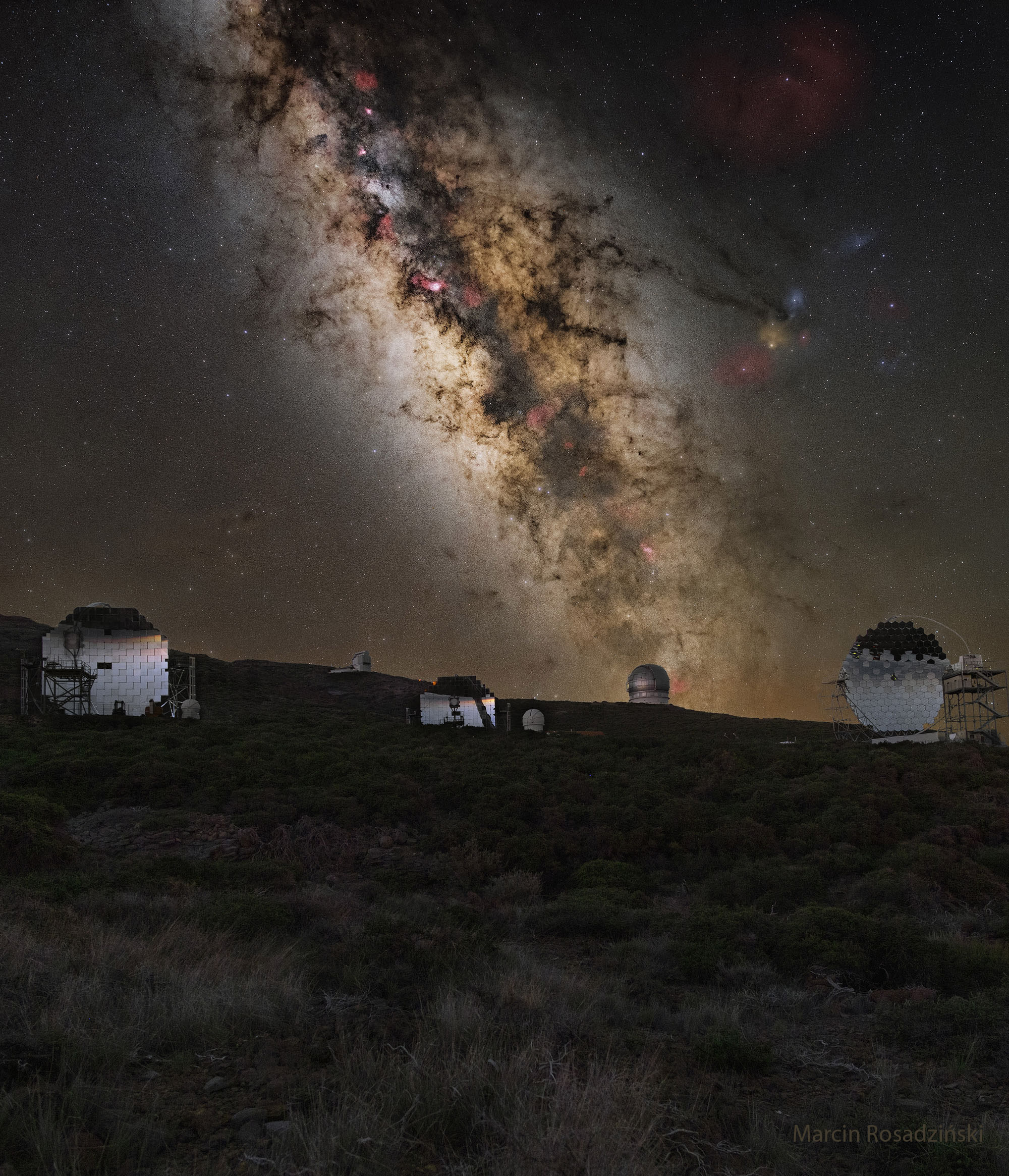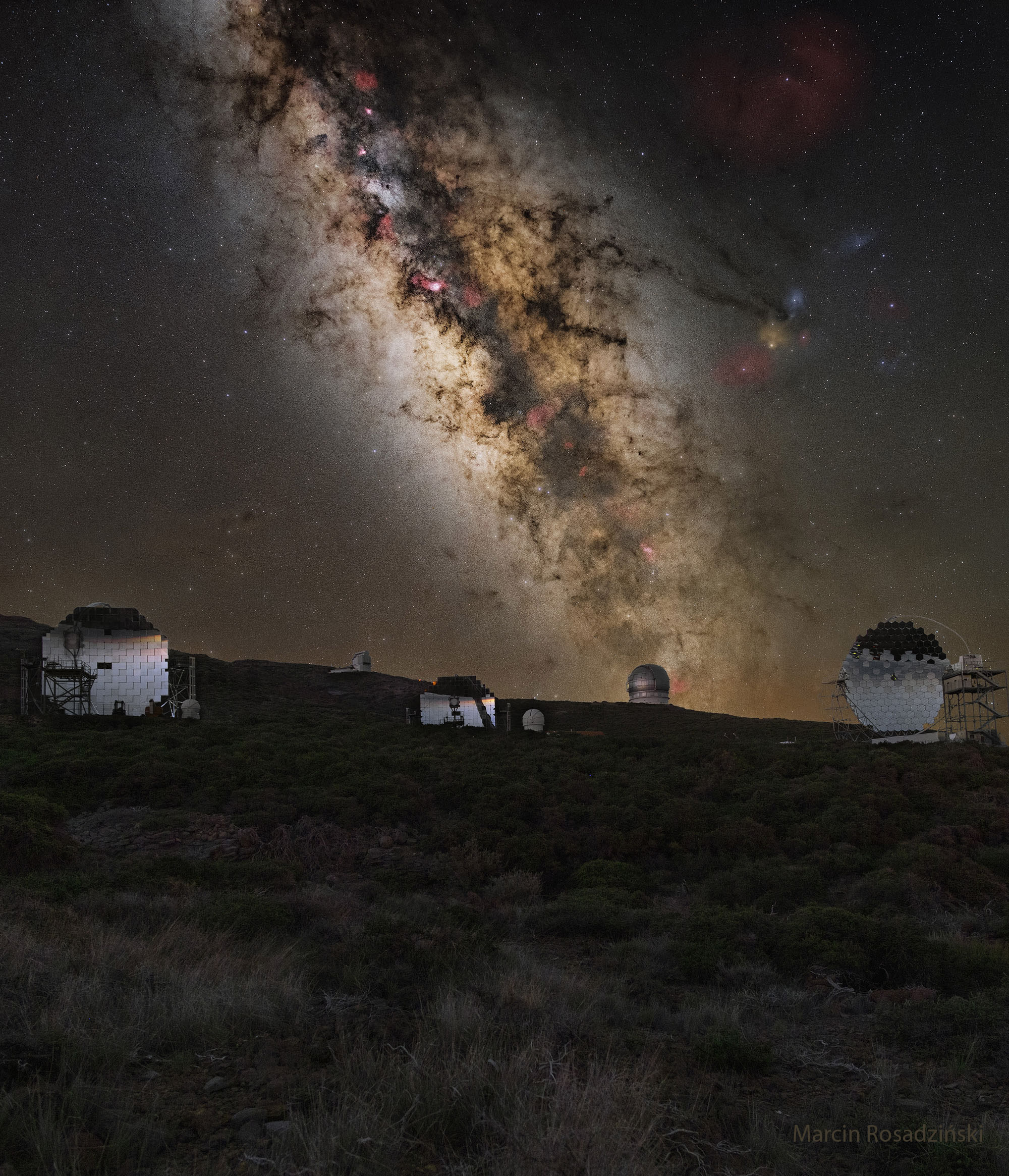
What's happening in the night sky? To help find out, telescopes all over the globe will be pointing into deep space. Investigations will include trying to understand the early universe, finding and tracking Earth-menacing asteroids, searching for planets that might contain extra-terrestrial life, and monitoring stars to help better understand our Sun. The featured composite includes foreground and background images taken in April from a mountaintop on La Palma island in the Canary Islands of Spain. Pictured, several telescopes from the Roque de los Muchachos Observatory are shown in front of a dark night sky. Telescopes in the foreground include, left to right, Magic 1, Galileo, Magic 2, Gran Telescopio Canarias, and LST. Sky highlights in the background include the central band of our Milky Way Galaxy, the constellations of Sagittarius, Ophiuchus and Scorpius, the red-glowing Eagle and Lagoon Nebulas, and the stars Alrami and Antares. Due to observatories like this, humanity has understood more about our night sky in the past 100 years than ever before in all of human history.
Crédito: NASA, APOD ¿Qué está sucediendo en el cielo nocturno? Para ayudar a descubrirlo, telescopios de todo el mundo apuntarán al espacio profundo. Las investigaciones incluirán tratar de comprender el universo primitivo, encontrar y rastrear asteroides que representan una amenaza para la Tierra, buscar planetas que podrían albergar vida extraterrestre, y monitorear estrellas para comprender mejor nuestro Sol. La imagen compuesta destacada incluye imágenes de primer plano y de fondo tomadas en abril desde una montaña en la isla de La Palma, en las Islas Canarias de España. En la imagen se muestran varios telescopios del Observatorio del Roque de los Muchachos frente a un cielo nocturno oscuro. Los telescopios en primer plano, de izquierda a derecha, son Magic 1, Galileo, Magic 2, Gran Telescopio Canarias y LST. Destacando en el fondo del cielo se encuentran la banda central de nuestra Galaxia Vía Láctea, las constelaciones de Sagitario, Ofiuco y Escorpión, las nebulosas Eagle y Lagoon que brillan con un color rojizo, y las estrellas Alrami y Antares. Gracias a observatorios como este, la humanidad ha comprendido más sobre nuestro cielo nocturno en los últimos 100 años que en toda la historia previa de la humanidad.