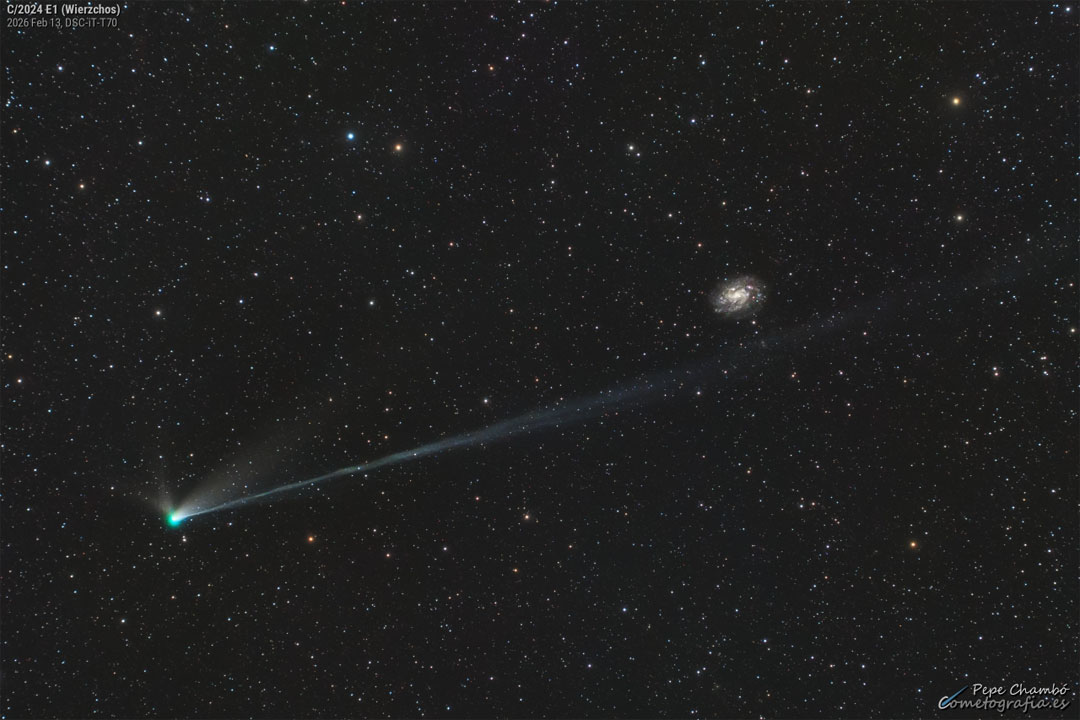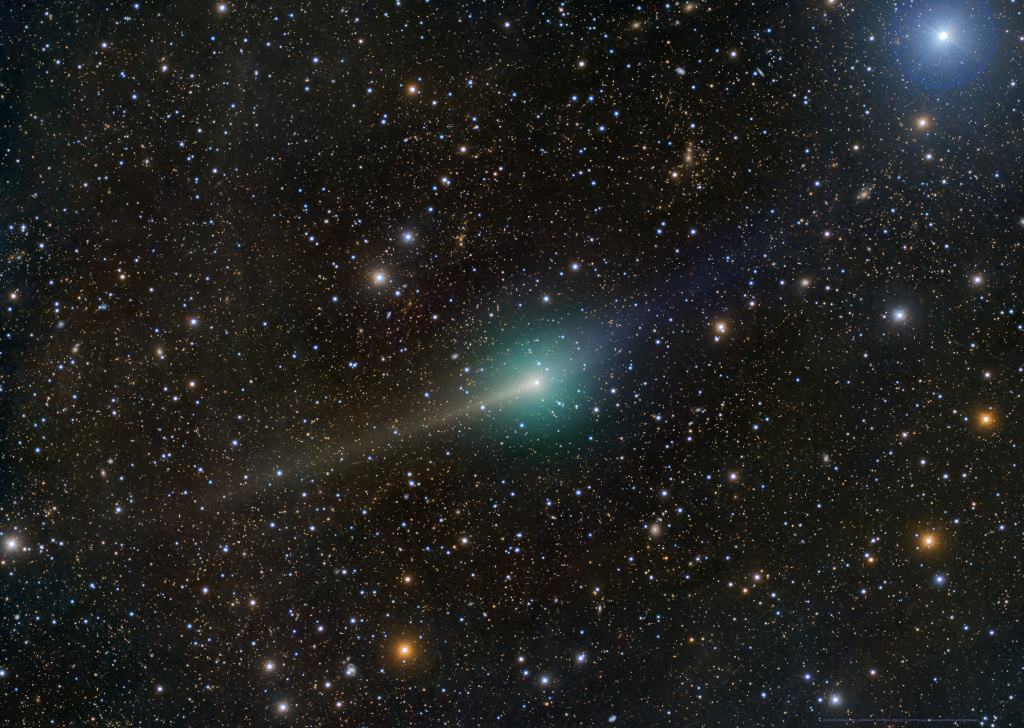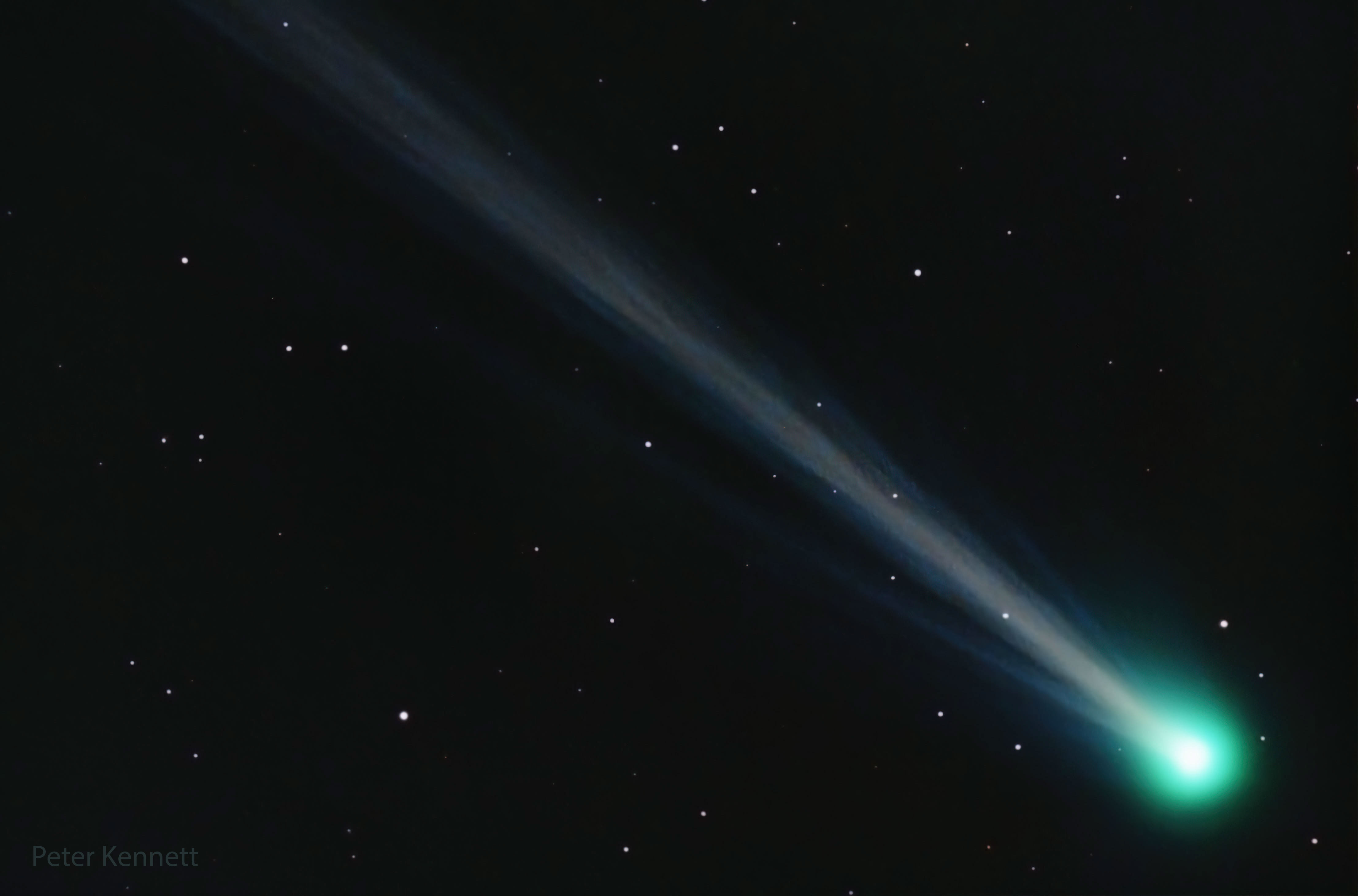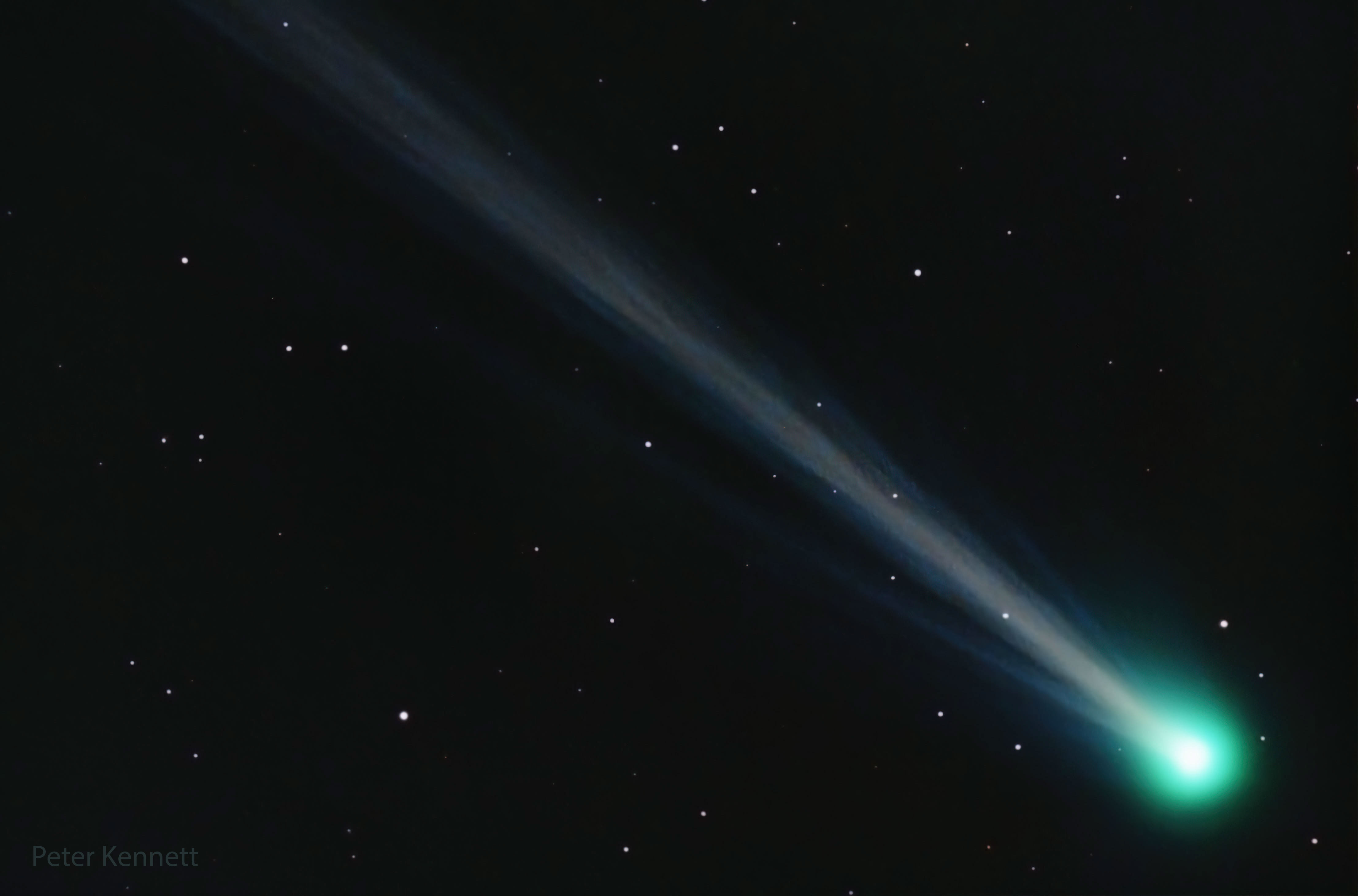
Comet Nishimura is growing. More precisely, the tails C/2023 P1 (Nishimura) are growing as it nears the Sun. Discovered only last month, the comet is already near naked eye brightness as it now moves inside the Earth's orbit. The comet will be nearest the Earth next week, but nearest the Sun the week after -- on September 17. Speculation holds that expelled ice and dust from Comet Nishimura's last visit to the inner Solar System may have created the Sigma Hydrids meteor shower which peaks yearly in December. If so, then this meteor shower may become more active, refreshed with new comet debris. Pictured, Comet Nishimura was captured from Edgewood, New Mexico, USA four nights ago, showing a long ion tail structured by interactions with the Sun's wind. Look for this comet near your eastern horizon just before sunrise for the next few mornings, but very near your western horizon just after sunset next week -- as its coma continues to brighten and its tails continue to grow. Gallery: Selected Comet Nishimura images submitted to APOD
El cometa Nishimura está creciendo. Más precisamente, sus colas C/2023 P1 (Nishimura) están creciendo a medida que se acerca al Sol. Descubierto apenas el mes pasado, el cometa ya está cerca de la magnitud visible a simple vista, ya que ahora se mueve dentro de la órbita terrestre. El cometa estará más cerca de la Tierra la próxima semana, pero más cerca del Sol la semana siguiente, el 17 de septiembre. Se especula que el hielo y el polvo expulsados por el cometa Nishimura en su última visita al sistema solar interior podrían haber creado la lluvia de meteoros Sigma Hydrids, que alcanza su máximo anual en diciembre. Si es así, entonces esta lluvia de meteoros podría volverse más activa, renovada con nuevos restos del cometa. En la imagen, el cometa Nishimura fue capturado desde Edgewood, Nuevo México, EE. UU., hace cuatro noches, mostrando una larga cola iónica estructurada por interacciones con el viento solar. Busque este cometa cerca de su horizonte oriental justo antes del amanecer durante las próximas mañanas, pero muy cerca de su horizonte occidental justo después del atardecer la próxima semana, a medida que su coma continúe brillando y sus colas sigan creciendo.