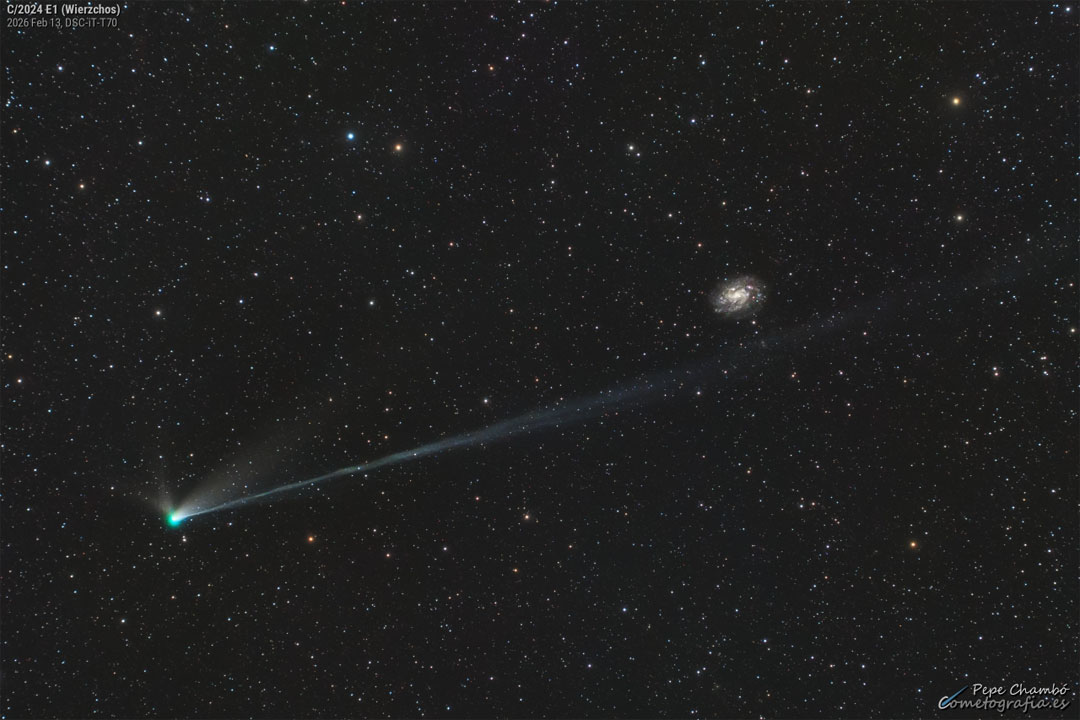
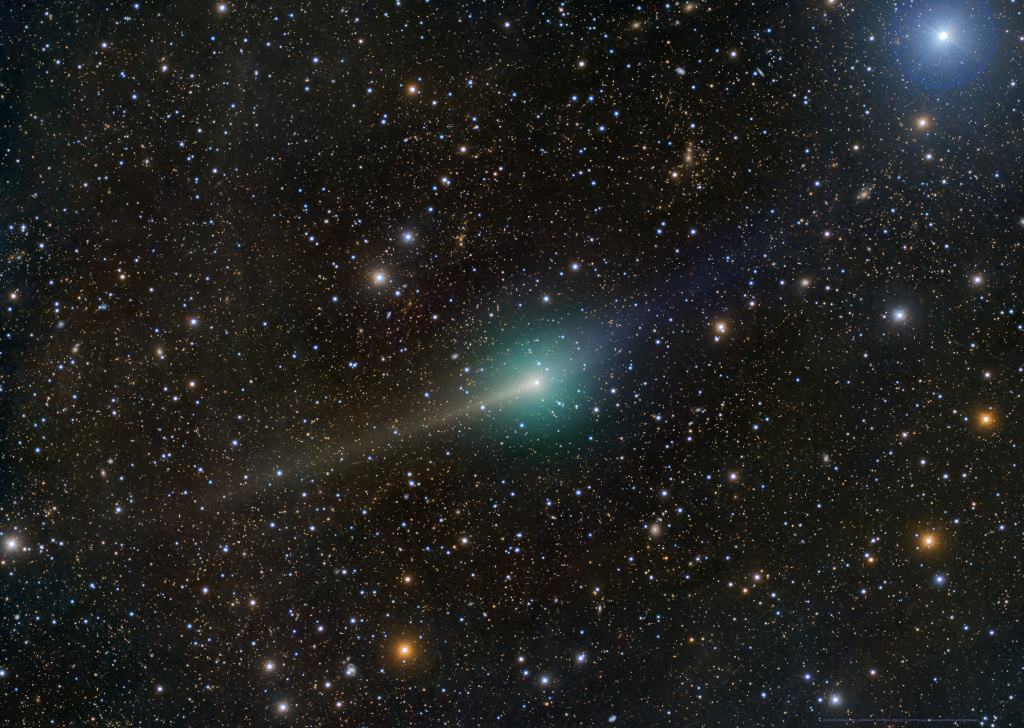
How bright and strange will the tails of Comet Tsuchinshan-ATLAS become? The comet has brightened dramatically over the few weeks as it passed its closest to the Sun and, just three days ago, passed its closest to the Earth. C/2023 A3 (Tsuchinshan–ATLAS) became of the brightest comets of the past century over the past few days, but was unfortunately hard to see because it was so nearly superposed on the Sun. As the comet appears to move away from the Sun, it is becoming a remarkable sight -- but may soon begin to fade. The featured animated video shows how the comet's tails have developed, as viewed from Earth, and gives one prediction about how they might further develop. As shown in the video, heavier parts of the dust tail that trails the comet have begun to appear to point in nearly the opposite direction from lighter parts of the dust tail as well as the comet's ion tail, the blue tail that is pushed directly out from the Sun by the solar wind. Growing Gallery: Comet Tsuchinsan-ATLAS in 2024
¿Qué tan brillante y extraña se volverán las colas del cometa Tsuchinshan-ATLAS? El cometa ha brillado dramáticamente durante las últimas semanas a medida que pasaba por su punto más cercano al Sol y, hace apenas tres días, alcanzaba su punto más cercano a la Tierra. C/2023 A3 (Tsuchinshan–ATLAS) se convirtió en uno de los cometas más brillantes del siglo pasado en los últimos días, pero fue difícil de observar debido a que estaba casi superpuesto al Sol. A medida que el cometa parece alejarse del Sol, se está convirtiendo en un espectáculo notable, aunque podría comenzar a debilitarse pronto. La animación incluida en esta publicación muestra cómo se han desarrollado las colas del cometa, vistas desde la Tierra, y ofrece una predicción sobre cómo podrían seguir evolucionando. Como se muestra en el video, las partes más pesadas de la cola de polvo que sigue al cometa comienzan a apuntar en dirección casi opuesta a las partes más ligeras de la cola de polvo, así como a la cola iónica del cometa, la cola azul que es empujada directamente hacia afuera del Sol por el viento solar.