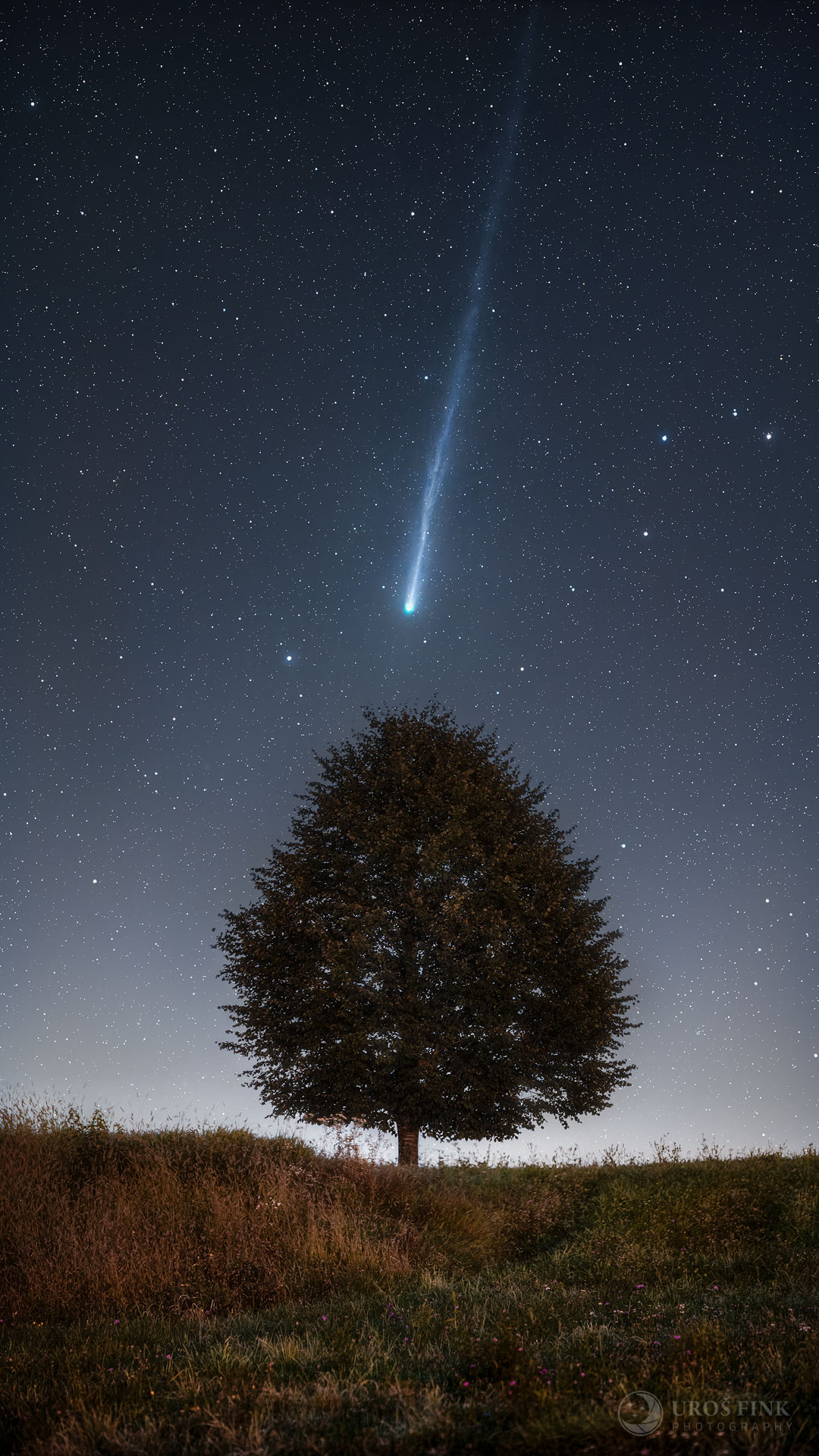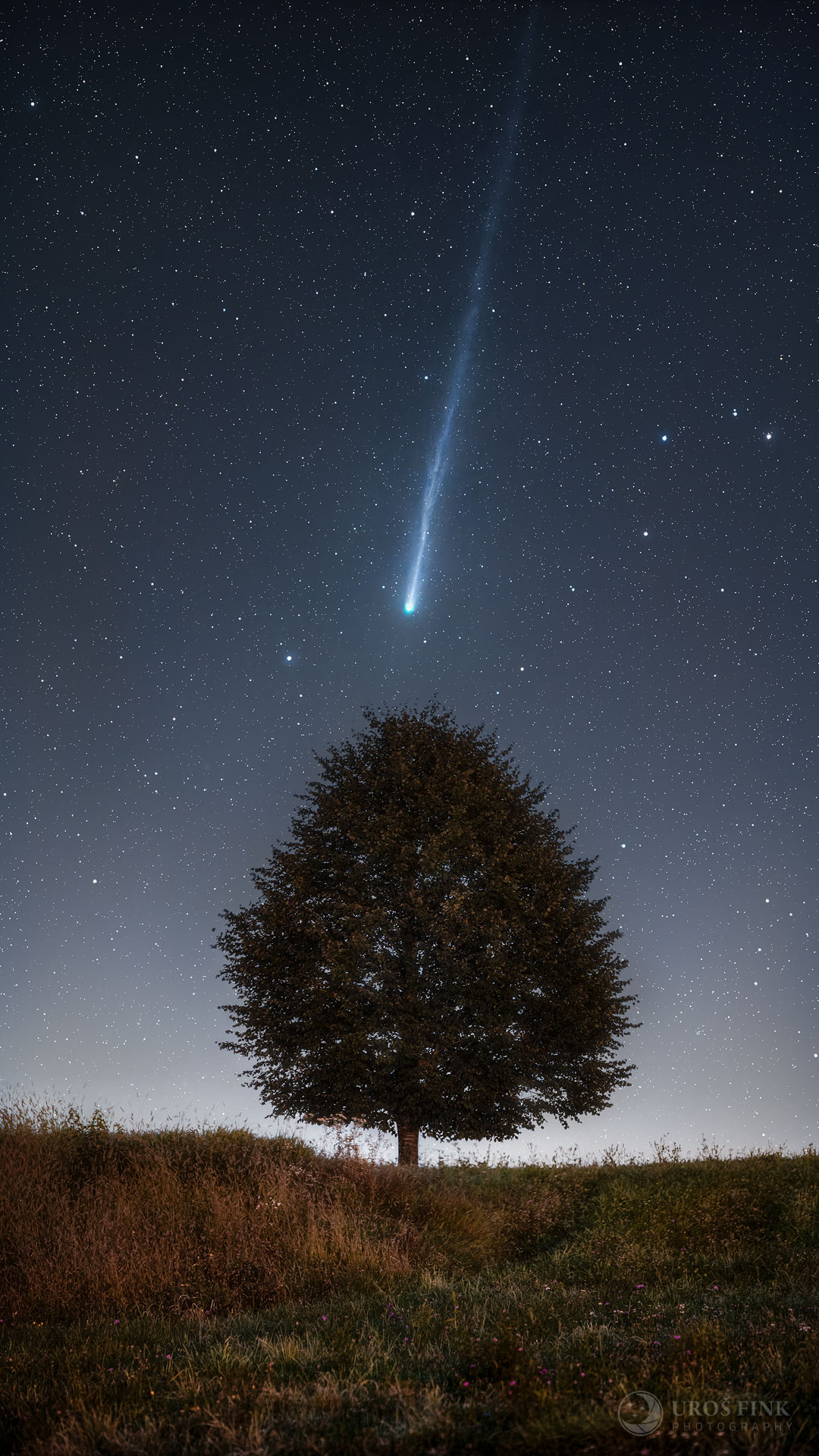
The tree is not in danger. That's because the comet pictured just above it, Comet C/2025 A6 (Lemmon), is far in the distance, well away from the Earth. Comet Lemmon now continues to brighten as it arcs through the inner Solar System, even though it has passed its nearest to the Sun -- because it is now approaching the Earth. The comet will likely appear brightest when it is at its closest to the Earth next week, then closing to about half the Earth-Sun distance. Comet Lemmon may then be visible to the unaided eye, but it is more likely to be imaged by a camera phone -- if you know where to look. Comet Lemmon, previously best visible in the morning, is now also visible in the evening sky for northern observers: look above the western horizon just after sunset. The featured image, centered on an unsuspecting European beech tree, was taken in Slovenia about ten days ago.
El árbol no corre peligro. Eso se debe a que el cometa que aparece justo encima de él, el cometa C/2025 A6 (Lemmon), está muy lejos, bien alejado de la Tierra. El cometa Lemmon continúa aumentando de brillo a medida que describe un arco a través del sistema solar interior, aunque ya pasó su punto más cercano al Sol — porque ahora se está acercando a la Tierra. El cometa probablemente aparezca más brillante cuando esté en su punto más cercano a la Tierra la próxima semana, momento en el que se acercará a la mitad de la distancia Tierra-Sol. El cometa Lemmon podría entonces ser visible a simple vista, pero es más probable que sea fotografiado con una cámara de teléfono — si sabes dónde mirar. El cometa Lemmon, que anteriormente era más visible por la mañana, ahora también es visible en el cielo de la tarde para los observadores del hemisferio norte: busquen por encima del horizonte occidental justo después de la puesta de sol. La imagen destacada, centrada en un incauto árbol de roble europeo, fue tomada en Eslovenia hace aproximadamente diez días.