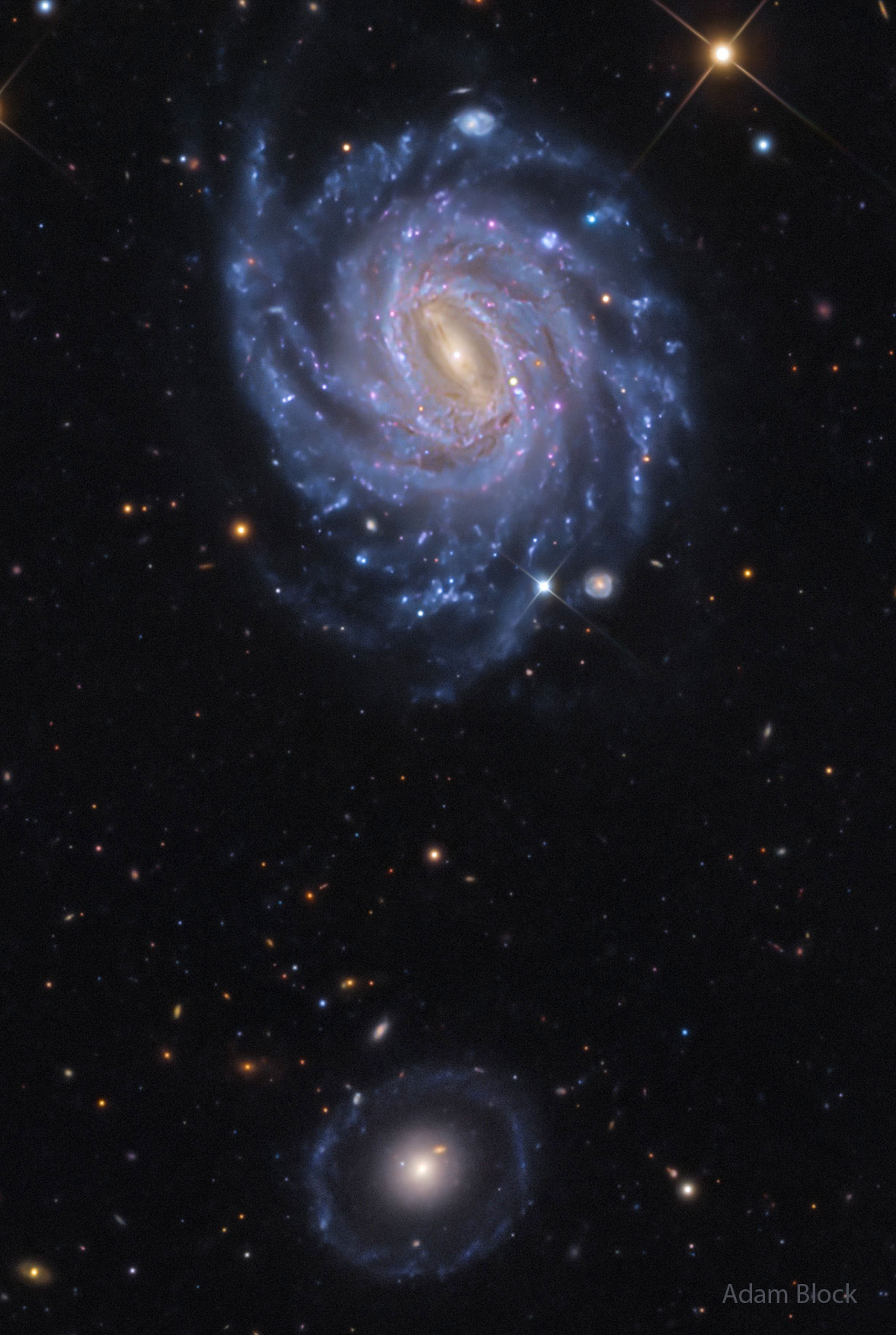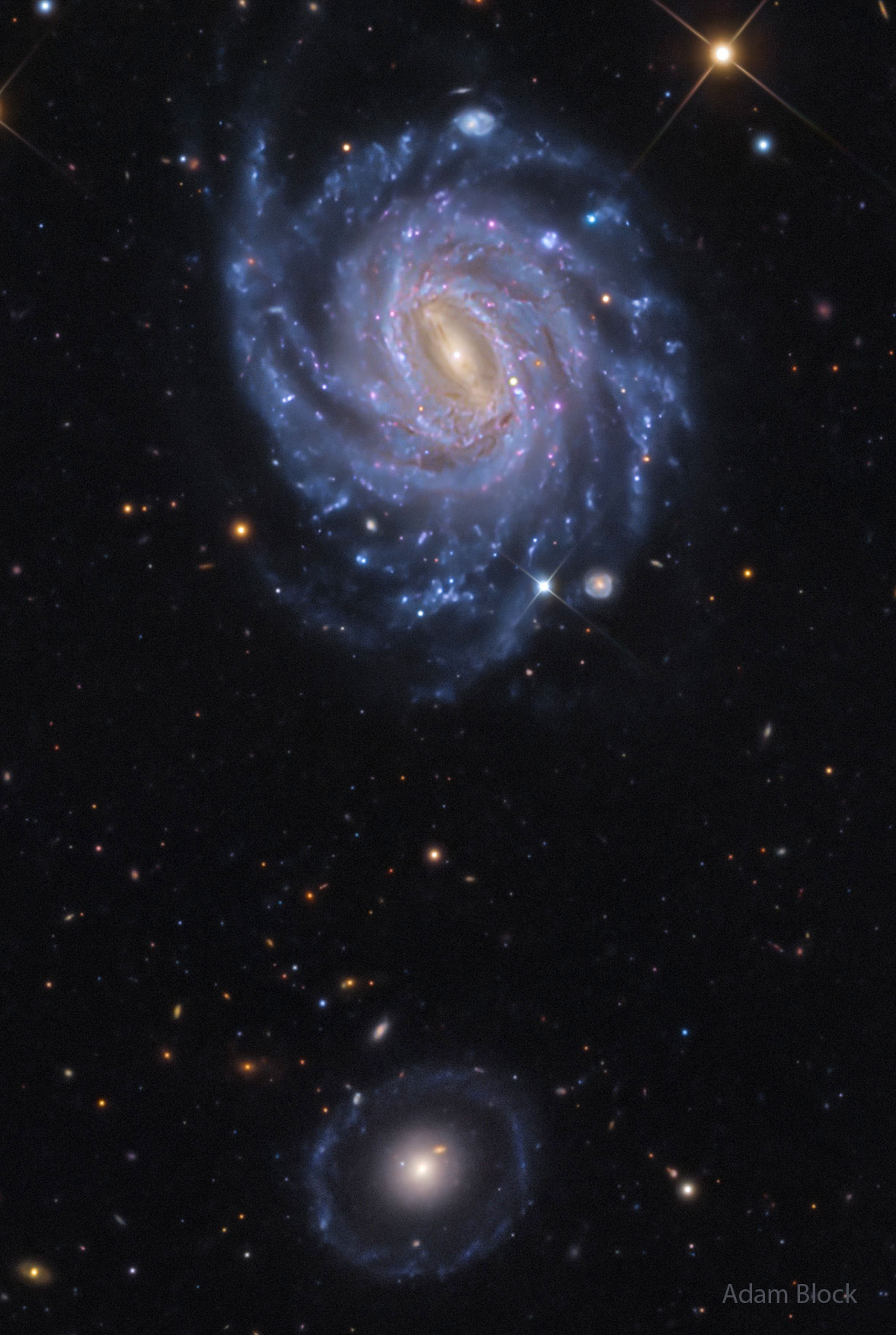
The upper galaxy might be more photogenic, but the lower galaxy is more unusual. The galaxy up top is NGC 3660, a spiral galaxy similar to our own Milky Way galaxy in that it has several bright blue spiral arms and a central bar of stars, dust, and gas. Captured by chance in the featured deep and colorful image, surprisingly, is SN 2026cff, a supernova found just to the right of the central bar. Farther in the distance is the bottom galaxy, known informally as Burçin’s galaxy, but formally cataloged as LEDA 1000714. The center of this galaxy appears to be an old elliptical galaxy, but it is strangely surrounded by not one but two rings of stars. What created Burçin's galaxy is a mystery and remains a continuing topic of research, but it likely involves the accretion of one or more smaller galaxies.
La galaxia superior podría ser más fotogénica, pero la galaxia inferior es más inusual. La galaxia de arriba es NGC 3660, una galaxia espiral similar a nuestra propia Vía Láctea en el sentido de que posee varios brazos espirales azules brillantes y una barra central de estrellas, polvo y gas. Capturada por casualidad en esta profunda y colorida imagen destacada, aparece sorprendentemente SN 2026cff, una supernova localizada justo a la derecha de la barra central. Más al fondo se encuentra la galaxia inferior, conocida informalmente como la galaxia de Burçin, pero catalogada formalmente como LEDA 1000714. El centro de esta galaxia parece ser una galaxia elíptica antigua, aunque se encuentra extrañamente rodeada no por uno, sino por dos anillos de estrellas. El origen de la galaxia de Burçin es un misterio y sigue siendo objeto de investigación continua, aunque probablemente implique la acreción de una o más galaxias más pequeñas.