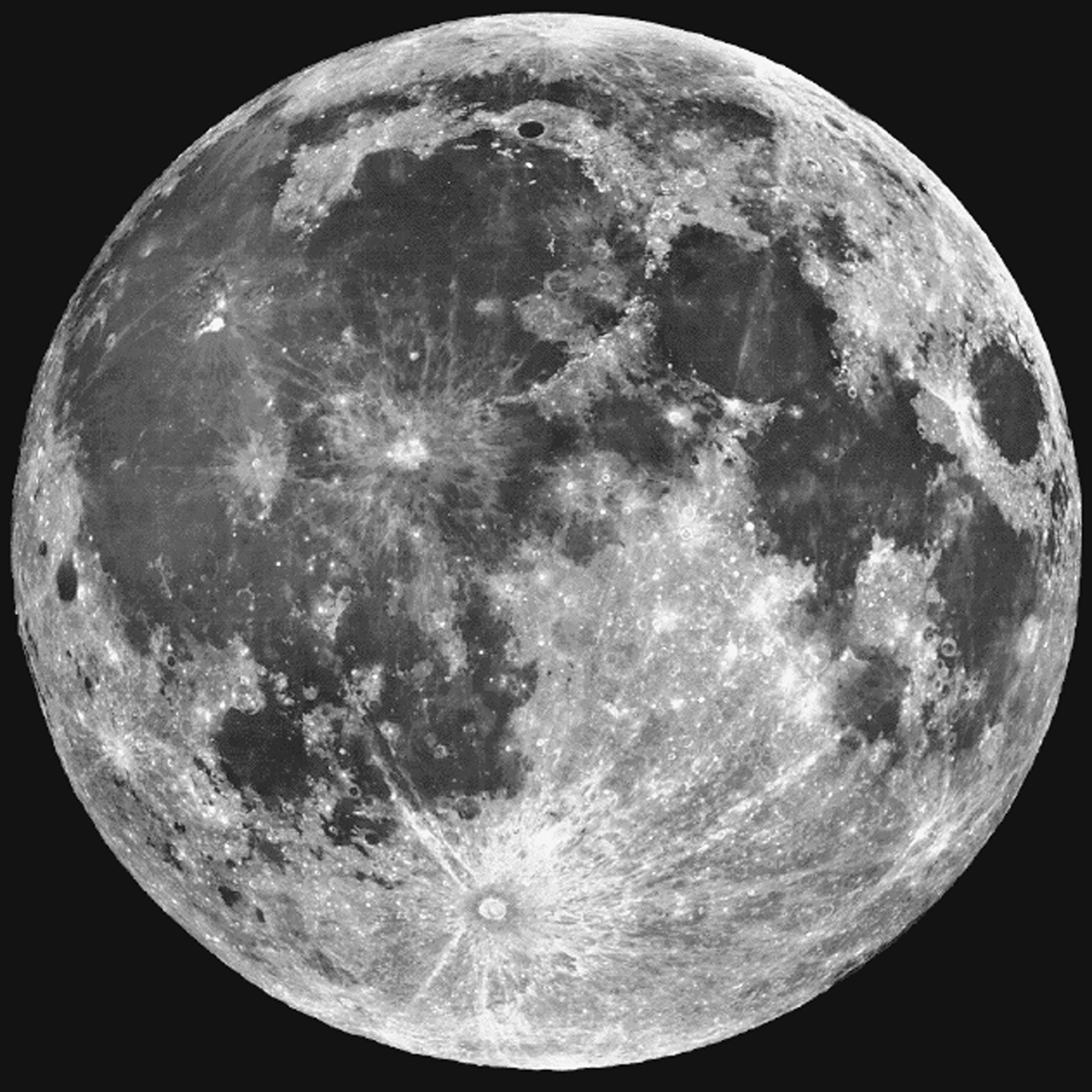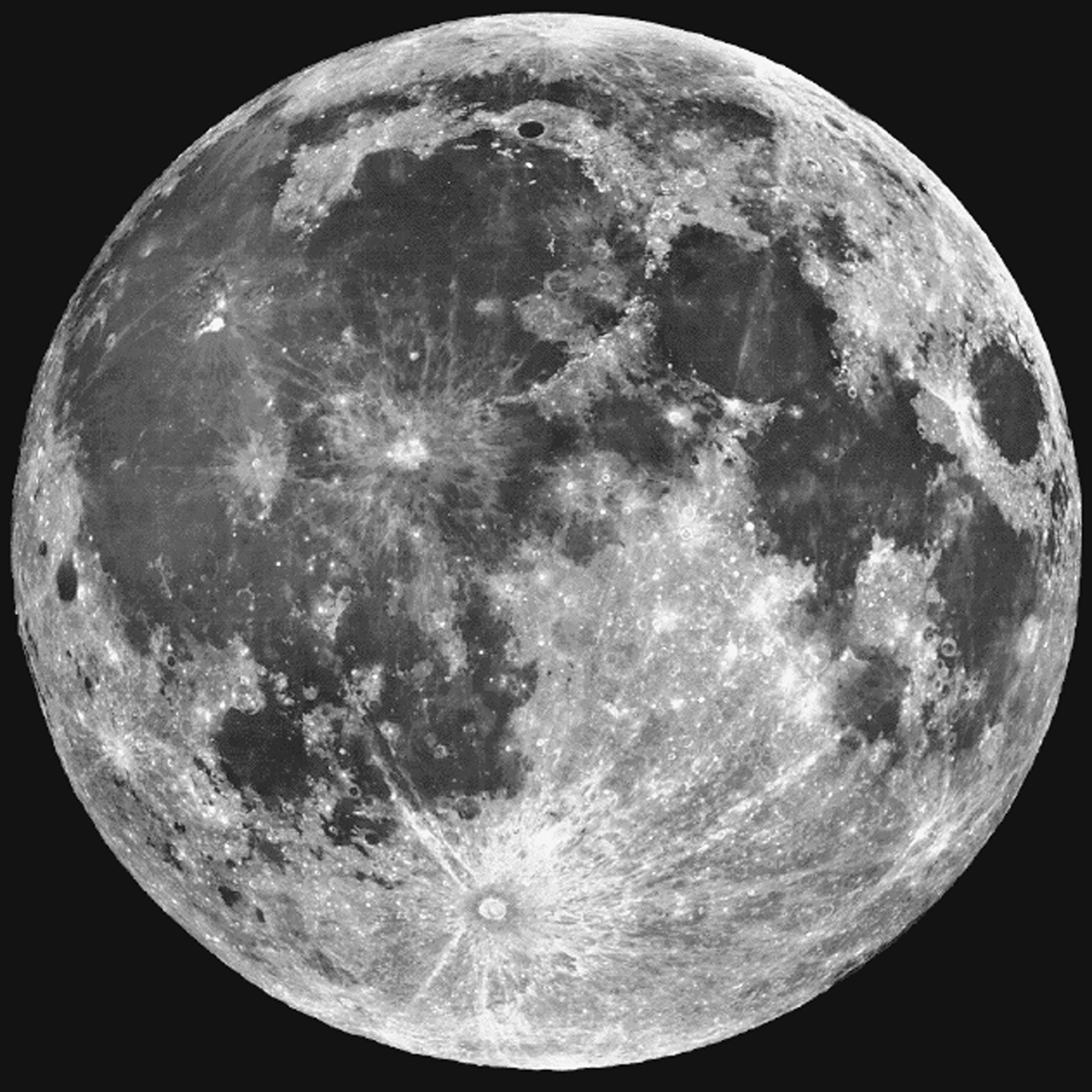
rth has one moon. A symbol in famous love songs, movies, poems, and folklore, many myths about the Moon date back to ancient history. In fact, the name Monday originates from Moon-day. The Moon glows by light it reflects from the Sun and is frequently the brightest object in the night sky. The Moon orbits the Earth about once a month (moon-th) from about 1 light second away. The above-pictured Full Moon occurs when the Moon is nearly opposite to the Sun in its orbit. The Moon's diameter is about 1/4 that of the Earth, and from the Earth's surface appears to have almost exactly the same angular size as the Sun. Recent evidence indicates that the Moon formed from a colossal impact on the Earth about 4.5 billions of years ago, and therefore has a similar composition to the Earth. Humans walked on the Moon for the first time in 1969.
La Tierra tiene una luna. Símbolo en famosas canciones de amor, películas, poemas y folclore, muchos mitos sobre la Luna se remontan a la historia antigua. De hecho, el nombre del lunes en inglés (Monday) se origina de Moon-day, es decir, "día de la Luna". La Luna brilla por la luz que refleja del Sol y es con frecuencia el objeto más brillante en el cielo nocturno. La Luna orbita la Tierra aproximadamente una vez al mes (de ahí el término "moon-th", mes en inglés) desde una distancia de aproximadamente 1 segundo luz. La Luna Llena que se muestra en la imagen ocurre cuando la Luna se encuentra casi en posición opuesta al Sol en su órbita. El diámetro de la Luna es aproximadamente 1/4 del de la Tierra y, vista desde la superficie terrestre, aparenta tener casi exactamente el mismo tamaño angular que el Sol. Evidencia reciente indica que la Luna se formó a partir de un impacto colosal sobre la Tierra hace aproximadamente 4.500 millones de años, y por lo tanto posee una composición similar a la de nuestro planeta. Los seres humanos pisaron la Luna por primera vez en 1969.