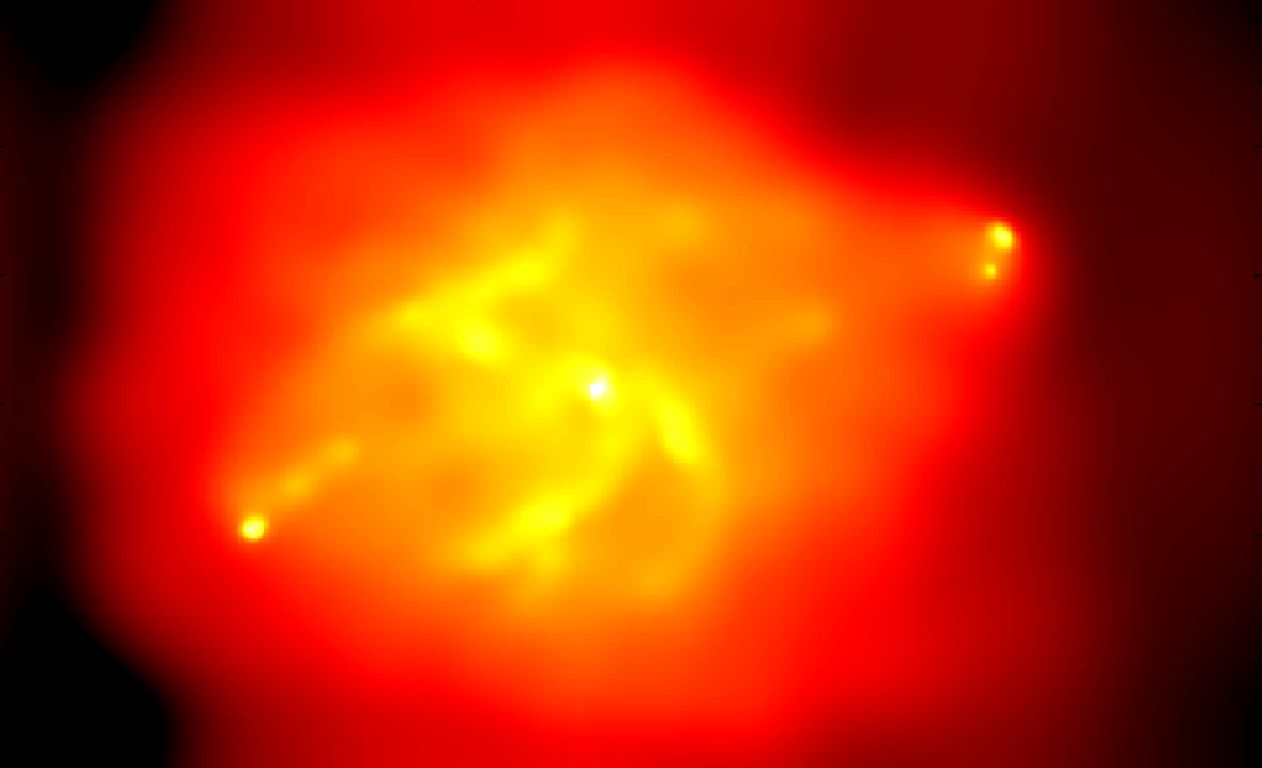
Amazingly detailed, this false-color x-ray image is centered on the galaxy Cygnus A. Recorded by the orbiting Chandra Observatory, Cygnus A is seen here as a spectacular high energy x-ray source. But it is actually more famous at the low energy end of the electromagnetic spectrum as one of the brightest celestial radio sources. Merely 700 million light-years distant, Cygnus A is the closest powerful radio galaxy and the false-color radio image (inset right) shows remarkable similarity to Chandra's x-ray view. Central in both pictures, the center of Cygnus A shines brightly while emission extends 300,000 light-years to either side along the same axis. Near light speed jets of atomic particles produced by a massive central black hole are believed to cause the emission. In fact, the x-ray image reveals "hot spots" suggestive of the locations where the particle jets are stopped in surrounding cooler, denser gas. The x-ray image also shows that the jets have cleared out a huge cavity in the surrounding gas. Bright swaths of emission within the cavity likely indicate x-ray hot material ... swirling toward the central black hole.
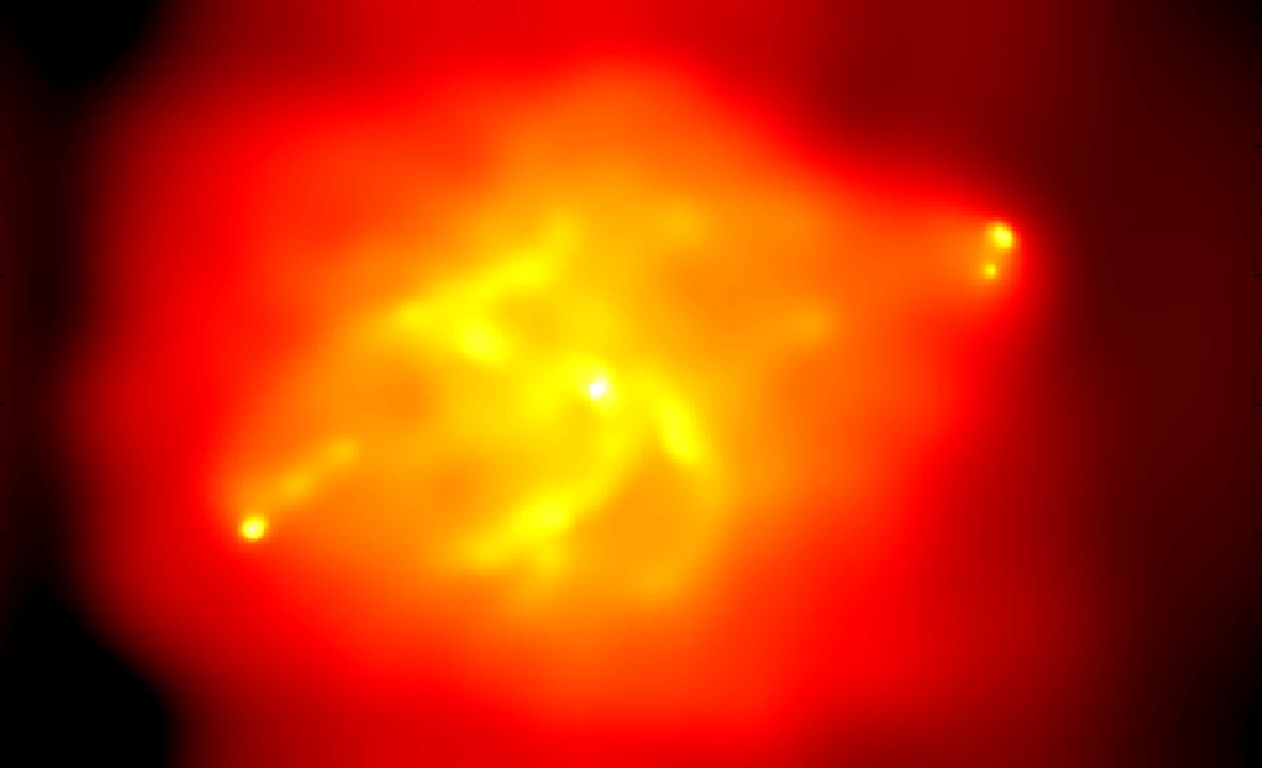
Extraordinariamente detallada, esta imagen de rayos X en falso color está centrada en la galaxia Cygnus A. Registrada por el Observatorio Chandra en órbita, Cygnus A se muestra aquí como una espectacular fuente de rayos X de alta energía. Sin embargo, es en realidad más famosa en el extremo de baja energía del espectro electromagnético como una de las fuentes de radio celeste más brillantes. A tan solo 700 millones de años luz de distancia, Cygnus A es la radiogalaxia potente más cercana, y la imagen de radio en falso color (recuadro a la derecha) muestra una notable similitud con la vista de rayos X de Chandra. En el centro de ambas imágenes, el núcleo de Cygnus A brilla intensamente, mientras que la emisión se extiende 300,000 años luz a cada lado a lo largo del mismo eje. Se cree que chorros de partículas atómicas a velocidades cercanas a la de la luz, producidos por un masivo agujero negro central, son los responsables de dicha emisión. De hecho, la imagen de rayos X revela "puntos calientes" que sugieren las ubicaciones donde los chorros de partículas se detienen en el gas circundante, más frío y denso. La imagen de rayos X también muestra que los chorros han excavado una enorme cavidad en el gas circundante. Las franjas brillantes de emisión dentro de la cavidad probablemente indican material a alta temperatura en rayos X... arremolinándose hacia el agujero negro central.