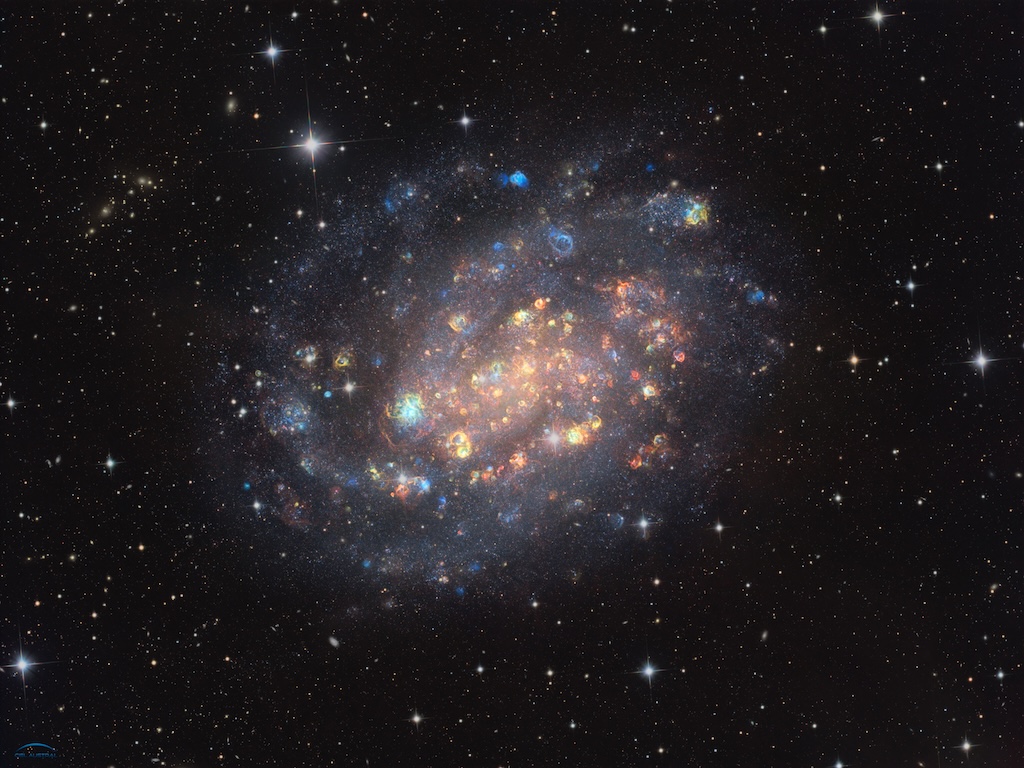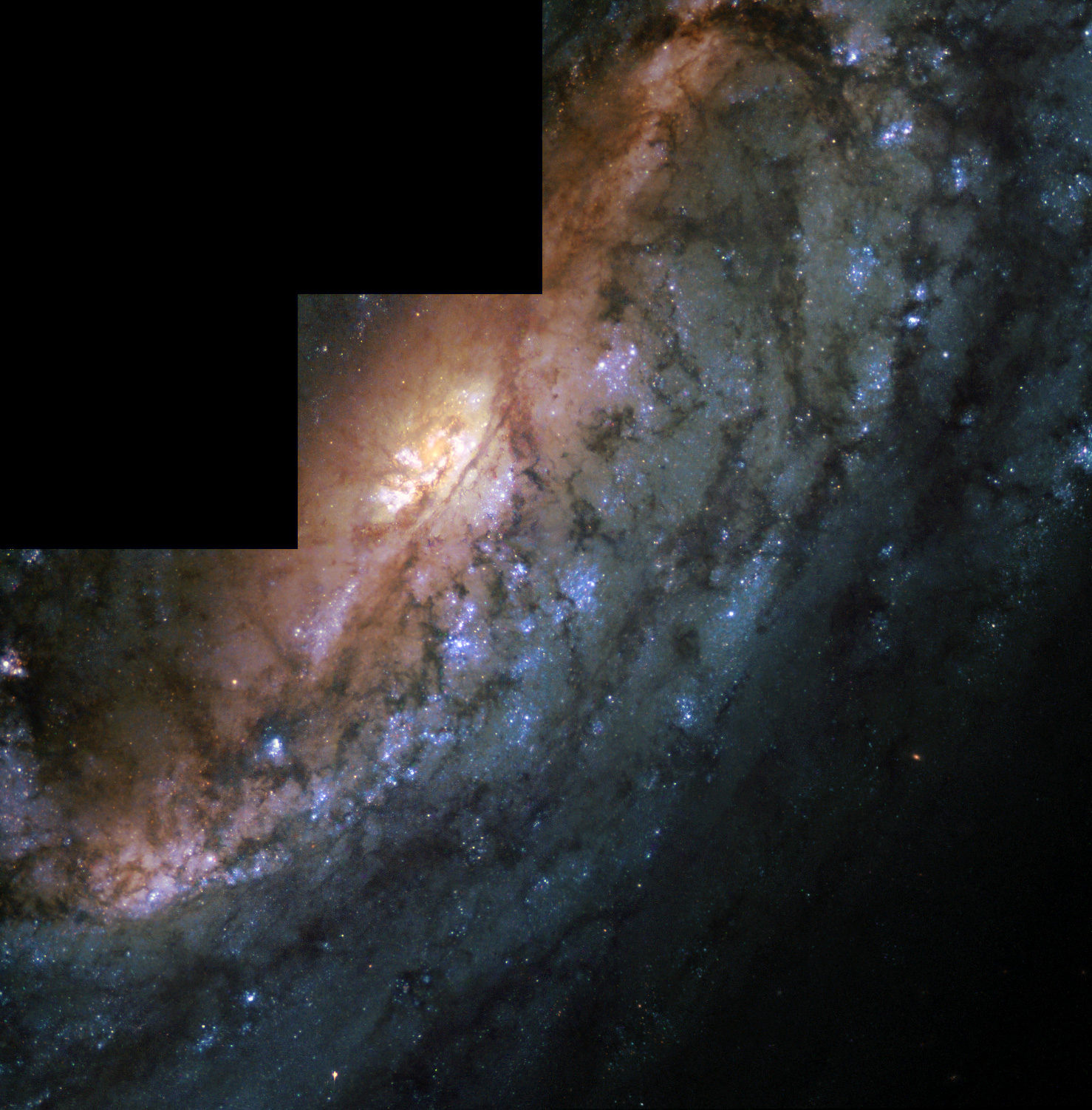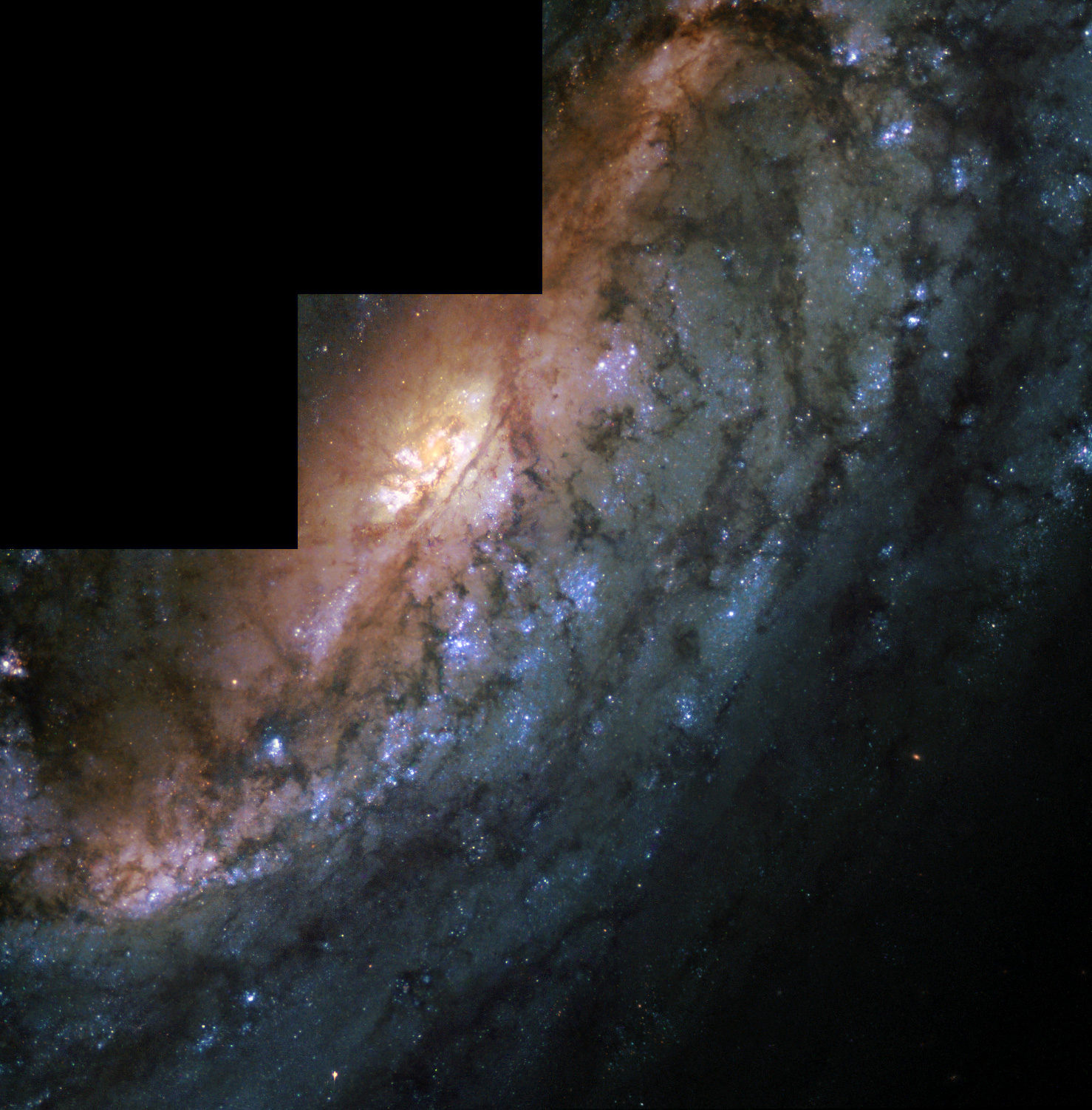
NGC 2903 is a spiral galaxy similar to our own Milky Way Galaxy. Similarities include its general size and a central bar. One striking difference, however, is the appearance of mysterious hot spots in NGC 2903's core. Upon inspection of the above image and similar images taken by the Hubble Space Telescope, these hot spots were found to be bright young globular clusters, in contrast to the uniformly old globular clusters found in our Milky Way Galaxy. Further investigation has indicated that current star formation is most rampant in a 2000 light-year wide circumnuclear ring surrounding NGC 2903's center. Astronomers hypothesize that the gravity of the central bar expedites star formation in this ring. NGC 2903 lies about 25 million light-years away and is visible with a small telescope towards the constellation of Leo.
NGC 2903 es una galaxia espiral similar a nuestra propia Galaxia Vía Láctea. Las similitudes incluyen su tamaño general y una barra central. Sin embargo, una diferencia notable es la presencia de misteriosos puntos calientes en el núcleo de NGC 2903. Al inspeccionar la imagen anterior y otras imágenes tomadas por el Telescopio Espacial Hubble, se descubrió que estos puntos calientes son en realidad brillantes cúmulos globulares jóvenes, a diferencia de los uniformemente antiguos cúmulos globulares encontrados en nuestra Galaxia Vía Láctea. Investigaciones posteriores han indicado que la formación estelar actual es más intensa en un anillo circunuclear de 2000 años luz de ancho que rodea el centro de NGC 2903. Los astrónomos hipotetizan que la gravedad de la barra central acelera la formación estelar en este anillo. NGC 2903 se encuentra a unos 25 millones de años luz de distancia y es visible con un telescopio pequeño en dirección a la constelación de Leo.