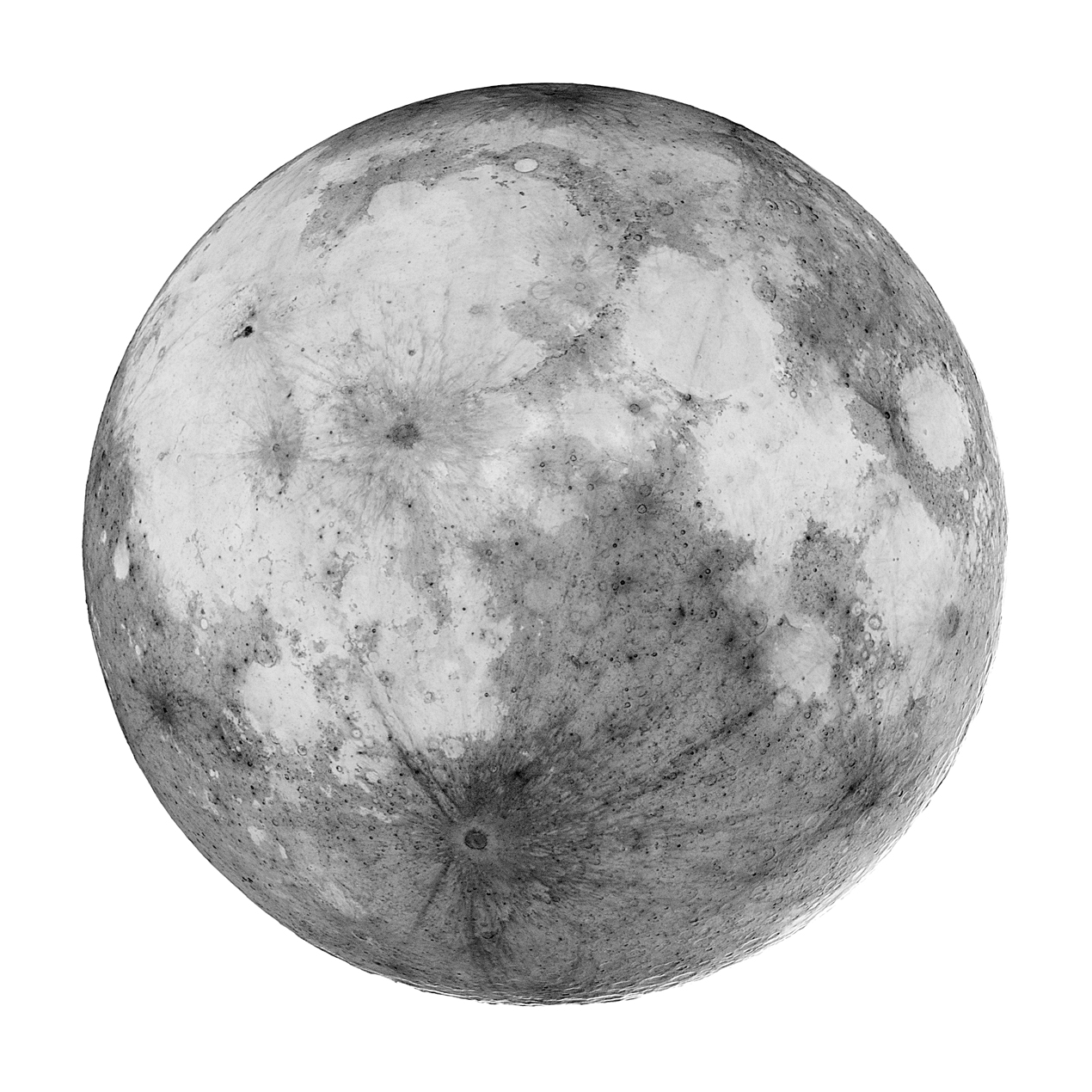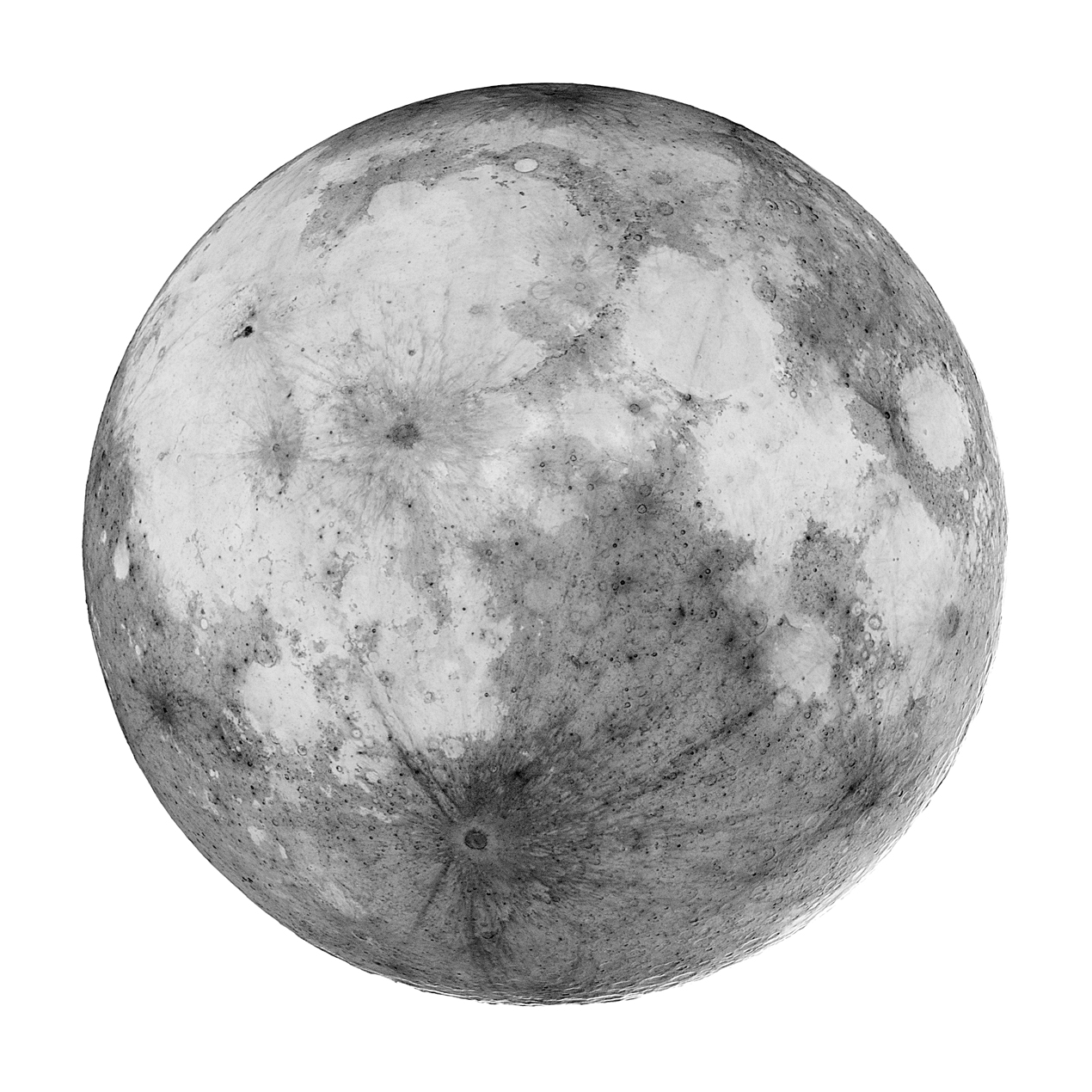
The brilliant full Moon might not have looked quite like this to skygazers this week, but the image is a mosaic of 18 digital frames recorded on December 9th at 3:30 UT. At that time, the Moon was only about seven hours past its exact full phase or time of maximum illumination as viewed from Earth. Here, the pixel values corresponding to light and dark areas have been translated in reverse, or inverted, producing a false-color representation reminiscent of a black and white photographic negative. Normally bright rays from the large crater Tycho dominate the southern (bottom) features as easily followed dark lines emanating from the 85 kilometer diameter impact site. Normally dark lunar mare appear light and silvery. Traditionally, astronomical images recorded on photographic plates were directly examined in this negative color scheme, which can help the eye pick out faint details.
La brillante Luna llena podría no haber lucido exactamente así para los observadores de cielo esta semana, pero la imagen es un mosaico de 18 fotogramas digitales registrados el 9 de diciembre a las 3:30 UT. En ese momento, la Luna estaba apenas a siete horas de su fase de Luna llena exacta o tiempo de máxima iluminación vista desde la Tierra. Aquí, los valores de píxeles correspondientes a las áreas claras y oscuras han sido traducidos de forma inversa, o invertidos, produciendo una representación en falso color reminiscente de un negativo fotográfico en blanco y negro. Normalmente, los brillantes rayos del gran cráter Tycho dominan las características del sur (inferior) como líneas oscuras fácilmente identificables que emanan del sitio de impacto de 85 kilómetros de diámetro. Normalmente, los mares lunares oscuros aparecen claros y plateados. Tradicionalmente, las imágenes astronómicas registradas en placas fotográficas fueron examinadas directamente en este esquema de color negativo, que puede ayudar al ojo a identificar detalles débiles.