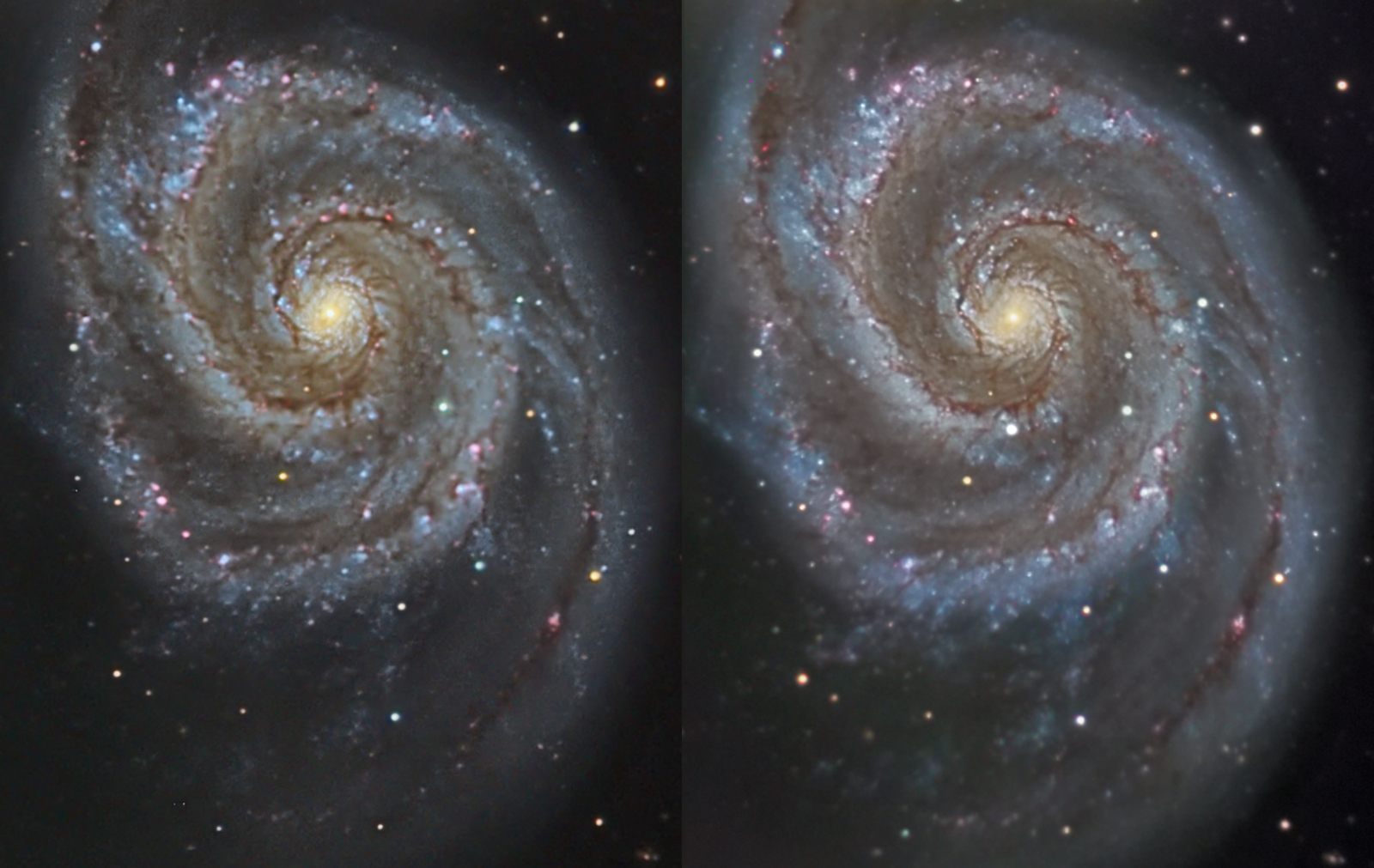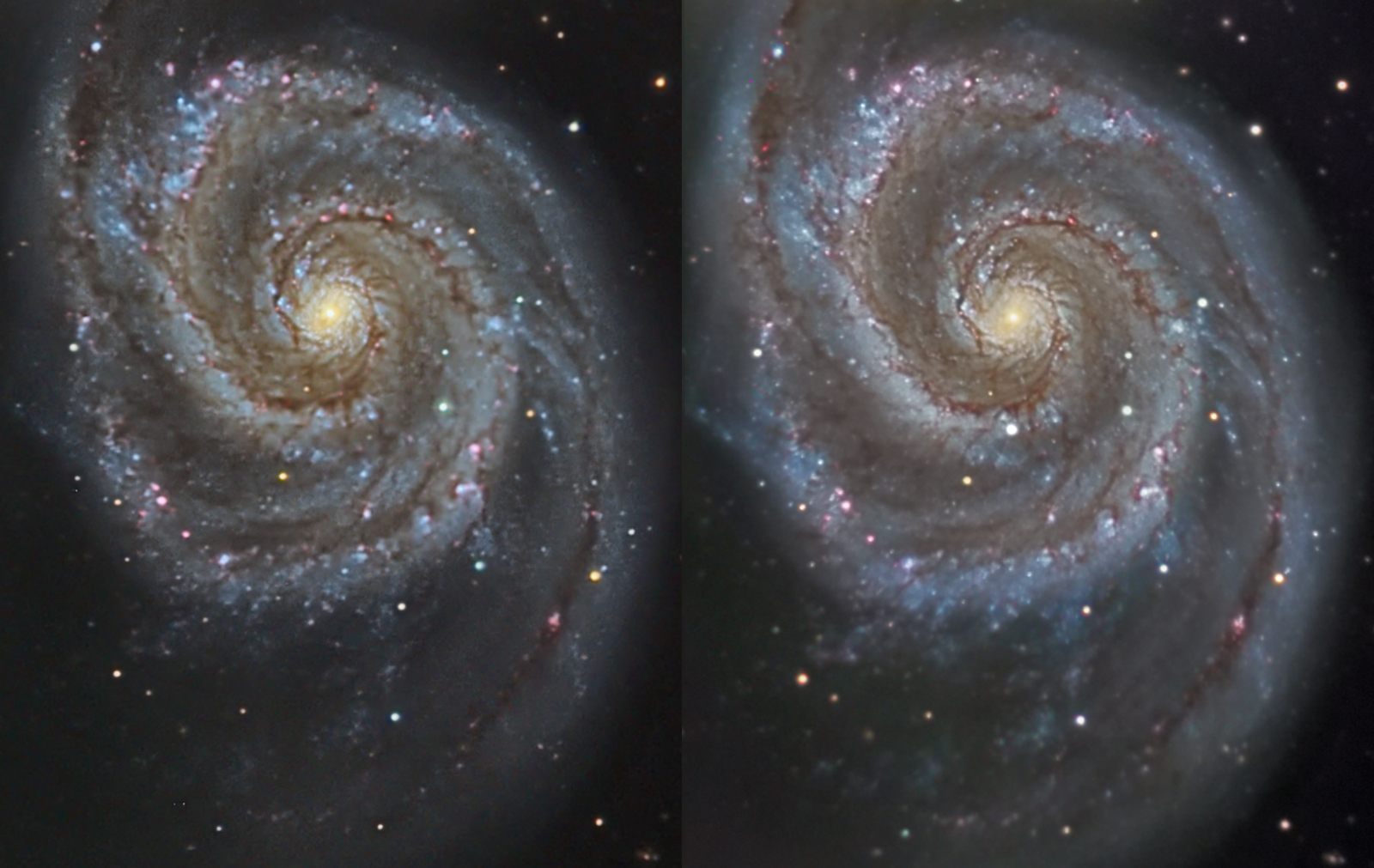
One of the nearest supernovas of recent years was discovered late last month in the bright nearby galaxy M51. It is visible on the right of the above before and after images of the picturesque spiral. Can you spot it? The supernova, discovered originally by Wolfgang Kloehr and now dubbed 2005cs, is still near its maximum brightness and visible with a telescope toward the constellation of the Hunting Dogs (Canes Venatici). The supernova has been identified as a Type II but has an unusual brightness history, creating speculation that is similar in nature to the brightest supernova of modern times: 1987A. The progenitor star has been identified as a bright blue star. Although hundreds of supernovas are discovered each year by automated searches, nearby supernova are rare and important because they frequently become bright enough to be studied by many telescopes and are near enough for their (former) host star and immediate surroundings to be spatially resolved. Supernova 2005cs may have left behind a core that has been compressed into a neutron star or black hole.
Una de las supernovas más cercanas de los últimos años fue descubierta a finales del mes pasado en la brillante galaxia cercana M51. Es visible a la derecha de las imágenes de antes y después de esta pintorescca espiral. ¿Puedes localizarla? La supernova, descubierta originalmente por Wolfgang Kloehr y ahora denominada 2005cs, sigue cerca de su brillo máximo y es visible con telescopio hacia la constelación de los Perros de Caza (Canes Venatici). La supernova ha sido identificada como de Tipo II pero presenta un historial de brillo inusual, lo que genera especulaciones de que es similar en naturaleza a la supernova más brillante de los tiempos modernos: 1987A. La estrella progenitora ha sido identificada como una estrella azul brillante. Aunque se descubren cientos de supernovas cada año mediante búsquedas automatizadas, las supernovas cercanas son raras e importantes porque frecuentemente se vuelven lo suficientemente brillantes para ser estudiadas por muchos telescopios y están lo suficientemente cerca como para que su estrella (antigua) anfitriona y sus alrededores inmediatos se resuelvan espacialmente. La supernova 2005cs puede haber dejado atrás un núcleo que ha sido comprimido en una estrella de neutrones o un agujero negro.