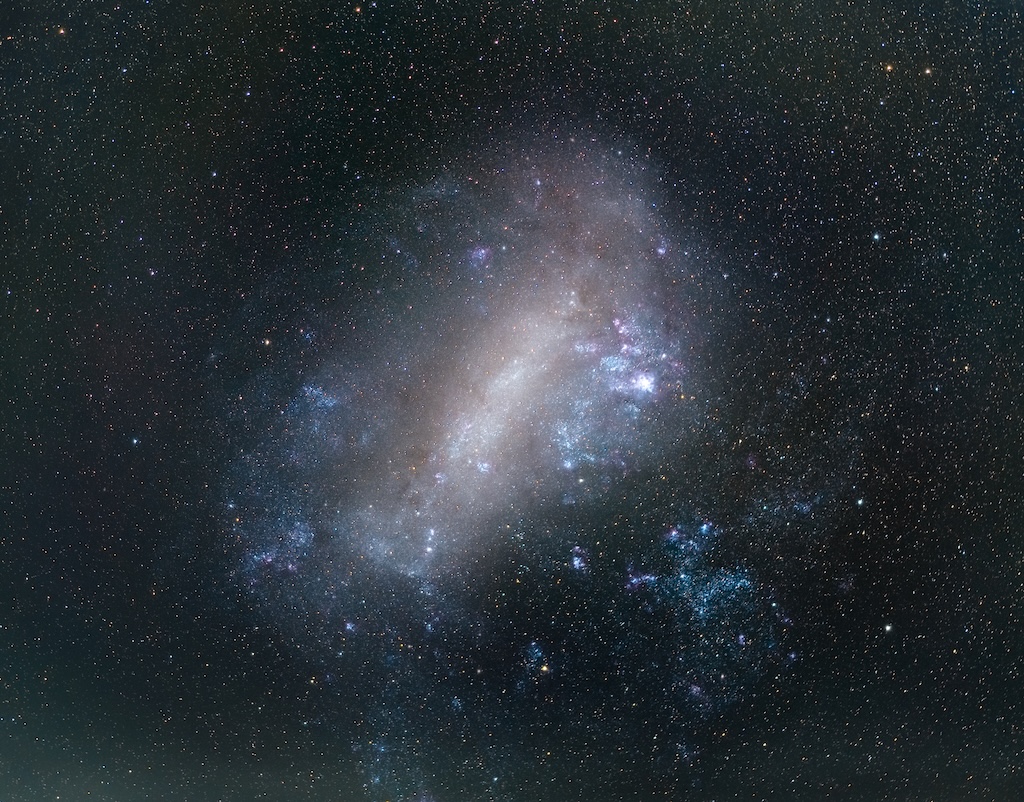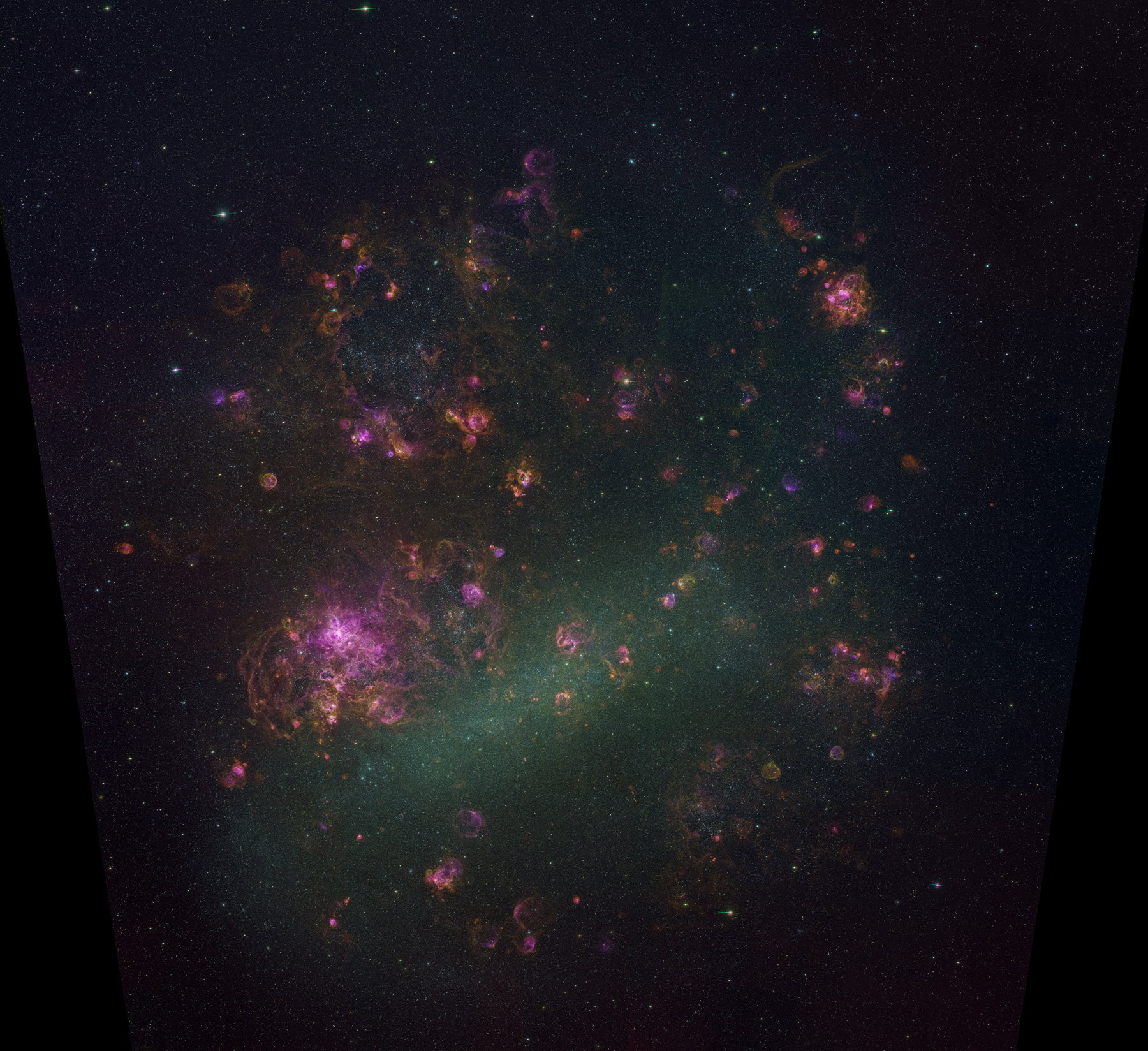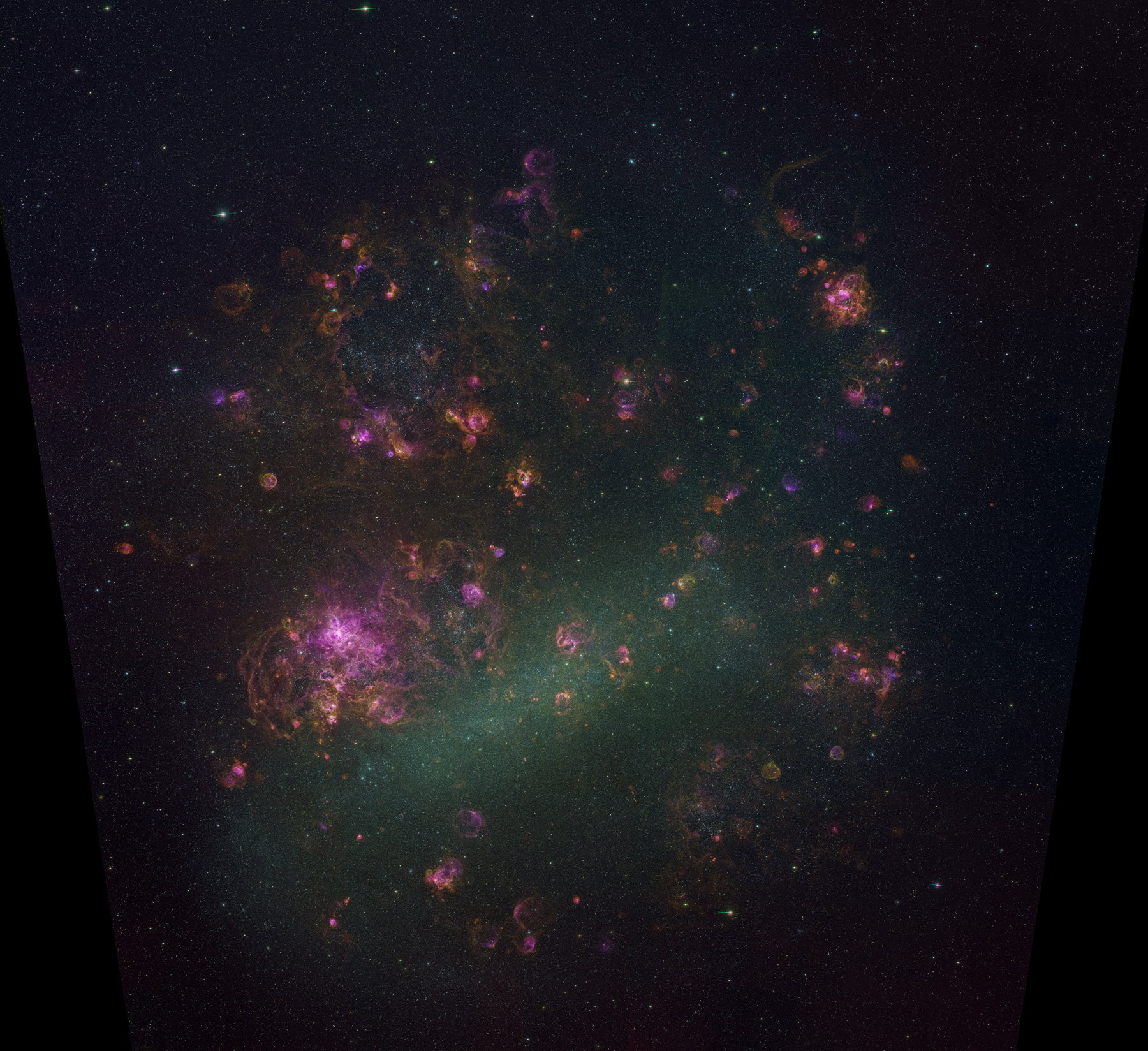
What goes on inside of a galaxy? To help find out, astronomers from the Magellanic Cloud Emission Line Survey team imaged our neighboring LMC galaxy in spectacular detail and highlighted very specific colors of light emitted by glowing gas. The above mosaic of over 1,500 images of the Large Magellanic Cloud (LMC) is the result -- clicking on the image will bring up an image with much greater detail. The colors highlighted on the mosaic are light emitted by hydrogen (red), oxygen (green), and sulfur (yellow), while light from individual stars has been subtracted. The mosaic shows what a busy and violent place the inside of the LMC really is. Visible in the above image are many small planetary nebulas pushed out by low mass stars, large emission nebula of ambient interstellar gas set aglow by massive stars, and huge gaseous supernova remnants cast off by massive stars exploding. The extended connected filaments are mostly connected supernova remnants. The LMC, a familiar sight to an unaided eye in the southern hemisphere, spans about 15,000 light years and lies only about 180,000 light years distant.
¿Qué ocurre dentro de una galaxia? Para ayudar a responder esta pregunta, astrónomos del equipo Magellanic Cloud Emission Line Survey obtuvieron imágenes de nuestra galaxia vecina de la Nube de Magallanes con detalle espectacular, destacando colores muy específicos de luz emitida por gas luminoso. El mosaico anterior de más de 1.500 imágenes de la Gran Nube de Magallanes (LMC) es el resultado. Los colores destacados en el mosaico corresponden a luz emitida por hidrógeno (rojo), oxígeno (verde) y azufre (amarillo), mientras que la luz de estrellas individuales ha sido sustraída. El mosaico revela que el interior de la LMC es un lugar extraordinariamente activo y violento. Visible en la imagen anterior hay muchas nebulosas planetarias pequeñas expulsadas por estrellas de baja masa, grandes nebulosas de emisión del gas interestelar circundante iluminadas por estrellas masivas, e inmensos remanentes de supernova gaseosos expulsados por estrellas masivas en explosión. Los filamentos conectados extendidos están principalmente compuestos por remanentes de supernova conectados. La LMC, visible a simple vista en el hemisferio sur, tiene una extensión de aproximadamente 15.000 años luz y se encuentra a solo unos 180.000 años luz de distancia.