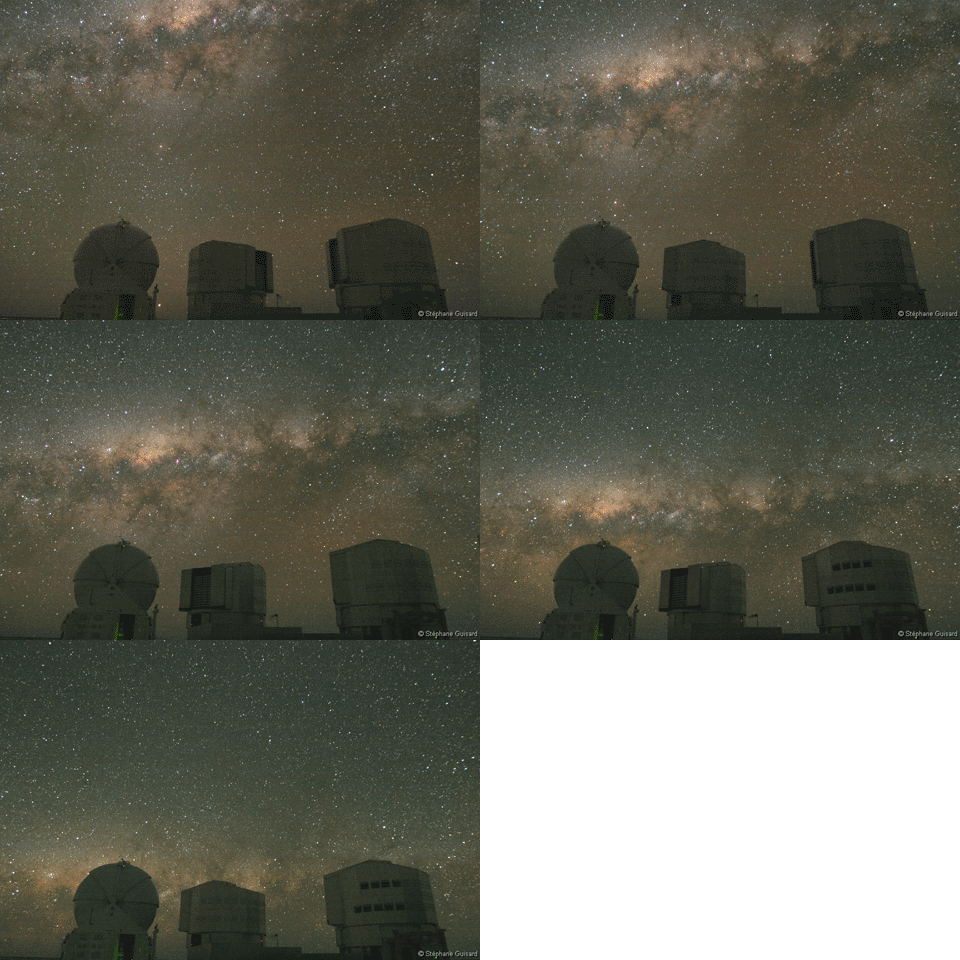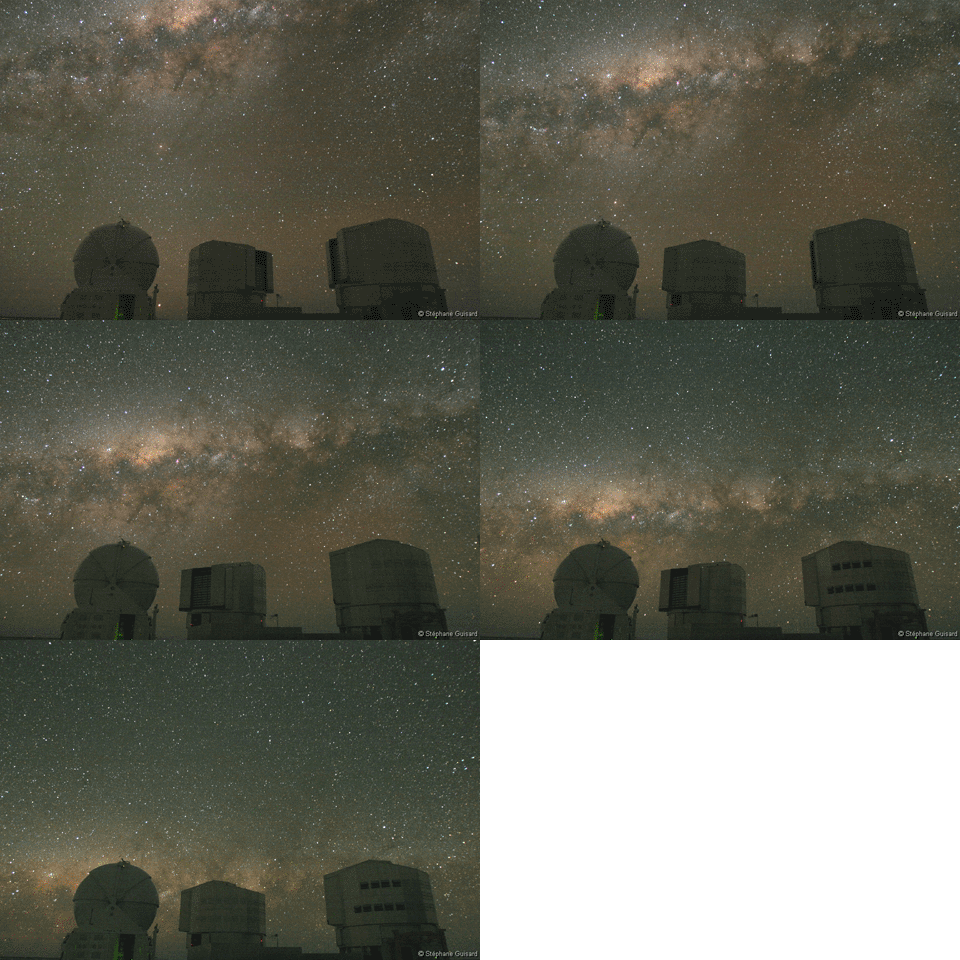
It's not the sky that's falling. More accurately, the Earth is rising. The Earth's rotation gives a continually changing view to all Earth observers, including those measuring the universe at the Paranal Observatory. The observatory's four, massive 8.2 meter telescope units are situated on top of the 2,600 meter high mountain, Cerro Paranal, in the dry Atacama Desert in northern Chile. The individual unit telescopes can be used separately or in combination. Their names, Antu, Kueyen, Melipal, and Yepun, are taken from the Mapuche language. Fittingly they translate to Sun, Moon, Evening Star, and Southern Cross. Together they are fittingly known as the European Southern Observatory's Very Large Telescope. A higher time resolution version of the above movie is available here.
No es el cielo el que se cae. Más precisamente, la Tierra es la que se eleva. La rotación terrestre proporciona una vista continuamente cambiante a todos los observadores en la Tierra, incluyendo aquellos que miden el universo en el Observatorio de Paranal. Las cuatro unidades de telescopios masivos de 8,2 metros del observatorio se encuentran en la cima de la montaña de 2.600 metros de altura, Cerro Paranal, en el árido Desierto de Atacama en el norte de Chile. Los telescopios de unidad individual pueden utilizarse por separado o en combinación. Sus nombres, Antu, Kueyen, Melipal y Yepun, proceden del idioma mapuche. Apropiadamente, se traducen como Sol, Luna, Estrella Vespertina y Cruz del Sur. Juntos se conocen apropiadamente como el Telescopio Muy Grande del Observatorio Europeo Austral.