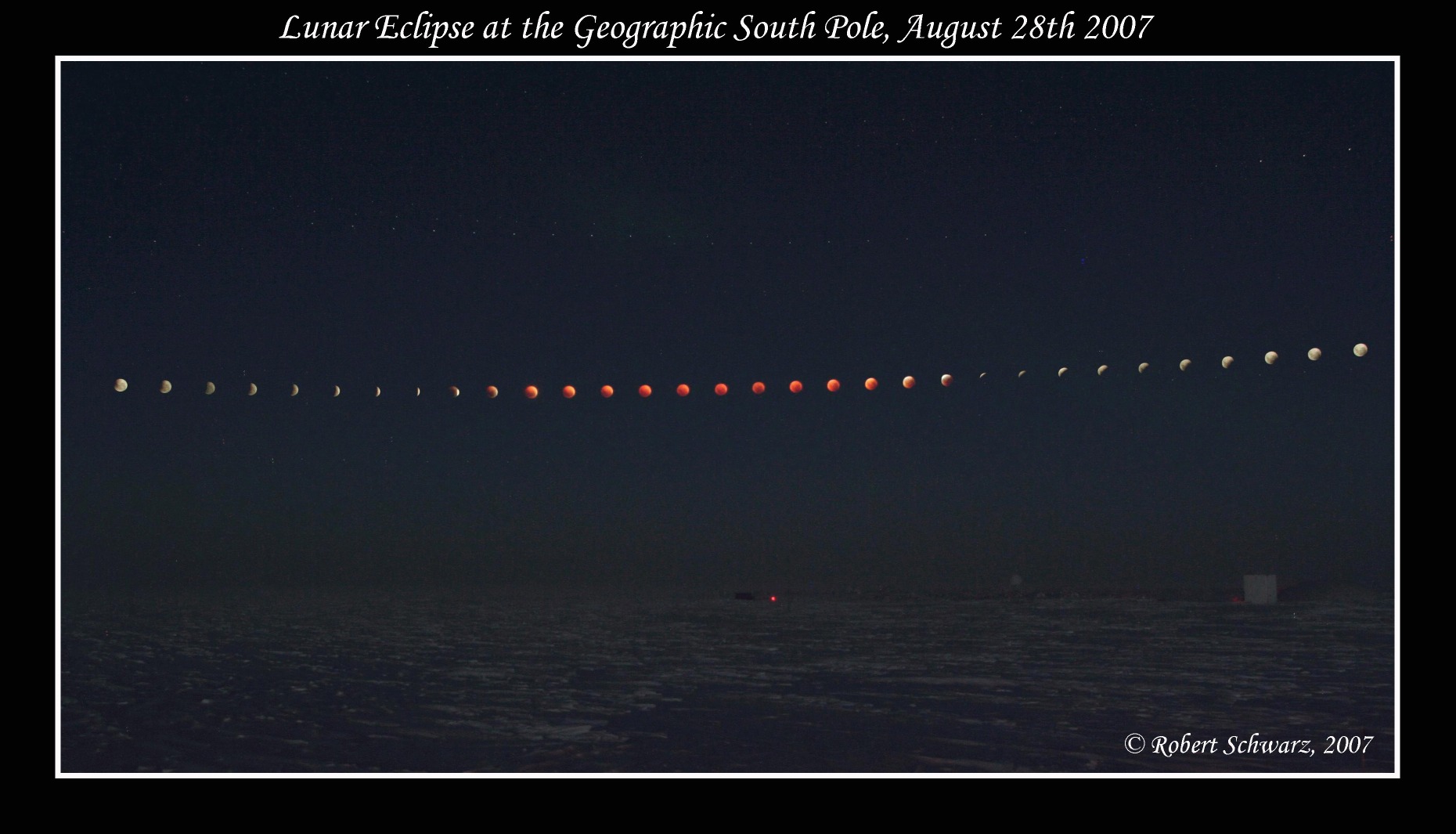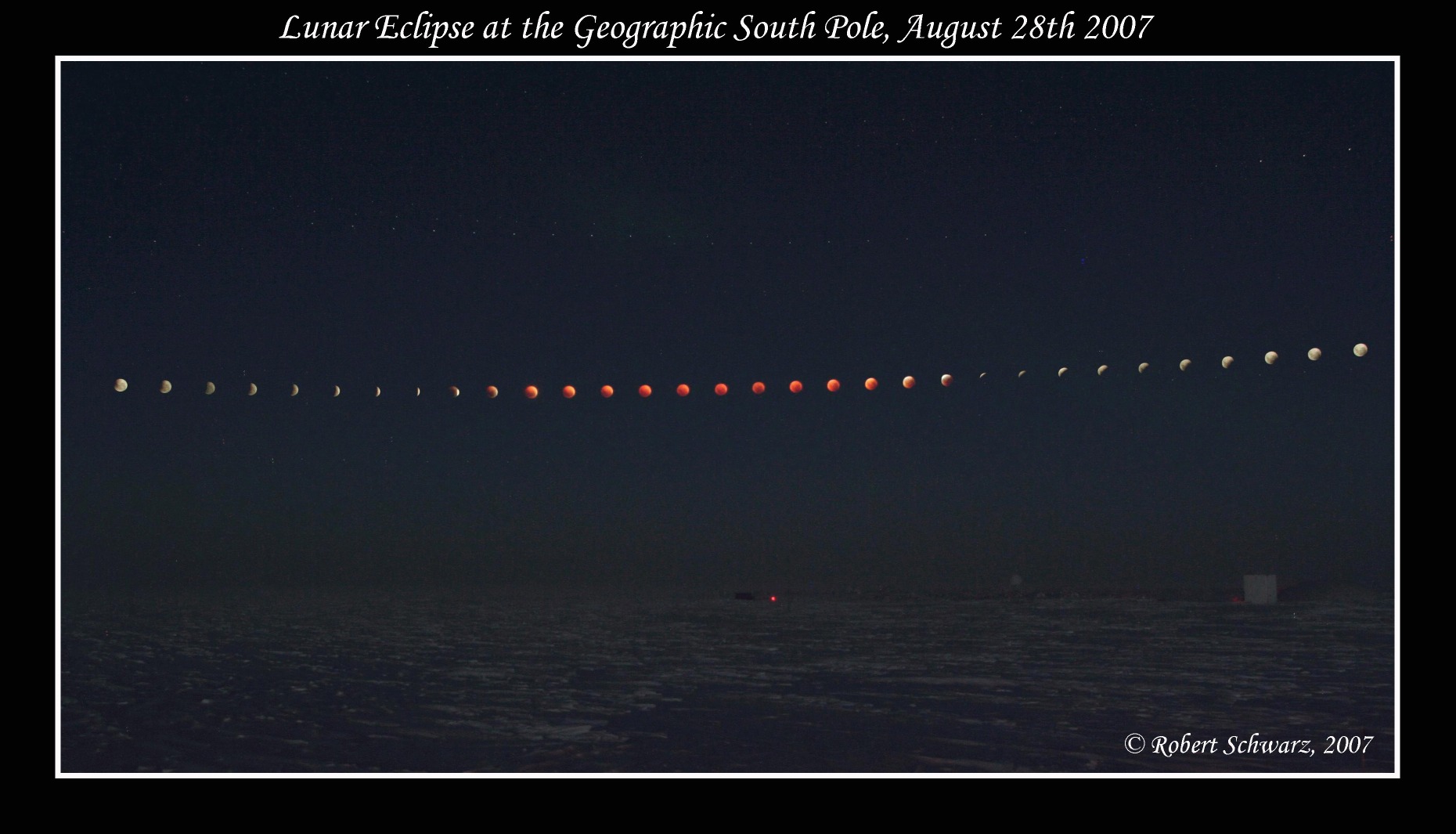
The Moon was up continuously for 14 days in August -- when viewed from the South Pole. But during the total lunar eclipse on August 28, it circled only about 10 degrees above the horizon. For Robert Schwarz, the resulting long line-of-sight through the atmosphere that blurred his images was a minor problem when he recorded this four hour long lunar eclipse sequence. A more severe problem was the outdoor air temperature of -68 C (-90 F). The extreme cold required him to make the series of exposures through a slit in a window from inside a heated room. Though the heat produced convection and further blurring, it was the only way to keep the camera at a reasonable operating temperature for an extended period of time. Still, he was rewarded with this impressive record of August's lunar eclipse from a unique perspective on planet Earth.
La Luna permaneció continuamente visible durante 14 días en agosto cuando se observaba desde el Polo Sur. Sin embargo, durante el eclipse lunar total del 28 de agosto, la Luna describía un círculo apenas 10 grados por encima del horizonte. Para Robert Schwarz, la línea de visión resultante atravesaba una gran extensión de atmósfera, lo que nublaba sus imágenes y representaba un problema menor cuando registró esta secuencia del eclipse lunar de cuatro horas de duración. Un problema más severo fue la temperatura del aire exterior de -68 °C (-90 °F). El frío extremo lo obligó a realizar la serie de exposiciones a través de una rendija en una ventana desde el interior de una habitación climatizada. Aunque el calor producía convección y un emborronamiento adicional, era la única manera de mantener la cámara a una temperatura de funcionamiento razonable durante un período extendido. No obstante, fue recompensado con este impresionante registro del eclipse lunar de agosto desde una perspectiva única en el planeta Tierra.