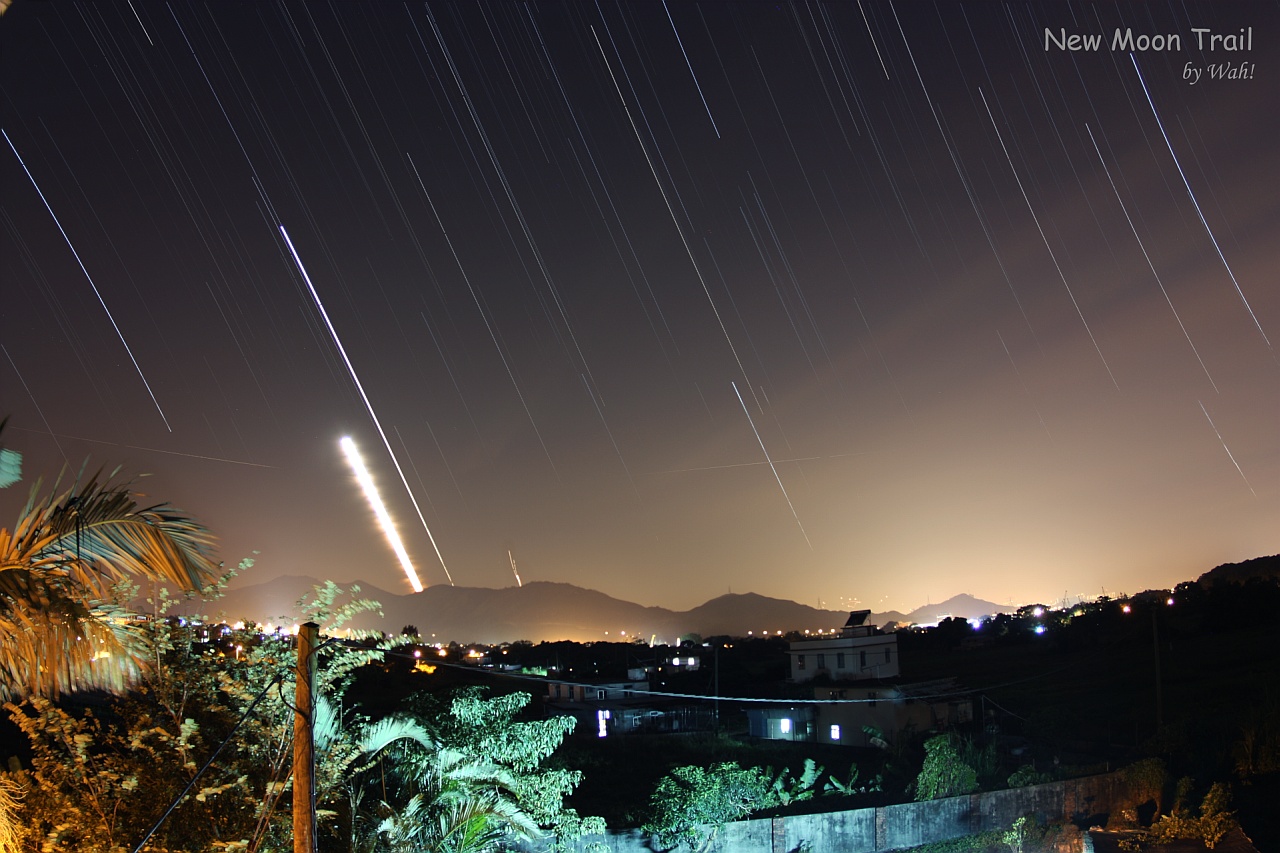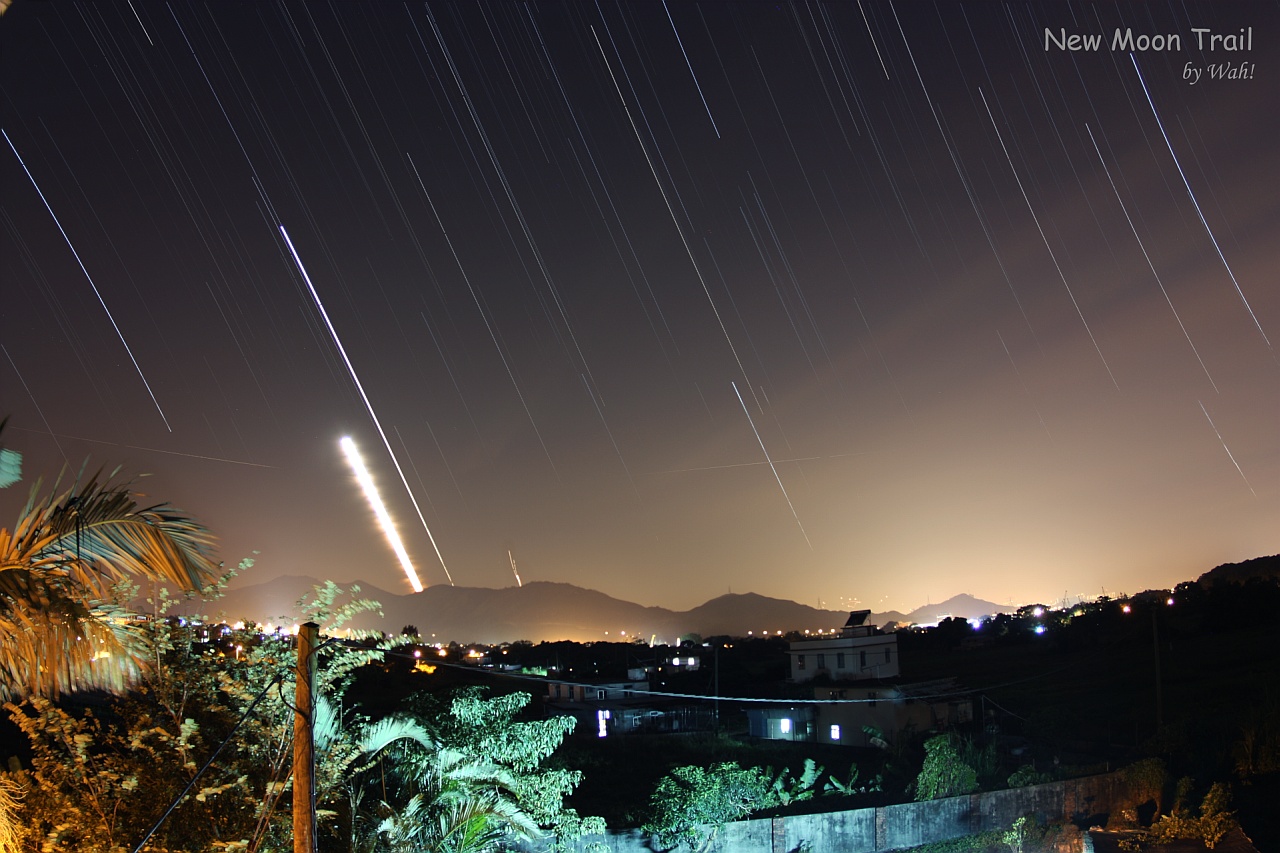
Do stars appear dimmer when nearer the horizon? Yes -- atmospheric air absorbs and reradiates light, so that the greater the airmass through which one peers, the fainter an object will appear. Pictured above in a multi-frame image, stars, the planet Jupiter, and even the Moon show the horizon-dimming effects of Earth's nearly-transparent atmosphere. The image was taken in the evening about three weeks ago over Hong Kong, China. The brightest streak near the center is the setting Moon, while intermittent thin clouds sometimes dispersed moonlight into a larger halo. Jupiter sets just to the Moon's right. The dim steaks cutting across the image horizontally were caused by passing airplanes. The bright strange multi-pronged streak over the house is a helicopter taking off. An astute observer will also notice faint rays emanating from near the horizon. Their cause is unknown, but may be crepuscular rays caused by the Sun shining through gaps in thick clouds. New Mirror: APOD now available in Romanian from Romania
¿Aparecen las estrellas más tenues cuando están más cerca del horizonte? Sí -- el aire atmosférico absorbe y reemite la luz, de modo que cuanto mayor sea la masa de aire a través de la cual se mira, más tenue parecerá un objeto. En la imagen de arriba, compuesta por múltiples fotogramas, las estrellas, el planeta Júpiter y hasta la Luna muestran los efectos de atenuación del horizonte causados por la atmósfera casi transparente de la Tierra. La imagen fue tomada por la noche hace aproximadamente tres semanas sobre Hong Kong, China. El destello más brillante cerca del centro es la Luna en el momento de su puesta, mientras que nubes intermitentes y delgadas a veces dispersaban la luz lunar en un halo más amplio. Júpiter se pone justo a la derecha de la Luna. Las rayas tenues que atraviesan horizontalmente la imagen fueron causadas por aviones en vuelo. El destello extraño y brillante con múltiples brazos sobre la casa es un helicóptero despegando. Un observador atento también notará rayos tenues que emanan cerca del horizonte. Su causa es desconocida, pero podría ser rayos crepusculares causados por la luz del Sol que atraviesa grietas en nubes espesas.