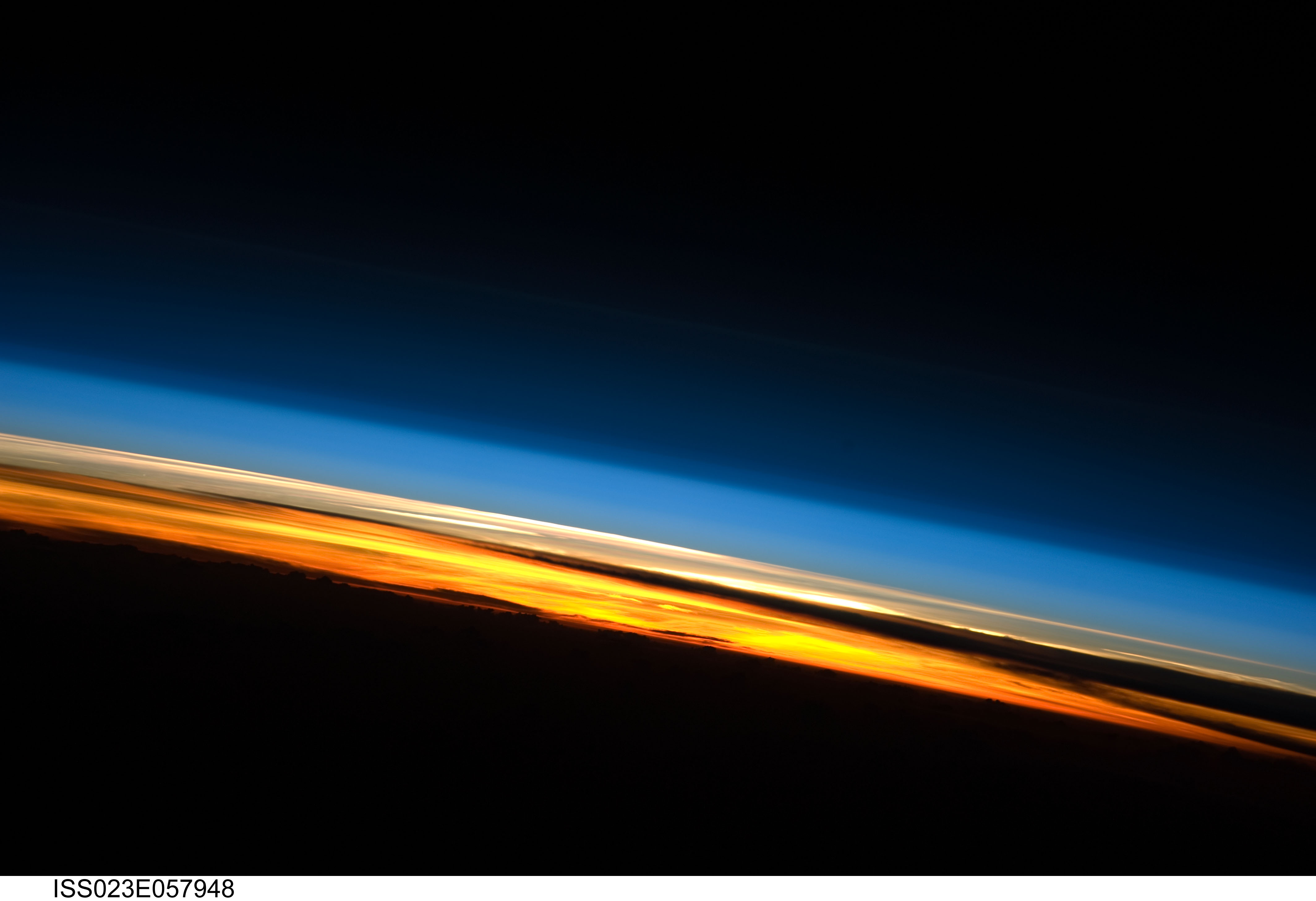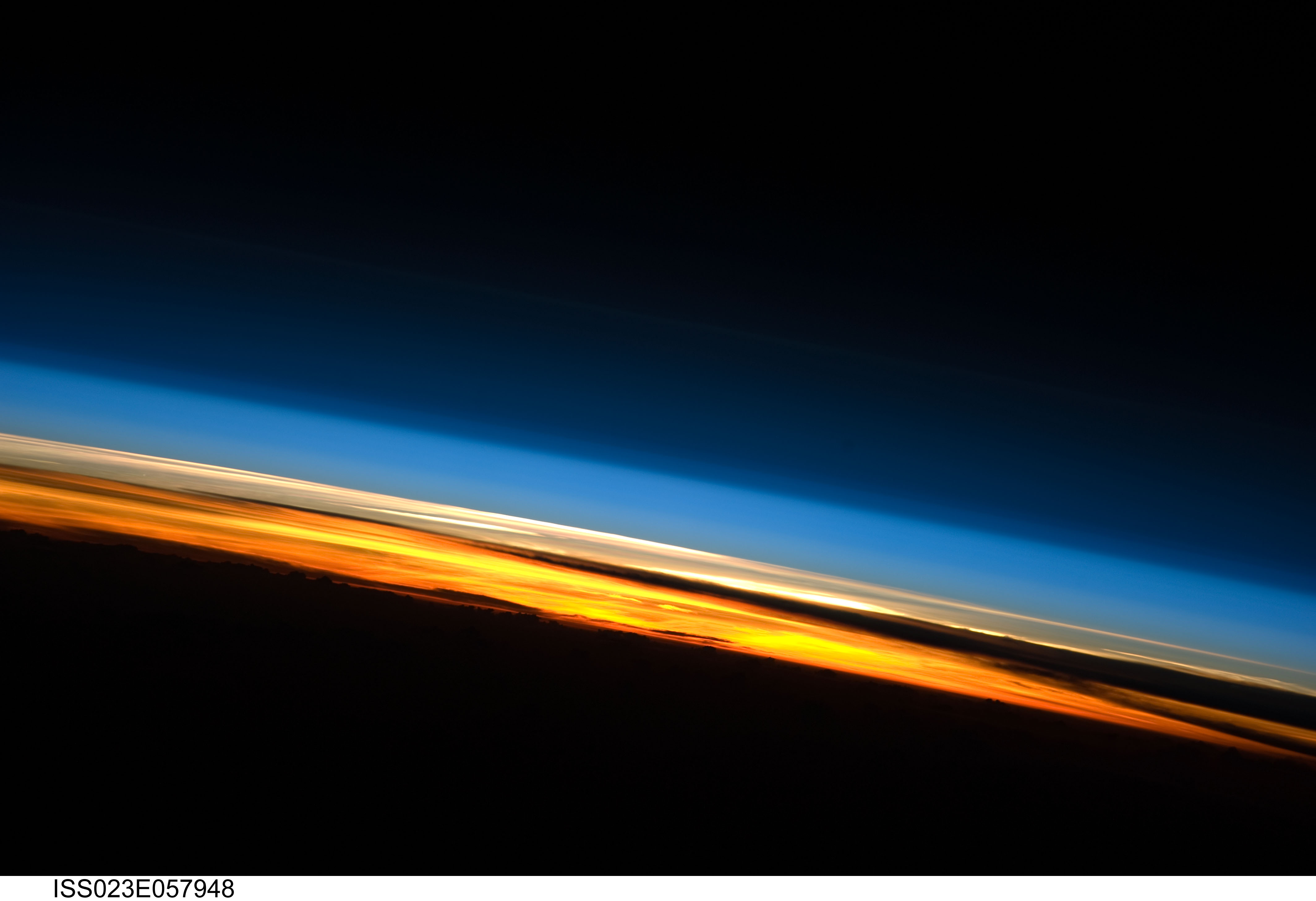
What are these strange color bands being seen from the International Space Station? The Sun setting through Earth's atmosphere. Pictured above, a sunset captured last month by the ISS's Expedition 23 crew shows in vivid detail many layers of the Earth's thin atmosphere. Part of the Earth experiencing night crosses the bottom of the image. Above that, appearing in deep orange and yellow, is the Earth's troposphere, which contains 80 percent of the atmosphere by mass and almost all of the clouds in the sky. Above the troposphere, seen as a light blue band with white clouds, is the stratosphere, part of the Earth's atmosphere where airplanes fly and some hardy bacteria float. Above the stratosphere, visible as a darker blue bands, are higher and thinner atmospheric levels that gradually fade away into the cold dark vacuum of outer space. Sunset is not an uncommon sight for occupants of the International Space Station, because it can be seen as many as 16 times a day.
¿Qué son estas extrañas bandas de color que se ven desde la Estación Espacial Internacional? La puesta del Sol a través de la atmósfera terrestre. En la imagen de arriba, una puesta de sol capturada el mes pasado por la tripulación de la Expedición 23 de la ISS muestra en detalle muchas capas de la delgada atmósfera terrestre. Parte de la Tierra que experimenta la noche cruza la parte inferior de la imagen. Encima de ella, apareciendo en naranja oscuro y amarillo, está la troposfera terrestre, que contiene el 80 por ciento de la atmósfera por masa y casi todas las nubes del cielo. Encima de la troposfera, visible como una banda azul clara con nubes blancas, está la estratosfera, parte de la atmósfera terrestre donde vuelan los aviones y flotan algunas bacterias resistentes. Encima de la estratosfera, visibles como bandas de color azul más oscuro, están los niveles atmosféricos más altos y más delgados que gradualmente desaparecen en el frío vacío del espacio exterior. La puesta de sol no es un espectáculo inusual para los ocupantes de la Estación Espacial Internacional, ya que se puede ver hasta 16 veces al día.