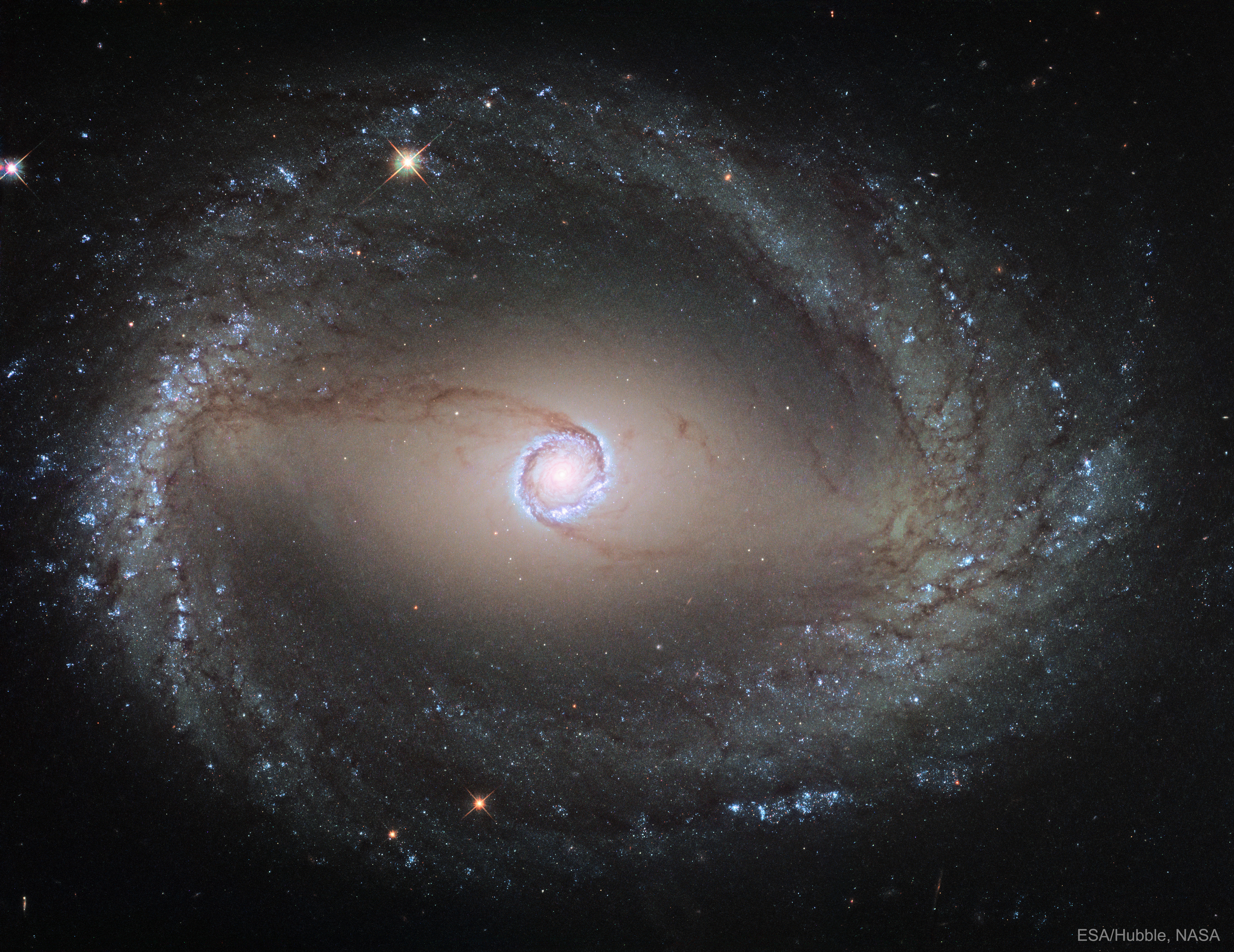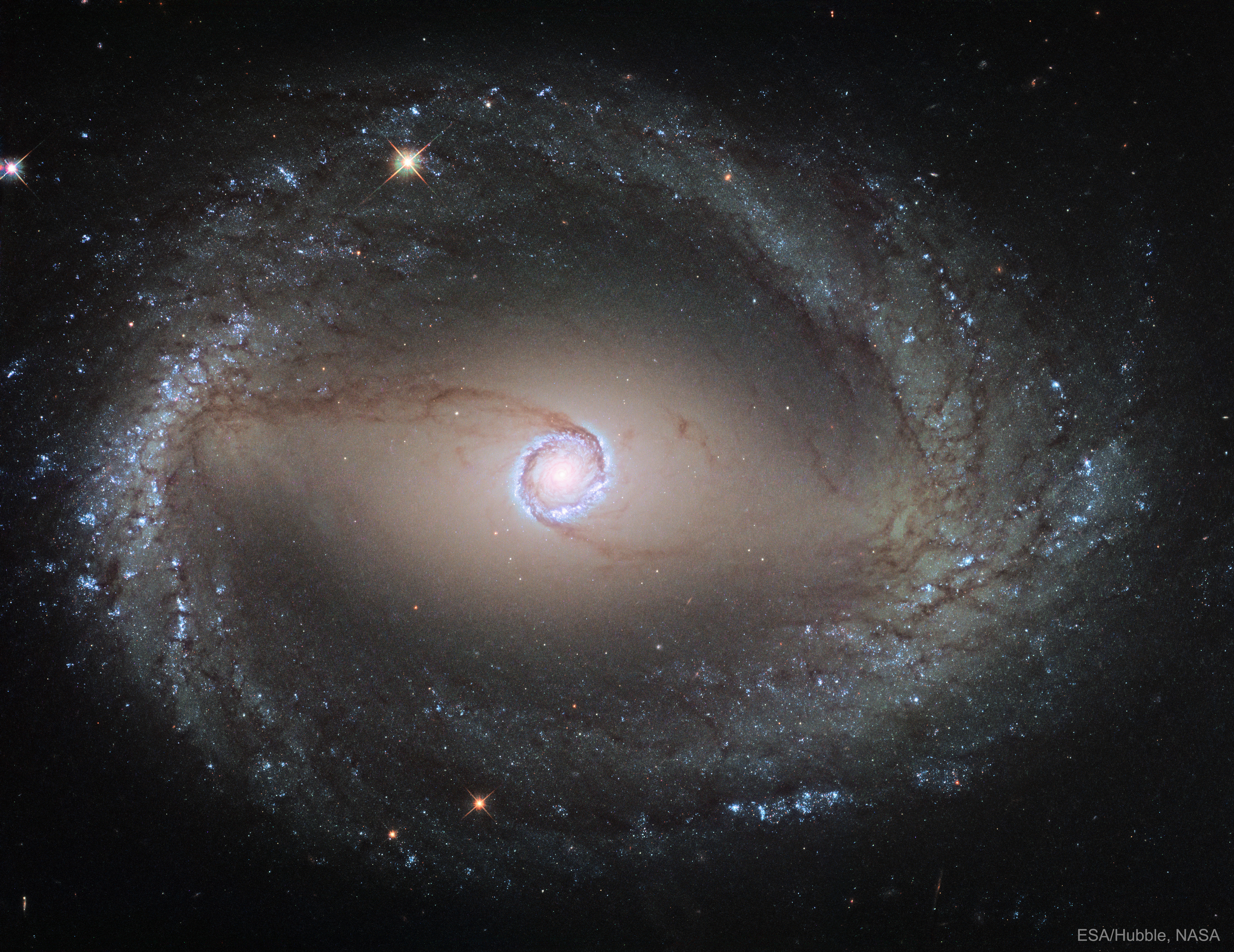
Most galaxies don't have any rings -- why does this galaxy have two? To begin, the bright band near NGC 1512's center is a nuclear ring, a ring that surrounds the galaxy center and glows brightly with recently formed stars. Most stars and accompanying gas and dust, however, orbit the galactic center in a ring much further out -- here seen near the image edge. This ring is called, counter-intuitively, the inner ring. If you look closely, you will see this the inner ring connects ends of a diffuse central bar that runs horizontally across the galaxy. These ring structures are thought to be caused by NGC 1512's own asymmetries in a drawn-out process called secular evolution. The gravity of these galaxy asymmetries, including the bar of stars, cause gas and dust to fall from the inner ring to the nuclear ring, enhancing this ring's rate of star formation. Some spiral galaxies also have a third ring -- an outer ring that circles the galaxy even further out. Two Weeks from Today: An American total eclipse of the Sun
La mayoría de las galaxias no tienen anillos — ¿por qué esta galaxia tiene dos? Para comenzar, la banda brillante cerca del centro de NGC 1512 es un anillo nuclear, un anillo que rodea el centro de la galaxia y brilla intensamente con estrellas recientemente formadas. Sin embargo, la mayoría de las estrellas, junto con el gas y el polvo asociados, orbitan el centro galáctico en un anillo mucho más alejado — aquí visible cerca del borde de la imagen. Este anillo se llama, contraintuitivamente, el anillo interno. Si se observa con atención, se verá que este anillo interno conecta los extremos de una barra central difusa que se extiende horizontalmente a través de la galaxia. Se cree que estas estructuras anulares se deben a las asimetrías propias de NGC 1512 en un proceso prolongado llamado evolución secular. La gravedad de estas asimetrías galácticas, incluida la barra de estrellas, hace que el gas y el polvo caigan del anillo interno al anillo nuclear, aumentando así la tasa de formación estelar de este último. Algunas galaxias espirales también tienen un tercer anillo — un anillo externo que rodea la galaxia aún más lejos.