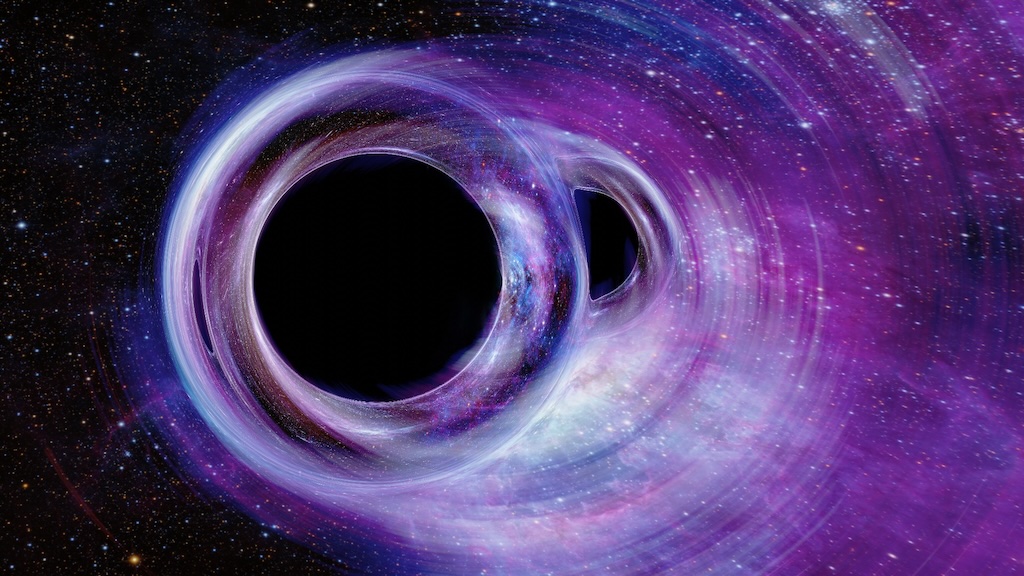
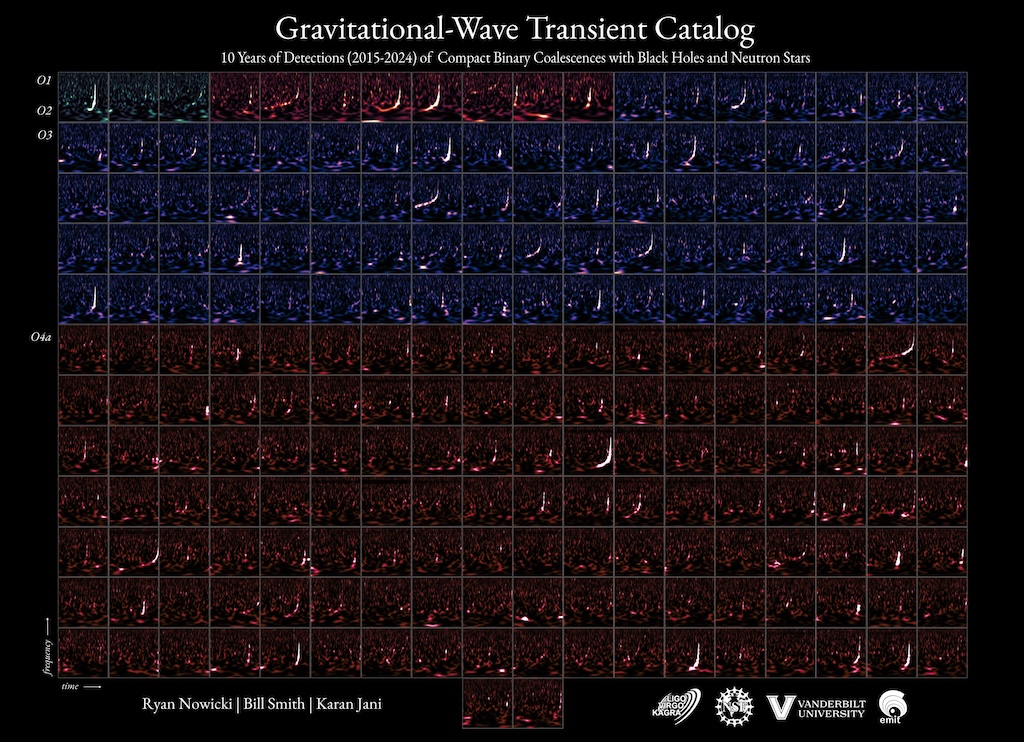
What created this unusual explosion? Three weeks ago, gravitational wave detectors in the USA and Europe -- the LIGO and Virgo detectors -- detected a burst of gravitational radiation that had the oscillating pattern expected when a black hole destroys a neutron star. One object in event S190814bv was best fit with a mass greater than five times the mass of the Sun -- making it a good candidate for a black hole, while the other object appeared to have a mass less than three times the mass of the Sun -- making it a good candidate for a neutron star. No similar event had been detected with gravitational waves before. Unfortunately, no light was seen from this explosion, light that might have been triggered by the disrupting neutron star. It is theoretically possible that the lower mass object was also a black hole, even though no clear example of a black hole with such a low mass is known. The featured video was created to illustrate a previously suspected black hole - neutron star collision detected in light in 2005, specifically gamma-rays from the burst GRB 050724. The animated video starts with a foreground neutron star orbiting a black hole surrounded by an accretion disk. The black hole's gravity then shreds the neutron star, creating a jet as debris falls into the black hole. S190814bv will continue to be researched, with clues about the nature of the objects involved possibly coming from future detections of similar systems. Follow APOD in English on: Instagram, Facebook, Reddit, or Twitter
¿Qué creó esta explosión inusual? Hace tres semanas, detectores de ondas gravitacionales en Estados Unidos y Europa — los detectores LIGO y Virgo — detectaron una explosión de radiación gravitacional que tenía el patrón oscilante esperado cuando un agujero negro destruye una estrella de neutrones. Un objeto en el evento S190814bv se ajustó mejor con una masa mayor a cinco veces la masa del Sol — lo que lo convierte en un buen candidato para ser un agujero negro, mientras que el otro objeto parecía tener una masa menor a tres veces la masa del Sol — lo que lo convierte en un buen candidato para ser una estrella de neutrones. No se había detectado un evento similar con ondas gravitacionales antes. Desafortunadamente, no se vio luz de esta explosión, luz que podría haber sido desencadenada por la estrella de neutrones al desintegrarse. Es teóricamente posible que el objeto de menor masa también fuera un agujero negro, aunque no se conoce un ejemplo claro de un agujero negro con una masa tan baja. El video destacado fue creado para ilustrar una colisión previamente sospechada entre un agujero negro y una estrella de neutrones, detectada en luz en 2005, específicamente rayos gamma del estallido GRB 050724. El video animado comienza con una estrella de neutrones en primer plano orbitando un agujero negro rodeado por un disco de acreción. La gravedad del agujero negro luego desgarró la estrella de neutrones, creando un chorro a medida que los escombros cayeron en el agujero negro. S190814bv continuará siendo investigado, con pistas sobre la naturaleza de los objetos involucrados posiblemente provenientes de futuras detecciones de sistemas similares.