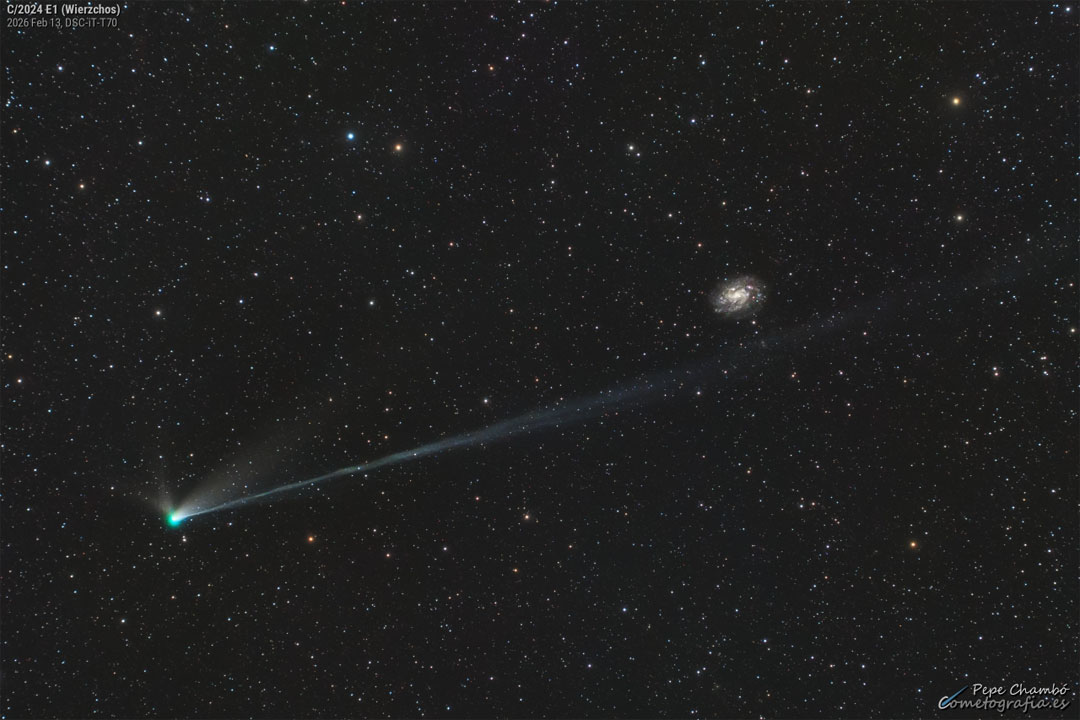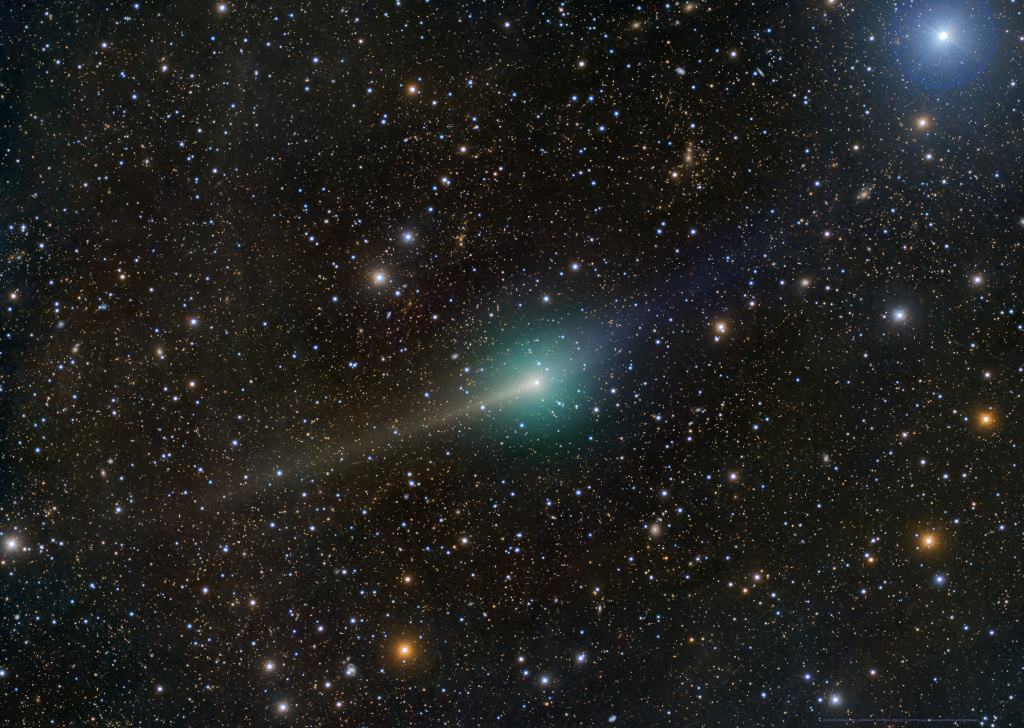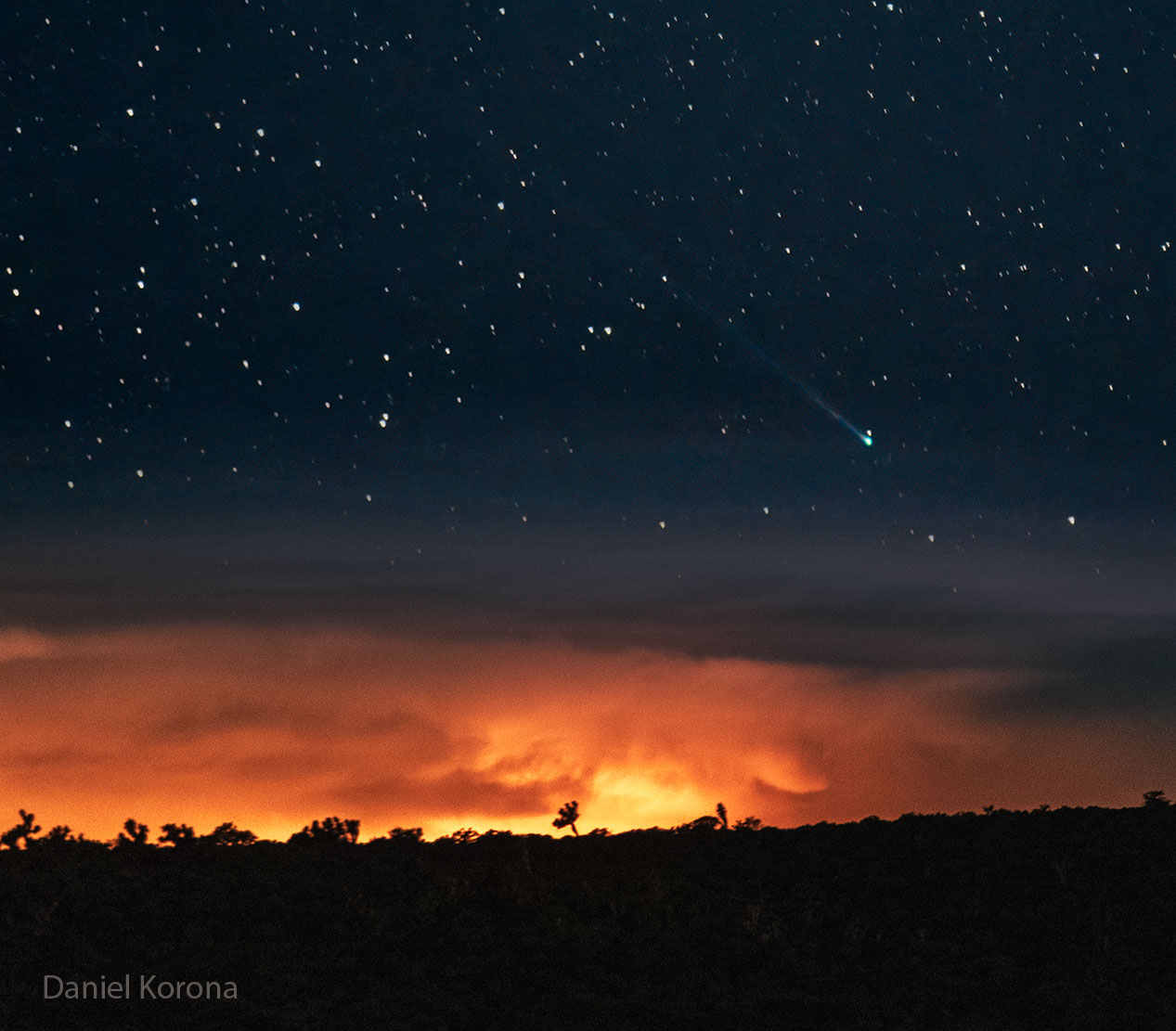
A newly discovered comet is already visible with binoculars. The comet, C/2025 R2 (SWAN) and nicknamed SWAN25B, is brightening significantly as it emerges from the Sun's direction and might soon become visible on your smartphone -- if not your eyes. Although the brightnesses of comets are notoriously hard to predict, many comets appear brighter as they approach the Earth, with SWAN25B reaching only a quarter of the Earth-Sun distance near October 19. Nighttime skygazers will also be watching for a SWAN25B-spawned meteor shower around October 5 when our Earth passes through the plane of the comet's orbit. The unexpectedly bright comet was discovered by an amateur astronomer in images of the SWAN instrument on NASA's SOHO satellite. The comet is currently best observed in southern skies but is slowly moving north. The featured image was captured at sunset three days ago just above the western horizon in Zacatecas, Mexico.
Un cometa recientemente descubierto ya es visible con binoculares. El cometa, C/2025 R2 (SWAN) y apodado SWAN25B, se está aclarando significativamente a medida que emerge de la dirección del Sol y podría convertirse pronto en visible en tu smartphone — si no en tus ojos. Aunque la luminosidad de los cometas es notablemente difícil de predecir, muchos cometas aparecen más brillantes a medida que se acercan a la Tierra, con SWAN25B alcanzando solo un cuarto de la distancia Tierra-Sol cerca del 19 de octubre. Los observadores del cielo nocturno también estarán atentos a una lluvia de meteoros originada por SWAN25B alrededor del 5 de octubre cuando la Tierra pase por el plano de la órbita del cometa. El cometa inesperadamente brillante fue descubierto por un astrónomo aficionado en imágenes del instrumento SWAN en el satélite SOHO de la NASA. El cometa actualmente se observa mejor en el hemisferio sur, pero se mueve lentamente hacia el norte. La imagen destacada fue capturada al atardecer hace tres días justo por encima del horizonte occidental en Zacatecas, México.